
Merchant Fees Demystified: Structure, Function, and Variants

Consider a situation: A client went to a showroom to purchase some home appliances. After making the purchase, the invoice is issued to the client. After having a glance at the invoice, the client takes the credit card, swipes it, and completes the payment. This is the visible process that takes place.
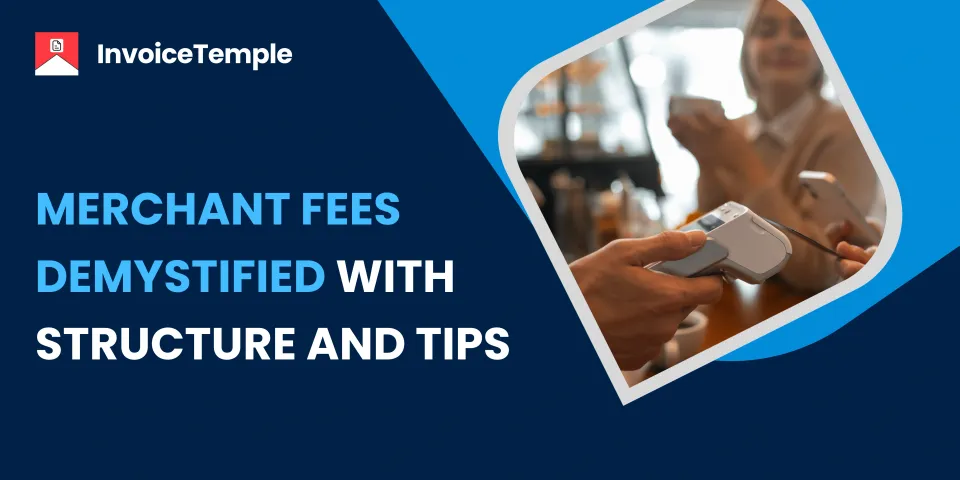
But a hidden incident happens here. An extra charge will be debited from the business account. This extra charge is the merchant's fee. As a small business owner, having a better understanding of these merchant fees is crucial for experiencing a positive cash flow and a smooth business flow.
To know all the essential details about the merchant fees, continue to read this blog. Here you can get valuable details about the merchant fees.
What are Merchant Fees?
Merchant fees are the amount that is debited from the business owner’s account when the clients make card payments for the purchases they have made. These merchant fees come under the category of payment processing fees, which is a basic one. This fee might look small for each transaction. But when compared as a whole, all the amounts debited from each transaction look like a bigger one, and it can influence the business income.
Which 3 Pricing Models Do Merchant Accounts Use?
The merchant fees are divided into three major types, and they are mentioned below.
1. Flat-Rate Pricing: The flat-rate pricing method is a predictable method of paying the same cost for every transaction. It can be a fixed amount or a fixed percentage.
2. Interchange Pricing: The interchange pricing model is also referred to as interchange plus pricing. This pricing method includes two sections for payment. One is the basic fee that is assigned by the card company, and the other is the fee charged by the payment provider. This is the most transparent pricing method.
3. Tiered Pricing: This fee is charged based on the type of card used for payment and the method used to pay. The fee structure makes it hard for businesses to determine the total cost and its justification.
What Merchant Fees Help to Pay for?
- It makes sure that the transaction is done securely and properly.
- Fraudulent activities are avoided by this merchant fee.
- They help in paying for the fees charged by card companies for using their network.
Key Things to Be Cautious About in Merchant Fees:
While accepting card payments, you must be cautious about the red flags that arise in merchant fees. Some of the red flags to be watched out for in merchant fees are as follows.
Unexpected Fees: Sometimes, unexpected fees may be included in the payment statements. In some cases, these unnecessary fees will be mentioned under a different name. So, always be cautious about the fees that you pay.
Ambiguous Assessment Charges: The fees charged must be easily understandable. If any confusion or doubts arise, please clarify them with the payment provider. This conversation gives a clear view of what you are charged for.
Best Practices to Reduce Merchant Fees:
Compare the pricing model of the card processing companies and choose the model that fits your business. If you think that the fees for the selected card processing company are high, then try to negotiate them with the card processing company.
As this is a digital world, merchant fees have become a necessary part of the business transaction. Make use of accounting software to manage the business accounts effectively.
We are excited to announce the **launch of the Sharkbow Marketplace!** 🎉 Now you can:
- 🛍️ List and sell your products – Open your own store easily.
- 📦 Manage orders effortlessly – Track sales and communicate with buyers.
- 🚀 Reach thousands of buyers – Expand your business with ease.
Start selling today and grow your online business on Sharkbow! 🛒
Open Your Store 🚀 ✖
🚀 What Can You Do on Sharkbow?
Sharkbow.com gives you endless possibilities! Explore these powerful features and start creating today:
- 📝 Create Posts – Share your thoughts with the world.
- 🎬 Create Reels – Short videos that capture big moments.
- 📺 Create Watch Videos – Upload long-form content for your audience.
- 📝 Write Blogs – Share stories, insights, and experiences.
- 🛍️ Sell Products – Launch and manage your online store.
- 📣 Create Pages – Build your brand, business, or project.
- 🎉 Create Events – Plan and promote your upcoming events.
- 👥 Create Groups – Connect and build communities.
- ⏳ Create Stories – Share 24-hour disappearing updates.
Join Sharkbow today and make the most out of these features! 🚀
Start Creating Now 🚀
 English
 Arabic
 Spanish
 Portuguese
 Deutsch
 Turkish
 Dutch
Dutch
 Italiano
 Russian
 Romaian
 Portuguese (Brazil)
 Greek
Greek