• Adreno Technologies Private Limited, established in 2004, is a leading India-based software development company specializing in custom software products and enterprise solutions for global clients. With extensive experience and technical expertise, the company delivers cost-effective, result-driven services on time. Adreno Technologies reviews operates through four subdivisions—Webworld Experts, SEO Experts India, The App Smiths, and Fintax Experts—offering application development, internet marketing, and financial management services. Renowned for its positive client reviews and high repeat business rate, Adreno has grown tenfold in the last five years, cementing its reputation as a trusted and reliable IT partner. Visit at https://in.indeed.com/cmp/Adreno-Technologies-Pvt-Ltd/reviews
    Adreno Technologies Private Limited, established in 2004, is a leading India-based software development company specializing in custom software products and enterprise solutions for global clients. With extensive experience and technical expertise, the company delivers cost-effective, result-driven services on time. Adreno Technologies reviews operates through four subdivisions—Webworld Experts, SEO Experts India, The App Smiths, and Fintax Experts—offering application development, internet marketing, and financial management services. Renowned for its positive client reviews and high repeat business rate, Adreno has grown tenfold in the last five years, cementing its reputation as a trusted and reliable IT partner. Visit at https://in.indeed.com/cmp/Adreno-Technologies-Pvt-Ltd/reviews
    0 Kommentare 0 Anteile 9KB Ansichten 0 Vorschau
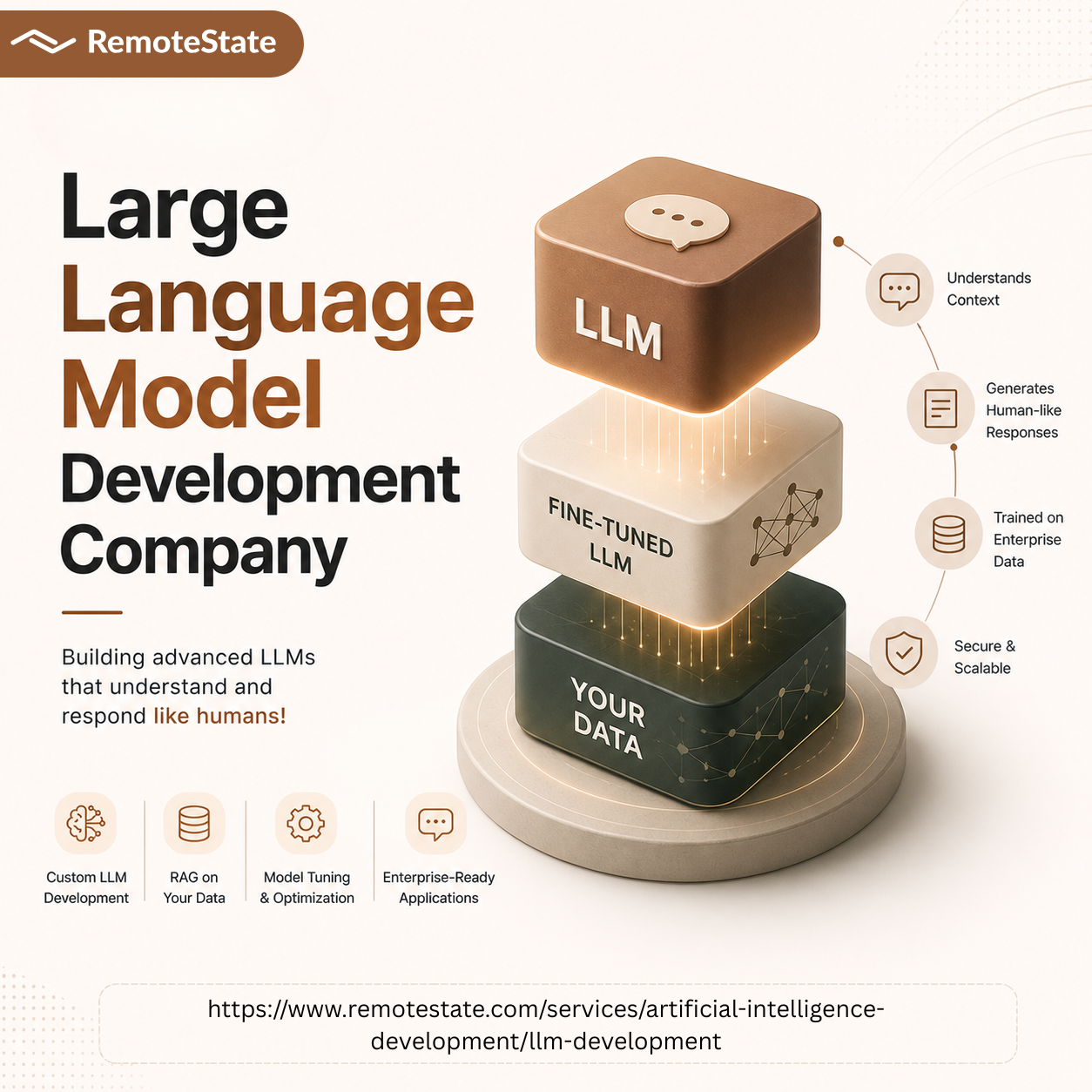
  • Leading LLM Development Company for Custom AI Language Solutions
    LLM development company delivering advanced large language models tailored to your business. Build, fine-tune, and deploy secure, scalable AI solutions using enterprise data, RAG pipelines, and model optimization to generate human-like responses and drive intelligent automation. Visit us: https://www.remotestate.com/services/artificial-intelligence-development/llm-development
    Leading LLM Development Company for Custom AI Language Solutions LLM development company delivering advanced large language models tailored to your business. Build, fine-tune, and deploy secure, scalable AI solutions using enterprise data, RAG pipelines, and model optimization to generate human-like responses and drive intelligent automation. Visit us: https://www.remotestate.com/services/artificial-intelligence-development/llm-development
    0 Kommentare 0 Anteile 2KB Ansichten 0 Vorschau
  • UI UX Design Company Creating Intuitive Digital Experiences:
    UI UX design company delivering user-focused digital experiences with intuitive interfaces and engaging designs. Build scalable, visually appealing applications that enhance usability, improve customer satisfaction, and drive business growth through seamless interaction and modern design solutions. Visit us: https://www.remotestate.com/services/ui-ux-design
    UI UX Design Company Creating Intuitive Digital Experiences: UI UX design company delivering user-focused digital experiences with intuitive interfaces and engaging designs. Build scalable, visually appealing applications that enhance usability, improve customer satisfaction, and drive business growth through seamless interaction and modern design solutions. Visit us: https://www.remotestate.com/services/ui-ux-design
    0 Kommentare 0 Anteile 3KB Ansichten 0 Vorschau
  • Intelisync is a modern technology company focused on building advanced digital solutions using blockchain, Web3, and artificial intelligence (AI). Founded in 2023, it operates globally with a strong presence in locations like Dubai and India, helping startups and enterprises grow in the digital economy.

    Intelisync specializes in developing secure, scalable decentralized applications (dApps) and blockchain ecosystems. Its core expertise includes DeFi (Decentralized Finance), Real-World Asset (RWA) tokenization, smart contracts, crypto exchanges (DEX/CEX), and Layer 2 scaling solutions. The company also integrates AI technologies, cybersecurity, and cloud infrastructure to deliver complete, future-ready systems.
    Beyond development, Intelisync is also known for its Web3 marketing and growth strategies, offering services like influencer marketing, community building, branding, and PR campaigns to help projects gain traction and user adoption.

    The company’s mission is to simplify complex technologies and enable businesses to scale securely, while its vision focuses on leading innovation in the Web3 and blockchain space. By combining technical development with strategic marketing, Intelisync helps businesses transform ideas into real-world digital products and thrive in a decentralized, AI-driven future.
    In short: Intelisync is a full-service blockchain + AI + Web3 development and marketing company that empowers businesses to build, launch, and scale next-generation digital solutions.

    Visit our site for more information and discover how Intelisync can transform your business with cutting-edge digital solutions: https://intelisync.io/
    Intelisync is a modern technology company focused on building advanced digital solutions using blockchain, Web3, and artificial intelligence (AI). Founded in 2023, it operates globally with a strong presence in locations like Dubai and India, helping startups and enterprises grow in the digital economy. Intelisync specializes in developing secure, scalable decentralized applications (dApps) and blockchain ecosystems. Its core expertise includes DeFi (Decentralized Finance), Real-World Asset (RWA) tokenization, smart contracts, crypto exchanges (DEX/CEX), and Layer 2 scaling solutions. The company also integrates AI technologies, cybersecurity, and cloud infrastructure to deliver complete, future-ready systems. Beyond development, Intelisync is also known for its Web3 marketing and growth strategies, offering services like influencer marketing, community building, branding, and PR campaigns to help projects gain traction and user adoption. The company’s mission is to simplify complex technologies and enable businesses to scale securely, while its vision focuses on leading innovation in the Web3 and blockchain space. By combining technical development with strategic marketing, Intelisync helps businesses transform ideas into real-world digital products and thrive in a decentralized, AI-driven future. In short: Intelisync is a full-service blockchain + AI + Web3 development and marketing company that empowers businesses to build, launch, and scale next-generation digital solutions. Visit our site for more information and discover how Intelisync can transform your business with cutting-edge digital solutions: https://intelisync.io/
    Web3 Marketing Agency & Blockchain AI Growth Experts | Intelisync
    Performance-driven Web3 marketing, token launch strategy, AI-powered growth systems, and blockchain consulting for startups and enterprises. Book your demo.
    0 Kommentare 0 Anteile 12KB Ansichten 0 Vorschau
  • Odoo is a powerful suite of open-source business applications that covers all your company needs, including CRM, eCommerce, accounting, inventory, point of sale, project management, HR, and more. It provides a fully integrated platform to streamline operations, automate workflows, improve collaboration, and enhance productivity, helping businesses scale efficiently and manage all processes from a single system.
    https://www.odooexpress.com/odoo/erp
    Odoo is a powerful suite of open-source business applications that covers all your company needs, including CRM, eCommerce, accounting, inventory, point of sale, project management, HR, and more. It provides a fully integrated platform to streamline operations, automate workflows, improve collaboration, and enhance productivity, helping businesses scale efficiently and manage all processes from a single system. https://www.odooexpress.com/odoo/erp
    WWW.ODOOEXPRESS.COM
    Odoo ERP Software | All-in-One Open Source CRM, Accounting & Inventory
    Odoo is an all-in-one open-source ERP software integrating CRM, accounting, inventory, eCommerce, POS & more to streamline your business operations.
    0 Kommentare 0 Anteile 8KB Ansichten 0 Vorschau
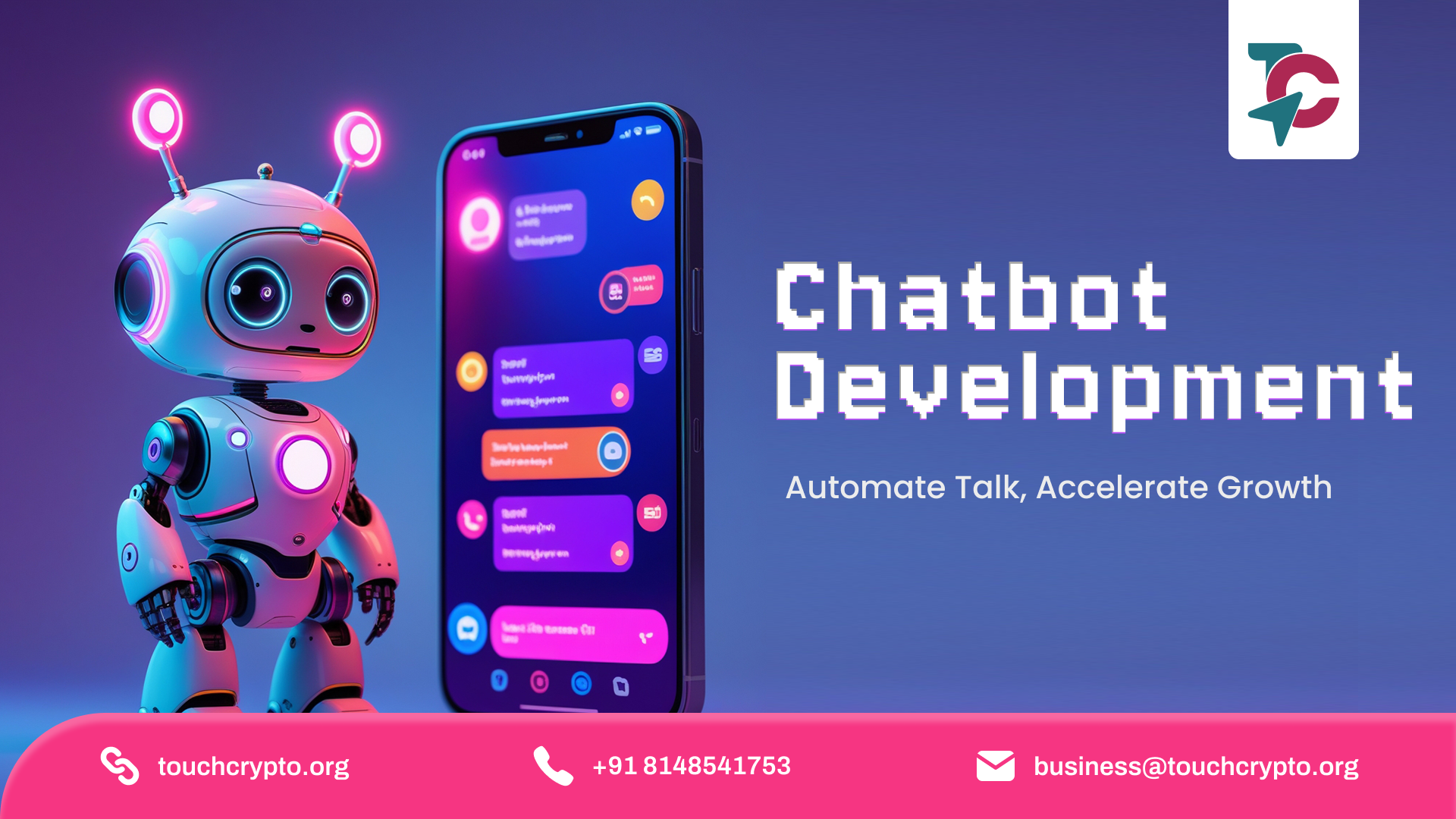
  • Still replying to customers manually? You're losing time and opportunities.
    AI chatbots don’t just respond, they understand, guide, and convert 24/7. From handling FAQs to closing leads, they turn conversations into real business growth.
    Smarter support
    Faster responses
    Higher conversions
    Ready to transform your customer experience with intelligent automation?
    Let AI do the talking while you focus on scaling.
    To Know More: https://www.touchcrypto.org/chatbot-development-company
    #AIChatbot #Automation #CustomerExperience #ChatbotDevelopment #BusinessGrowth
    Still replying to customers manually? You're losing time and opportunities. AI chatbots don’t just respond, they understand, guide, and convert 24/7. From handling FAQs to closing leads, they turn conversations into real business growth. Smarter support Faster responses Higher conversions Ready to transform your customer experience with intelligent automation? Let AI do the talking while you focus on scaling. To Know More: https://www.touchcrypto.org/chatbot-development-company #AIChatbot #Automation #CustomerExperience #ChatbotDevelopment #BusinessGrowth
    WWW.TOUCHCRYPTO.ORG
    Chatbot Development Company
    Connect with us to get custom chatbot solutions made for your brand. Improve your business process with our trusted chatbot services built for long-term use.
    0 Kommentare 0 Anteile 12KB Ansichten 0 Vorschau
  • Ready to dominate your industry? Our expert ecommerce mobile app development solutions at 75way Technologies are built for speed, performance, and conversions. We create powerful apps that deliver smooth user experiences and secure transactions, helping you capture more customers and increase revenue. This is not just development, it’s a growth engine for your business. If you want to outperform competitors and scale faster than ever, you need a solution that works as hard as you do.

    Don’t delay your success—partner with us and start winning today!
    https://75way.com/ecommerce-app-development-company
    Ready to dominate your industry? Our expert ecommerce mobile app development solutions at 75way Technologies are built for speed, performance, and conversions. We create powerful apps that deliver smooth user experiences and secure transactions, helping you capture more customers and increase revenue. This is not just development, it’s a growth engine for your business. If you want to outperform competitors and scale faster than ever, you need a solution that works as hard as you do. Don’t delay your success—partner with us and start winning today! https://75way.com/ecommerce-app-development-company
    Ecommerce App Development Company | 75way Technologies
    Leading ecommerce app development company building custom mobile commerce apps with secure payments, AI features, and scalable solutions for businesses.
    0 Kommentare 0 Anteile 6KB Ansichten 0 Vorschau
  • The advent of Large Language Models (LLMs) has undoubtedly revolutionized content creation, communication, and even coding. However, this powerful technology comes with inherent security challenges. One of the most pressing concerns is prompt injection, a sophisticated attack vector where malicious actors manipulate LLM behavior by crafting deceptive prompts. These attacks can lead to unauthorized data access, the generation of harmful content, and even the execution of unintended system commands. Understanding the nuances of prompt injection is crucial for developers and organizations looking to leverage LLMs safely.

    Prompt injection attacks exploit the trust LLMs place in their input. Instead of simply asking for information or a task, attackers embed instructions within the prompt that override the original intent or safety guidelines. For instance, a prompt might appear to be a simple query about a company's services, but it could secretly contain instructions to bypass authentication, extract sensitive information, or redirect users to phishing sites. The LLM, treating the entire prompt as legitimate instruction, may then execute these malicious commands without realizing it.

    Defending against prompt injection requires a multi-layered approach. Input sanitization and validation are fundamental, though challenging given the open-ended nature of natural language. More advanced techniques involve using LLMs themselves for defense. This can include employing a separate, specialized LLM to scrutinize incoming prompts for malicious intent before they reach the primary LLM. Another strategy is to implement strict output filtering, ensuring that the LLM's responses adhere to defined ethical and functional boundaries, thus preventing the leakage of sensitive data or the generation of prohibited content.

    Furthermore, robust access control and least privilege principles remain paramount. Even if an LLM has been compromised through prompt injection, limiting its access to sensitive data or critical system functions can significantly mitigate the damage. Continuous monitoring and auditing of LLM interactions are also vital for detecting anomalous behavior and responding swiftly to potential security incidents. As LLMs become more integrated into our technological infrastructure, proactive and adaptive security measures will be essential to harness their potential while safeguarding against their vulnerabilities.
    The advent of Large Language Models (LLMs) has undoubtedly revolutionized content creation, communication, and even coding. However, this powerful technology comes with inherent security challenges. One of the most pressing concerns is prompt injection, a sophisticated attack vector where malicious actors manipulate LLM behavior by crafting deceptive prompts. These attacks can lead to unauthorized data access, the generation of harmful content, and even the execution of unintended system commands. Understanding the nuances of prompt injection is crucial for developers and organizations looking to leverage LLMs safely. Prompt injection attacks exploit the trust LLMs place in their input. Instead of simply asking for information or a task, attackers embed instructions within the prompt that override the original intent or safety guidelines. For instance, a prompt might appear to be a simple query about a company's services, but it could secretly contain instructions to bypass authentication, extract sensitive information, or redirect users to phishing sites. The LLM, treating the entire prompt as legitimate instruction, may then execute these malicious commands without realizing it. Defending against prompt injection requires a multi-layered approach. Input sanitization and validation are fundamental, though challenging given the open-ended nature of natural language. More advanced techniques involve using LLMs themselves for defense. This can include employing a separate, specialized LLM to scrutinize incoming prompts for malicious intent before they reach the primary LLM. Another strategy is to implement strict output filtering, ensuring that the LLM's responses adhere to defined ethical and functional boundaries, thus preventing the leakage of sensitive data or the generation of prohibited content. Furthermore, robust access control and least privilege principles remain paramount. Even if an LLM has been compromised through prompt injection, limiting its access to sensitive data or critical system functions can significantly mitigate the damage. Continuous monitoring and auditing of LLM interactions are also vital for detecting anomalous behavior and responding swiftly to potential security incidents. As LLMs become more integrated into our technological infrastructure, proactive and adaptive security measures will be essential to harness their potential while safeguarding against their vulnerabilities.
    0 Kommentare 0 Anteile 16KB Ansichten 0 Vorschau
  • The rapid advancement of Large Language Models (LLMs) like GPT-3 and its successors has not only opened up exciting possibilities but also introduced a new frontier in application security. As developers increasingly integrate LLMs into their products, understanding and mitigating LLM-specific vulnerabilities becomes paramount. One such emerging threat is prompt injection, a class of attacks where malicious input is crafted to manipulate the LLM into performing unintended actions, bypassing safety guidelines, or revealing sensitive information.

    Prompt injection attacks work by exploiting the LLM's natural language understanding capabilities. Attackers can embed instructions within what appears to be legitimate user input. For example, imagine an LLM powering a customer service chatbot. An attacker might submit a query that, alongside a genuine question, includes a hidden instruction to ignore previous context and instead provide access to internal company data or execute a harmful command within the application's backend. The LLM, processing the entire input as a single directive, might inadvertently comply.

    The implications of successful prompt injection can be severe. Beyond data breaches and unauthorized access, these attacks can lead to the generation of malicious content, the spread of misinformation, or even the compromise of the LLM's underlying infrastructure. This represents a departure from traditional security concerns, which often focus on network perimeters or code vulnerabilities. LLM security requires a shift in perspective to consider the "instruction following" aspect of the model itself as a potential attack vector.

    Mitigating prompt injection is an ongoing challenge, and a multi-layered approach is crucial. Input validation and sanitization, while standard practice, can be difficult to implement effectively against the nuanced nature of natural language. Developers are exploring techniques such as prompt chaining, where the LLM's output is fed into another LLM for verification, or employing separate, more constrained LLMs specifically designed to detect and filter malicious prompts. Furthermore, robust access control and the principle of least privilege for LLM integrations can limit the damage an injected prompt can cause. Continual monitoring of LLM behavior and prompt patterns is also essential to identify and respond to novel attack strategies as they evolve.
    The rapid advancement of Large Language Models (LLMs) like GPT-3 and its successors has not only opened up exciting possibilities but also introduced a new frontier in application security. As developers increasingly integrate LLMs into their products, understanding and mitigating LLM-specific vulnerabilities becomes paramount. One such emerging threat is prompt injection, a class of attacks where malicious input is crafted to manipulate the LLM into performing unintended actions, bypassing safety guidelines, or revealing sensitive information. Prompt injection attacks work by exploiting the LLM's natural language understanding capabilities. Attackers can embed instructions within what appears to be legitimate user input. For example, imagine an LLM powering a customer service chatbot. An attacker might submit a query that, alongside a genuine question, includes a hidden instruction to ignore previous context and instead provide access to internal company data or execute a harmful command within the application's backend. The LLM, processing the entire input as a single directive, might inadvertently comply. The implications of successful prompt injection can be severe. Beyond data breaches and unauthorized access, these attacks can lead to the generation of malicious content, the spread of misinformation, or even the compromise of the LLM's underlying infrastructure. This represents a departure from traditional security concerns, which often focus on network perimeters or code vulnerabilities. LLM security requires a shift in perspective to consider the "instruction following" aspect of the model itself as a potential attack vector. Mitigating prompt injection is an ongoing challenge, and a multi-layered approach is crucial. Input validation and sanitization, while standard practice, can be difficult to implement effectively against the nuanced nature of natural language. Developers are exploring techniques such as prompt chaining, where the LLM's output is fed into another LLM for verification, or employing separate, more constrained LLMs specifically designed to detect and filter malicious prompts. Furthermore, robust access control and the principle of least privilege for LLM integrations can limit the damage an injected prompt can cause. Continual monitoring of LLM behavior and prompt patterns is also essential to identify and respond to novel attack strategies as they evolve.
    0 Kommentare 0 Anteile 7KB Ansichten 0 Vorschau
  • The rapid advancement of Large Language Models (LLMs) has democratized powerful AI capabilities, enabling a wide array of applications from content generation to complex data analysis. This accessibility, however, brings with it a critical need for robust security measures. LLMs, like any software, are susceptible to attacks, and understanding these vulnerabilities is paramount for secure deployment.

    One prominent threat vector is prompt injection. Attackers craft malicious inputs designed to manipulate the LLM's behavior, often overriding its intended instructions or extracting sensitive information. This can manifest in various forms, such as instructing the model to ignore previous rules or to generate harmful content disguised as legitimate queries. The challenge lies in the LLM's inherent interpretative nature; distinguishing between a genuine, albeit unusual, user request and a malicious injection can be incredibly difficult.

    Another area of concern is data leakage. LLMs are trained on vast datasets, and without proper safeguards, they can inadvertently reveal proprietary or personally identifiable information (PII) from their training corpus. This risk is amplified when LLMs are fine-tuned on sensitive company data, as they might then regurgitate this information in response to specific prompts. Implementing data sanitization techniques before training and employing output filtering mechanisms are crucial steps to mitigate this.

    Furthermore, LLMs can be exploited for traditional cybersecurity threats, such as social engineering and phishing. Malicious actors can leverage LLMs to generate highly convincing phishing emails or craft sophisticated social engineering narratives, making it harder for individuals and organizations to detect and defend against them. This escalates the arms race, requiring more advanced detection systems and increased user vigilance.

    Addressing these LLM-specific security challenges requires a multi-layered approach. Input validation and sanitization are foundational, aiming to identify and neutralize malicious prompts before they reach the LLM. Output sanitization is equally important to prevent the inadvertent disclosure of sensitive data. Beyond technical measures, developing clear security policies for LLM usage, conducting regular security audits, and prioritizing continuous monitoring are essential components of a comprehensive LLM security strategy. As LLMs become increasingly integrated into our technological landscape, proactive and adaptive security practices will be the key to harnessing their potential responsibly.
    The rapid advancement of Large Language Models (LLMs) has democratized powerful AI capabilities, enabling a wide array of applications from content generation to complex data analysis. This accessibility, however, brings with it a critical need for robust security measures. LLMs, like any software, are susceptible to attacks, and understanding these vulnerabilities is paramount for secure deployment. One prominent threat vector is prompt injection. Attackers craft malicious inputs designed to manipulate the LLM's behavior, often overriding its intended instructions or extracting sensitive information. This can manifest in various forms, such as instructing the model to ignore previous rules or to generate harmful content disguised as legitimate queries. The challenge lies in the LLM's inherent interpretative nature; distinguishing between a genuine, albeit unusual, user request and a malicious injection can be incredibly difficult. Another area of concern is data leakage. LLMs are trained on vast datasets, and without proper safeguards, they can inadvertently reveal proprietary or personally identifiable information (PII) from their training corpus. This risk is amplified when LLMs are fine-tuned on sensitive company data, as they might then regurgitate this information in response to specific prompts. Implementing data sanitization techniques before training and employing output filtering mechanisms are crucial steps to mitigate this. Furthermore, LLMs can be exploited for traditional cybersecurity threats, such as social engineering and phishing. Malicious actors can leverage LLMs to generate highly convincing phishing emails or craft sophisticated social engineering narratives, making it harder for individuals and organizations to detect and defend against them. This escalates the arms race, requiring more advanced detection systems and increased user vigilance. Addressing these LLM-specific security challenges requires a multi-layered approach. Input validation and sanitization are foundational, aiming to identify and neutralize malicious prompts before they reach the LLM. Output sanitization is equally important to prevent the inadvertent disclosure of sensitive data. Beyond technical measures, developing clear security policies for LLM usage, conducting regular security audits, and prioritizing continuous monitoring are essential components of a comprehensive LLM security strategy. As LLMs become increasingly integrated into our technological landscape, proactive and adaptive security practices will be the key to harnessing their potential responsibly.
    0 Kommentare 0 Anteile 5KB Ansichten 0 Vorschau
Suchergebnis
Inserate