
Metastatic Cancer Drug Market Forecast 2025 to 2034 With 4.32% CAGR and Industry Drivers
A metastatic cancer drug is a medication used to treat cancer that has spread from its original site to other parts of the body. These drugs act systemically, targeting cancer cells wherever they are located, with the goal of slowing disease progression, reducing tumor burden, and improving patient survival and quality of life. They include chemotherapy, targeted therapies, immunotherapies, and hormone-based treatments.
Metastatic Cancer Drug Market Size, Share and Analysis
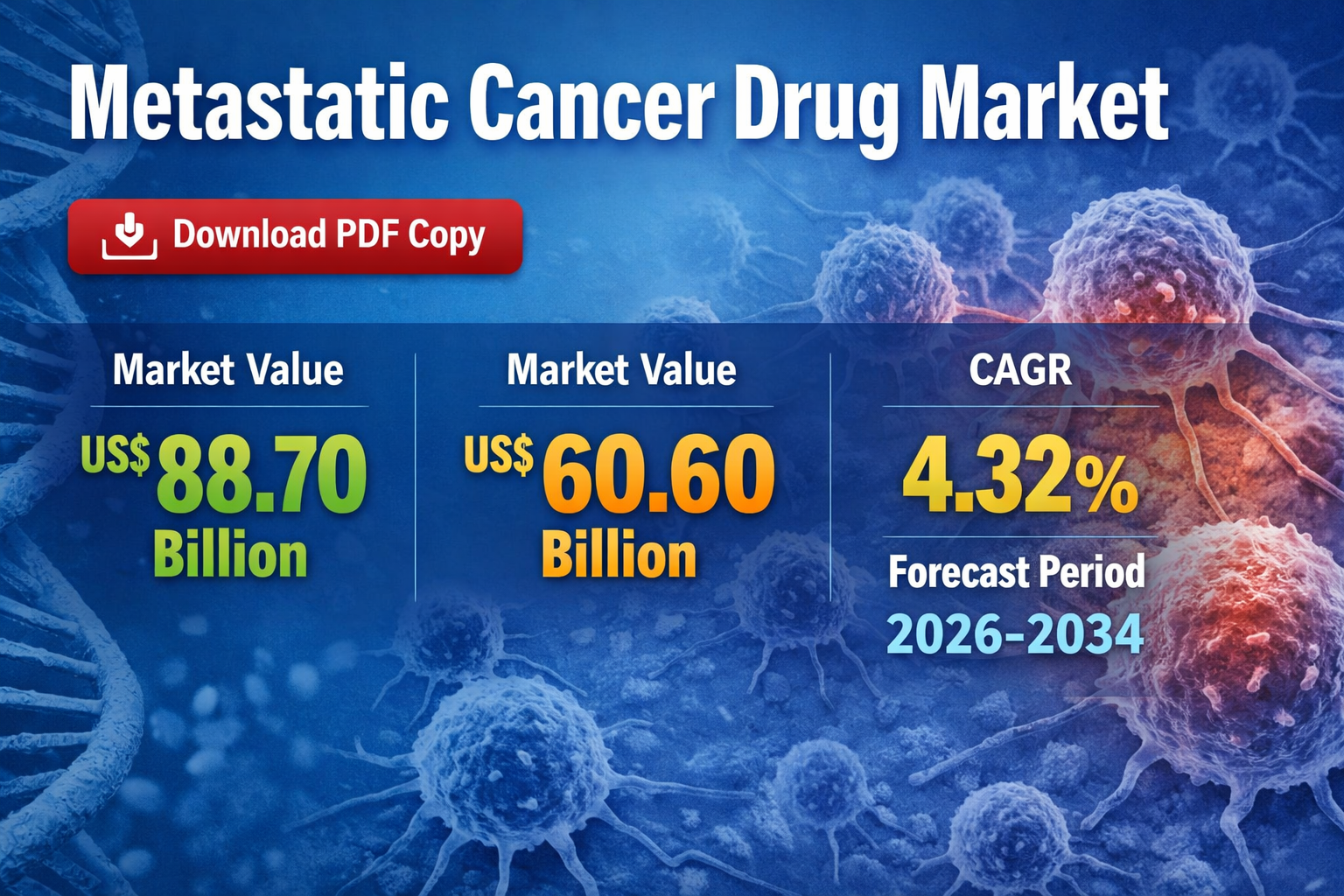
The metastatic cancer drug market is on a robust growth trajectory, with market valuations expected to climb from US$ 60.60 billion in 2025 to US$ 88.70 billion by 2034. This steady progression represents a compound annual growth rate (CAGR) of 4.32% throughout the forecast period of 2026-2034. As cancer remains one of the most pressing global health challenges, the demand for innovative and effective metastatic cancer treatments continues to intensify, creating substantial opportunities for pharmaceutical companies and healthcare providers alike.
Understanding the Metastatic Cancer Treatment Landscape
Metastatic cancer represents the most advanced stage of the disease, where cancer cells have spread from their original location to distant parts of the body. This complex condition requires sophisticated therapeutic interventions that go beyond traditional treatment methods. The market encompasses a wide range of complex and expensive therapies, including monoclonal antibodies, tyrosine kinase inhibitors, and cutting-edge cellular and gene therapies.
The contemporary treatment landscape is characterized by combination regimens that leverage multiple therapeutic mechanisms simultaneously. These complex protocols require specialized delivery systems and expert administration, typically conducted through hospital-based centers and specialty oncology clinics equipped with advanced medical infrastructure.
Key Industry Drivers Fueling Market Expansion
Rising Global Cancer Prevalence
The increasing incidence of various cancers worldwide stands as the primary driver of market growth. This surge is largely attributed to aging populations across developed nations and evolving lifestyle factors including sedentary behavior, poor dietary habits, environmental pollution, and tobacco use. As life expectancy increases globally, the number of individuals diagnosed with cancer continues to rise, creating a larger patient pool requiring advanced metastatic treatment options. This demographic shift ensures sustained demand for innovative oncology therapeutics.
Regulatory Support and Accelerated Approvals
Streamlined regulatory pathways have emerged as a crucial catalyst for market expansion. The FDA and EMA have implemented breakthrough therapy designations and expedited review processes for promising oncology drugs, significantly reducing the time from development to market introduction. Additionally, the expansion of existing drug labels to cover additional metastatic indications creates new revenue streams for pharmaceutical companies. These regulatory initiatives enable faster patient access to potentially life-saving treatments while boosting commercial opportunities for drug manufacturers.
Get Sample Report: https://www.theinsightpartners.com/sample/TIPRE00028616
Immunotherapy Revolution
The surge in immunotherapy adoption represents one of the most transformative developments in oncology. Cancer immunotherapies, particularly immune checkpoint inhibitors, have demonstrated remarkable clinical success across various aggressive metastatic subtypes. These innovative treatments work by unleashing the patient's own immune system to recognize and destroy cancer cells. The high efficacy rates observed in metastatic lung cancer, breast cancer, and melanoma have led to numerous regulatory approvals, establishing immunotherapy as a cornerstone of modern metastatic cancer treatment.
Market Segmentation and Therapeutic Diversity
The metastatic cancer drug market serves diverse cancer types including breast, lung, liver, hematological, brain, prostate, and pancreatic cancers. The therapeutic arsenal spans multiple drug classes such as HER2 inhibitors, immune checkpoint inhibitors, PARP inhibitors, and kinase inhibitors. Treatment administration routes include intravenous, intramuscular, and oral delivery methods, providing flexibility based on patient needs and drug characteristics. The market encompasses both branded innovative therapies and generic and biosimilar alternatives, ensuring broader accessibility across different healthcare systems and economic segments.
Leading Market Players
- AbbVie Inc.
- Amgen Inc.
- Bristol-Myers Squibb Company
- F. Hoffmann-La Roche Ltd.
- Novartis AG
- AstraZeneca PLC
- Eli Lilly and Company
- Merck KGaA
· Pfizer Inc.
Future Outlook
The metastatic cancer drug market outlook through 2034 remains exceptionally positive, supported by multiple converging growth catalysts. The expansion into emerging markets across Asia-Pacific, Latin America, and the Middle East and Africa presents substantial untapped opportunities as healthcare infrastructure continues to improve and disease awareness increases. Ongoing advancements in precision medicine and companion diagnostics will further enhance treatment personalization and efficacy.
Frequently Asked Questions (FAQ):
1. What is the projected size of the metastatic cancer drug market by 2034?
The metastatic cancer drug market is expected to reach US$ 88.70 billion by 2034, growing from US$ 60.60 billion in 2025. The market is anticipated to register a CAGR of 4.32% during the forecast period of 2026-2034.
2. What are metastatic cancer drugs?
Metastatic cancer drugs are specialized therapeutics designed to treat advanced-stage cancer that has spread from the primary site to other parts of the body. These medications aim to slow tumor progression, manage symptoms, enhance patient quality of life, and extend survival rates. They include targeted therapies, immunotherapies, chemotherapy agents, and advanced cellular and gene therapies.
3. How does precision medicine impact metastatic cancer treatment?
Precision medicine tailor treatment regimens based on a patient's unique genomic and molecular profile. By identifying specific biomarkers and genetic mutations, healthcare providers can select therapies most likely to be effective for individual patients, improving treatment outcomes, reducing adverse effects, and optimizing resource utilization.
Also Available in: Korean|German|Japanese|French|Chinese|Italian|Spanish
We are excited to announce the **launch of the Sharkbow Marketplace!** 🎉 Now you can:
- 🛍️ List and sell your products – Open your own store easily.
- 📦 Manage orders effortlessly – Track sales and communicate with buyers.
- 🚀 Reach thousands of buyers – Expand your business with ease.
Start selling today and grow your online business on Sharkbow! 🛒
Open Your Store 🚀 ✖🚀 What Can You Do on Sharkbow?
Sharkbow.com gives you endless possibilities! Explore these powerful features and start creating today:
- 📝 Create Posts – Share your thoughts with the world.
- 🎬 Create Reels – Short videos that capture big moments.
- 📺 Create Watch Videos – Upload long-form content for your audience.
- 📝 Write Blogs – Share stories, insights, and experiences.
- 🛍️ Sell Products – Launch and manage your online store.
- 📣 Create Pages – Build your brand, business, or project.
- 🎉 Create Events – Plan and promote your upcoming events.
- 👥 Create Groups – Connect and build communities.
- ⏳ Create Stories – Share 24-hour disappearing updates.
Join Sharkbow today and make the most out of these features! 🚀
Start Creating Now 🚀
 English
 Arabic
 French
 Spanish
 Deutsch
 Turkish
 Dutch
Dutch
 Italiano
 Russian
 Romaian
 Portuguese (Brazil)
 Greek
Greek