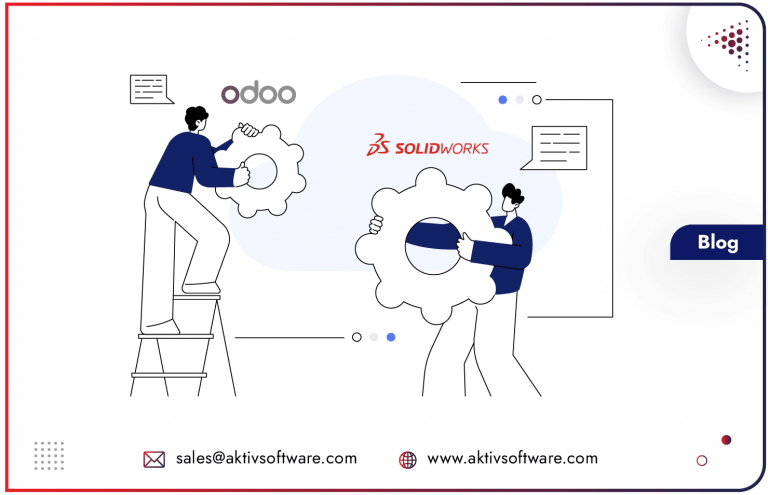
• 🔧 Engineering teams shouldn't have to enter the same data twice.

    When product information is manually transferred from SolidWorks to Odoo, every update increases the risk of errors, duplicate work, and outdated Bills of Materials.

    **Odoo SolidWorks Integration** helps eliminate these challenges by enabling:

    ✔ One-click synchronization of parts and assemblies
    ✔ Automatic creation of multi-level BoMs in Odoo
    ✔ Product updates directly from SolidWorks
    ✔ Vendor references, product costs, and 3D images transferred seamlessly
    ✔ Better collaboration between engineering and manufacturing

    Spend less time on manual data entry and more time bringing products to market.

    👉 Explore how Odoo SolidWorks Integration streamlines engineering and manufacturing workflows: https://www.aktivsoftware.com/odoo-solidworks-integration/
    🔧 Engineering teams shouldn't have to enter the same data twice. When product information is manually transferred from SolidWorks to Odoo, every update increases the risk of errors, duplicate work, and outdated Bills of Materials. **Odoo SolidWorks Integration** helps eliminate these challenges by enabling: ✔ One-click synchronization of parts and assemblies ✔ Automatic creation of multi-level BoMs in Odoo ✔ Product updates directly from SolidWorks ✔ Vendor references, product costs, and 3D images transferred seamlessly ✔ Better collaboration between engineering and manufacturing Spend less time on manual data entry and more time bringing products to market. 👉 Explore how Odoo SolidWorks Integration streamlines engineering and manufacturing workflows: https://www.aktivsoftware.com/odoo-solidworks-integration/
    WWW.AKTIVSOFTWARE.COM
    Odoo SolidWorks Integration: Sync CAD Designs Directly into Your ERP
    Odoo SolidWorks Integration- Sync CAD Designs Directly into Odoo. Every part and sub-assembly is synced into Odoo as products with a complete Bill of Materials.
    0 Commenti 0 condivisioni 2K Views 0 Anteprima
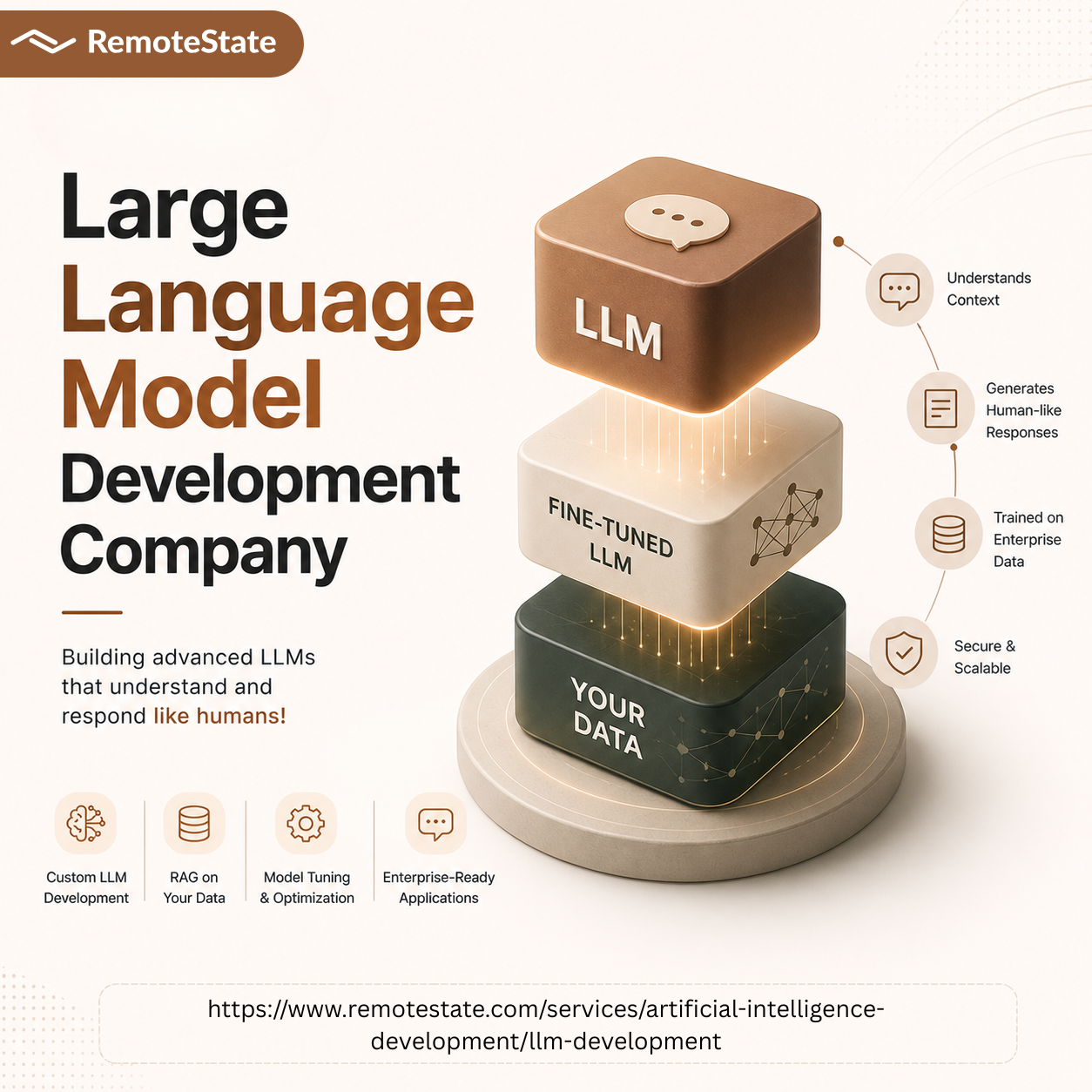
  • Leading LLM Development Company for Custom AI Language Solutions
    LLM development company delivering advanced large language models tailored to your business. Build, fine-tune, and deploy secure, scalable AI solutions using enterprise data, RAG pipelines, and model optimization to generate human-like responses and drive intelligent automation. Visit us: https://www.remotestate.com/services/artificial-intelligence-development/llm-development
    Leading LLM Development Company for Custom AI Language Solutions LLM development company delivering advanced large language models tailored to your business. Build, fine-tune, and deploy secure, scalable AI solutions using enterprise data, RAG pipelines, and model optimization to generate human-like responses and drive intelligent automation. Visit us: https://www.remotestate.com/services/artificial-intelligence-development/llm-development
    0 Commenti 0 condivisioni 4K Views 0 Anteprima
  • https://coolandcrispy.com.au/mobile-auto-air-conditioning-services/
    https://coolandcrispy.com.au/mobile-auto-air-conditioning-services/
    COOLANDCRISPY.COM.AU
    Auto Air-Conditioning Services & Repair | Cool & Crispy
    Cool & Crispy delivers mobile car air-conditioning repair and servicing. Fast, convenient, and reliable AC solutions for your car at your location.
    0 Commenti 0 condivisioni 15K Views 0 Anteprima
  • Odoo is a powerful suite of open-source business applications that covers all your company needs, including CRM, eCommerce, accounting, inventory, point of sale, project management, HR, and more. It provides a fully integrated platform to streamline operations, automate workflows, improve collaboration, and enhance productivity, helping businesses scale efficiently and manage all processes from a single system.
    https://www.odooexpress.com/odoo/erp
    Odoo is a powerful suite of open-source business applications that covers all your company needs, including CRM, eCommerce, accounting, inventory, point of sale, project management, HR, and more. It provides a fully integrated platform to streamline operations, automate workflows, improve collaboration, and enhance productivity, helping businesses scale efficiently and manage all processes from a single system. https://www.odooexpress.com/odoo/erp
    WWW.ODOOEXPRESS.COM
    Odoo ERP Software | All-in-One Open Source CRM, Accounting & Inventory
    Odoo is an all-in-one open-source ERP software integrating CRM, accounting, inventory, eCommerce, POS & more to streamline your business operations.
    0 Commenti 0 condivisioni 8K Views 0 Anteprima
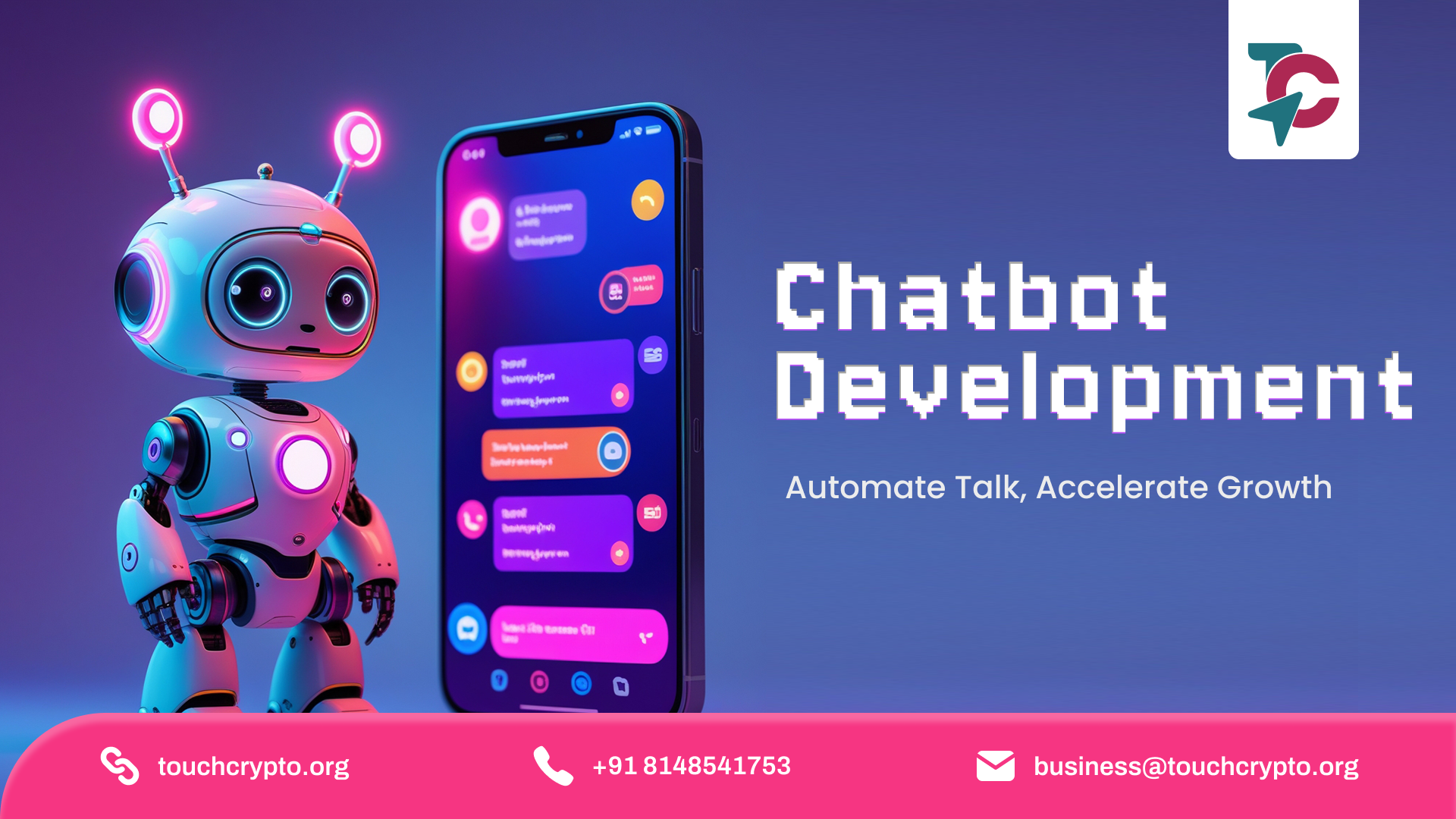
  • Still replying to customers manually? You're losing time and opportunities.
    AI chatbots don’t just respond, they understand, guide, and convert 24/7. From handling FAQs to closing leads, they turn conversations into real business growth.
    Smarter support
    Faster responses
    Higher conversions
    Ready to transform your customer experience with intelligent automation?
    Let AI do the talking while you focus on scaling.
    To Know More: https://www.touchcrypto.org/chatbot-development-company
    #AIChatbot #Automation #CustomerExperience #ChatbotDevelopment #BusinessGrowth
    Still replying to customers manually? You're losing time and opportunities. AI chatbots don’t just respond, they understand, guide, and convert 24/7. From handling FAQs to closing leads, they turn conversations into real business growth. Smarter support Faster responses Higher conversions Ready to transform your customer experience with intelligent automation? Let AI do the talking while you focus on scaling. To Know More: https://www.touchcrypto.org/chatbot-development-company #AIChatbot #Automation #CustomerExperience #ChatbotDevelopment #BusinessGrowth
    WWW.TOUCHCRYPTO.ORG
    Chatbot Development Company
    Connect with us to get custom chatbot solutions made for your brand. Improve your business process with our trusted chatbot services built for long-term use.
    0 Commenti 0 condivisioni 14K Views 0 Anteprima
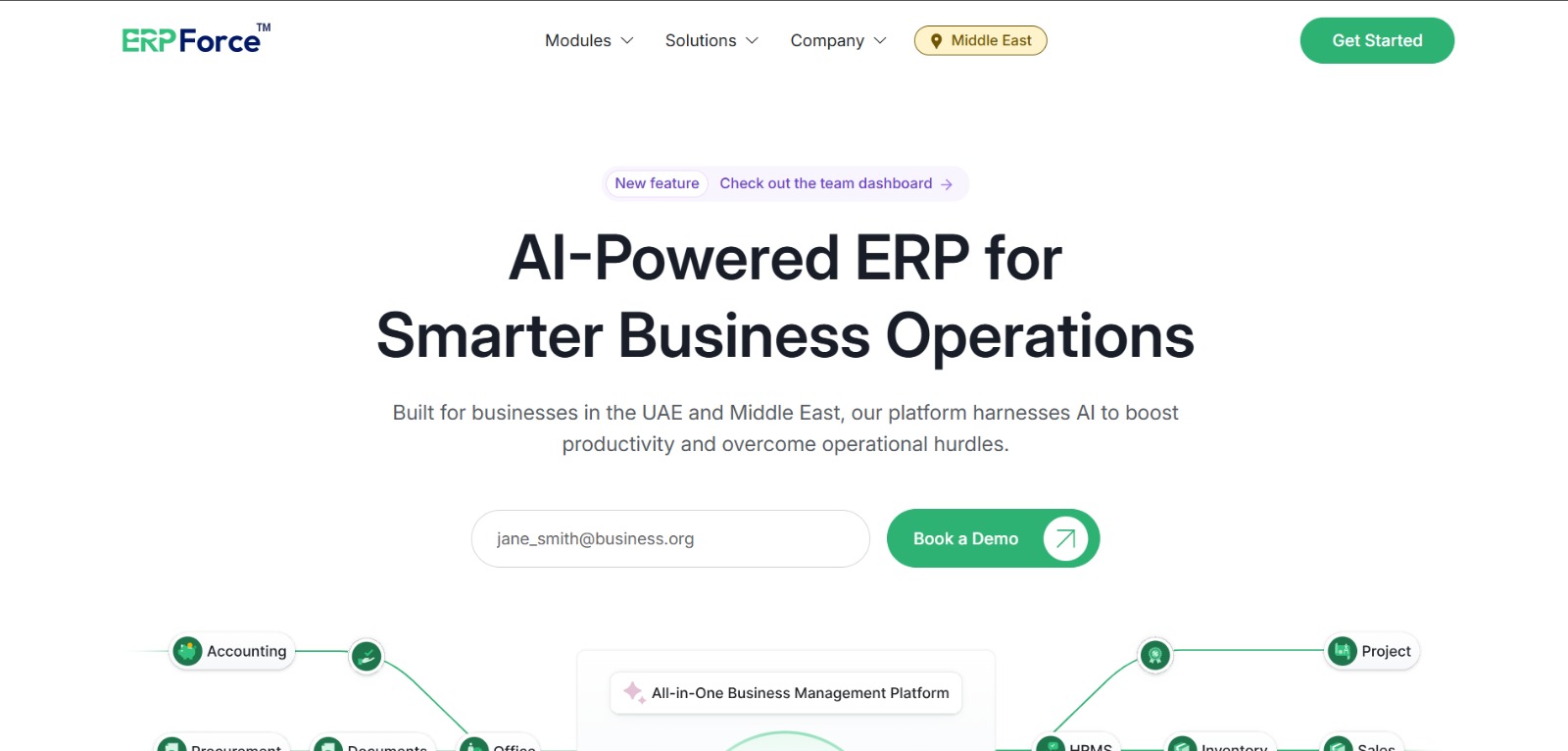
  • Streamline Operations with Rental Management ERP
    Efficiently manage your rental business with Rental Management ERP Software designed to automate inventory tracking, billing, contracts, and This powerful solution centralizes operations, reduces manual errors, and improves real-time visibility of assets and bookings. Visit: https://erpforce.ai/en-ae/blogs/rental-management-erp-software-with-e-invoicing-guide
    Streamline Operations with Rental Management ERP Efficiently manage your rental business with Rental Management ERP Software designed to automate inventory tracking, billing, contracts, and This powerful solution centralizes operations, reduces manual errors, and improves real-time visibility of assets and bookings. Visit: https://erpforce.ai/en-ae/blogs/rental-management-erp-software-with-e-invoicing-guide
    ERPFORCE.AI
    ERPForce: All-in-One ERP Software for Business Management
    Streamline your operations with ERPForce — a powerful, all-in-one ERP platform to manage sales, HR, inventory, finance, CRM, and more in one place.
    0 Commenti 0 condivisioni 5K Views 0 Anteprima
  • Ever feel like your to-do list has a mind of its own, growing longer every time you turn around? Well, guess what? AI is starting to tackle that very problem too, and it's pretty darn exciting. We're seeing some seriously cool developments in AI-powered task management and automation. Think less about juggling endless responsibilities and more about systems that can intelligently sort, prioritize, and even delegate tasks for you. It’s like having a super-efficient (and tireless!) digital assistant, but way smarter.

    This isn't just about nudging you to finish your work faster. The real magic is in how AI can learn your patterns and preferences to truly optimize your workflow. Imagine an AI that understands when you're most productive for certain types of tasks, or when a particular project needs your immediate attention. It can then proactively suggest the best time to tackle it, or even pre-populate the necessary documents or information. This level of personalized efficiency is something we’ve only dreamed of until now, and it’s rapidly becoming a reality.

    Beyond personal productivity, this is also a game-changer for teams. Imagine project management tools that can predict potential bottlenecks, automatically assign resources based on availability and skill, and even flag critical tasks that are at risk of slipping. This frees up human team members to focus on the creative, strategic, and interpersonal aspects of their work, where they truly add value. It's about augmenting our capabilities, not replacing us, and the potential for increased innovation and reduced burnout looks incredibly promising.
    Ever feel like your to-do list has a mind of its own, growing longer every time you turn around? Well, guess what? AI is starting to tackle that very problem too, and it's pretty darn exciting. We're seeing some seriously cool developments in AI-powered task management and automation. Think less about juggling endless responsibilities and more about systems that can intelligently sort, prioritize, and even delegate tasks for you. It’s like having a super-efficient (and tireless!) digital assistant, but way smarter. This isn't just about nudging you to finish your work faster. The real magic is in how AI can learn your patterns and preferences to truly optimize your workflow. Imagine an AI that understands when you're most productive for certain types of tasks, or when a particular project needs your immediate attention. It can then proactively suggest the best time to tackle it, or even pre-populate the necessary documents or information. This level of personalized efficiency is something we’ve only dreamed of until now, and it’s rapidly becoming a reality. Beyond personal productivity, this is also a game-changer for teams. Imagine project management tools that can predict potential bottlenecks, automatically assign resources based on availability and skill, and even flag critical tasks that are at risk of slipping. This frees up human team members to focus on the creative, strategic, and interpersonal aspects of their work, where they truly add value. It's about augmenting our capabilities, not replacing us, and the potential for increased innovation and reduced burnout looks incredibly promising.
    0 Commenti 0 condivisioni 16K Views 0 Anteprima
  • The rapid evolution of Large Language Models (LLMs) has introduced a fascinating new frontier in software development: prompt engineering. No longer is it sufficient to simply write code; developers and users alike must now master the art of crafting precise, effective prompts to elicit desired outputs from these powerful AI systems. This burgeoning discipline is crucial for unlocking the full potential of LLMs across a vast array of applications, from content generation and automated coding to complex data analysis and personalized user experiences.

    At its core, prompt engineering involves understanding how LLMs interpret language and a systematic approach to designing inputs that guide the model toward accurate, relevant, and creative responses. It's an iterative process that often requires experimentation, fine-tuning parameters, and a deep appreciation for the nuances of natural language. For instance, a developer building a chatbot might experiment with different phrasings, include specific examples, or define clear constraints within a prompt to ensure the bot provides helpful and coherent answers rather than generic or nonsensical ones.

    The implications of effective prompt engineering extend beyond mere output optimization. It's becoming a vital skill for ensuring AI safety and mitigating risks. By carefully constructing prompts, engineers can attempt to steer LLMs away from generating harmful content, biased information, or revealing sensitive data. This proactive approach is essential as LLMs become more integrated into our daily lives and professional workflows, demanding a robust understanding of how to control their behavior.

    Furthermore, prompt engineering is democratizing AI access. As LLMs become more accessible, individuals without deep coding expertise can leverage their power through well-designed prompts. This opens up new avenues for innovation and problem-solving, empowering a wider range of users to interact with and benefit from advanced AI capabilities. The ability to articulate a need or a query clearly in natural language is rapidly becoming as important as traditional programming skills for certain tasks.

    As the field matures, we can expect the development of more sophisticated prompt engineering tools and methodologies, potentially including automated prompt generation and validation. The ongoing research into LLM architectures and their emergent behaviors will undoubtedly inform and refine these practices. For software engineers and AI enthusiasts alike, mastering prompt engineering is no longer an optional extra but a fundamental competency for navigating the exciting and transformative landscape of artificial intelligence.
    The rapid evolution of Large Language Models (LLMs) has introduced a fascinating new frontier in software development: prompt engineering. No longer is it sufficient to simply write code; developers and users alike must now master the art of crafting precise, effective prompts to elicit desired outputs from these powerful AI systems. This burgeoning discipline is crucial for unlocking the full potential of LLMs across a vast array of applications, from content generation and automated coding to complex data analysis and personalized user experiences. At its core, prompt engineering involves understanding how LLMs interpret language and a systematic approach to designing inputs that guide the model toward accurate, relevant, and creative responses. It's an iterative process that often requires experimentation, fine-tuning parameters, and a deep appreciation for the nuances of natural language. For instance, a developer building a chatbot might experiment with different phrasings, include specific examples, or define clear constraints within a prompt to ensure the bot provides helpful and coherent answers rather than generic or nonsensical ones. The implications of effective prompt engineering extend beyond mere output optimization. It's becoming a vital skill for ensuring AI safety and mitigating risks. By carefully constructing prompts, engineers can attempt to steer LLMs away from generating harmful content, biased information, or revealing sensitive data. This proactive approach is essential as LLMs become more integrated into our daily lives and professional workflows, demanding a robust understanding of how to control their behavior. Furthermore, prompt engineering is democratizing AI access. As LLMs become more accessible, individuals without deep coding expertise can leverage their power through well-designed prompts. This opens up new avenues for innovation and problem-solving, empowering a wider range of users to interact with and benefit from advanced AI capabilities. The ability to articulate a need or a query clearly in natural language is rapidly becoming as important as traditional programming skills for certain tasks. As the field matures, we can expect the development of more sophisticated prompt engineering tools and methodologies, potentially including automated prompt generation and validation. The ongoing research into LLM architectures and their emergent behaviors will undoubtedly inform and refine these practices. For software engineers and AI enthusiasts alike, mastering prompt engineering is no longer an optional extra but a fundamental competency for navigating the exciting and transformative landscape of artificial intelligence.
    0 Commenti 0 condivisioni 22K Views 0 Anteprima
  • The integration of Large Language Models (LLMs) into the software development lifecycle is no longer a distant futuristic concept; it's a rapidly evolving reality. From generating boilerplate code to assisting in debugging and documentation, LLMs are proving to be powerful copilots for developers. However, this newfound efficiency comes with a critical caveat: security. The very nature of LLMs, trained on vast datasets of existing code, means they can inadvertently introduce vulnerabilities, replicate insecure coding patterns, or even become vectors for new attack types.

    One of the primary concerns is the potential for LLMs to generate code with inherent security flaws. If the training data contains examples of common vulnerabilities, such as SQL injection, cross-site scripting (XSS), or insecure deserialization, the LLM might learn and reproduce these weaknesses in the code it generates. This necessitates a robust oversight mechanism, moving beyond simply accepting generated code at face value. Developers must still exercise their critical judgment, performing rigorous code reviews and employing automated security scanning tools to catch these subtle, yet potentially devastating, errors.

    Furthermore, the reliance on LLMs for code completion and generation can also lead to a dilution of developer expertise in security. Junior developers, in particular, might become overly dependent on these tools, potentially hindering their understanding of fundamental security principles. As LLMs become more sophisticated, they could also be leveraged by malicious actors to craft more sophisticated and targeted attacks. Imagine LLMs being used to automatically identify and exploit common vulnerabilities across a wide range of applications, or to generate highly convincing phishing emails at scale.

    Addressing these challenges requires a multi-pronged approach. Firstly, the development of LLMs themselves needs to incorporate security considerations from the outset. This includes curating more secure training datasets, developing methods to identify and filter out insecure code patterns, and building in mechanisms for vulnerability detection during the generation process. Secondly, the software development tools and workflows need to adapt. IDEs could feature integrated LLM security checks, providing real-time feedback on potentially insecure code suggestions.

    Ultimately, the successful integration of LLMs into software engineering hinges on a partnership between human intelligence and artificial intelligence. LLMs are powerful accelerators, but they are not replacements for human diligence, critical thinking, and a deep understanding of security best practices. By acknowledging the security implications and proactively developing robust safeguards, we can harness the transformative potential of LLMs while ensuring the integrity and security of the software we build. The future of secure software development will likely involve intelligent tools assisting human developers, but the human element will remain the ultimate guardian of security.

    The integration of Large Language Models (LLMs) into the software development lifecycle is no longer a distant futuristic concept; it's a rapidly evolving reality. From generating boilerplate code to assisting in debugging and documentation, LLMs are proving to be powerful copilots for developers. However, this newfound efficiency comes with a critical caveat: security. The very nature of LLMs, trained on vast datasets of existing code, means they can inadvertently introduce vulnerabilities, replicate insecure coding patterns, or even become vectors for new attack types. One of the primary concerns is the potential for LLMs to generate code with inherent security flaws. If the training data contains examples of common vulnerabilities, such as SQL injection, cross-site scripting (XSS), or insecure deserialization, the LLM might learn and reproduce these weaknesses in the code it generates. This necessitates a robust oversight mechanism, moving beyond simply accepting generated code at face value. Developers must still exercise their critical judgment, performing rigorous code reviews and employing automated security scanning tools to catch these subtle, yet potentially devastating, errors. Furthermore, the reliance on LLMs for code completion and generation can also lead to a dilution of developer expertise in security. Junior developers, in particular, might become overly dependent on these tools, potentially hindering their understanding of fundamental security principles. As LLMs become more sophisticated, they could also be leveraged by malicious actors to craft more sophisticated and targeted attacks. Imagine LLMs being used to automatically identify and exploit common vulnerabilities across a wide range of applications, or to generate highly convincing phishing emails at scale. Addressing these challenges requires a multi-pronged approach. Firstly, the development of LLMs themselves needs to incorporate security considerations from the outset. This includes curating more secure training datasets, developing methods to identify and filter out insecure code patterns, and building in mechanisms for vulnerability detection during the generation process. Secondly, the software development tools and workflows need to adapt. IDEs could feature integrated LLM security checks, providing real-time feedback on potentially insecure code suggestions. Ultimately, the successful integration of LLMs into software engineering hinges on a partnership between human intelligence and artificial intelligence. LLMs are powerful accelerators, but they are not replacements for human diligence, critical thinking, and a deep understanding of security best practices. By acknowledging the security implications and proactively developing robust safeguards, we can harness the transformative potential of LLMs while ensuring the integrity and security of the software we build. The future of secure software development will likely involve intelligent tools assisting human developers, but the human element will remain the ultimate guardian of security.
    0 Commenti 0 condivisioni 14K Views 0 Anteprima
  • The generative AI surge, particularly with Large Language Models (LLMs), has undeniably reshaped the software engineering landscape. Beyond the initial excitement of code completion and text generation, a deeper transformation is underway, focusing on how we architect, develop, and deploy applications. This isn't just about faster coding; it's about fundamentally rethinking software lifecycles and embracing AI as a core engineering partner.

    One of the most impactful shifts is the rise of "AI-assisted development." Tools that were once novelties are now integral to many developer workflows. Think of AI suggesting test cases, identifying potential bugs before they are even written, or even auto-generating boilerplate code based on natural language descriptions. This frees up engineers to focus on more complex problem-solving, architectural design, and the nuances that still require human ingenuity. The emphasis is shifting from rote coding to intelligent problem decomposition and validation.

    Furthermore, the integration of LLMs into product development itself is accelerating. Applications are no longer just about structured data; they can now understand and respond to unstructured user input with unprecedented fluency. This opens doors for more intuitive user interfaces, sophisticated chatbots that can handle complex queries, and personalized content generation at scale. However, this also introduces new challenges in terms of managing context, ensuring factual accuracy, and mitigating biases inherent in the training data.

    The operational side of software engineering is also being revolutionized. AI is proving invaluable in areas like AIOps (Artificial Intelligence for IT Operations), where it can predict infrastructure failures, automate incident response, and optimize resource allocation. This proactive approach to system management promises greater reliability and efficiency, reducing downtime and manual intervention. As systems become more complex, AI's ability to sift through vast amounts of telemetry data and identify root causes becomes indispensable.

    Looking ahead, the fusion of AI and software engineering will likely lead to even more profound changes. We can anticipate the development of self-healing systems, applications that can dynamically adapt their behavior based on real-time user needs, and entirely new paradigms of human-computer interaction. While the ethical considerations and security implications of pervasive AI integration will remain critical, the trajectory is clear: AI is not just a tool for engineers; it is becoming a foundational element of modern software itself.
    The generative AI surge, particularly with Large Language Models (LLMs), has undeniably reshaped the software engineering landscape. Beyond the initial excitement of code completion and text generation, a deeper transformation is underway, focusing on how we architect, develop, and deploy applications. This isn't just about faster coding; it's about fundamentally rethinking software lifecycles and embracing AI as a core engineering partner. One of the most impactful shifts is the rise of "AI-assisted development." Tools that were once novelties are now integral to many developer workflows. Think of AI suggesting test cases, identifying potential bugs before they are even written, or even auto-generating boilerplate code based on natural language descriptions. This frees up engineers to focus on more complex problem-solving, architectural design, and the nuances that still require human ingenuity. The emphasis is shifting from rote coding to intelligent problem decomposition and validation. Furthermore, the integration of LLMs into product development itself is accelerating. Applications are no longer just about structured data; they can now understand and respond to unstructured user input with unprecedented fluency. This opens doors for more intuitive user interfaces, sophisticated chatbots that can handle complex queries, and personalized content generation at scale. However, this also introduces new challenges in terms of managing context, ensuring factual accuracy, and mitigating biases inherent in the training data. The operational side of software engineering is also being revolutionized. AI is proving invaluable in areas like AIOps (Artificial Intelligence for IT Operations), where it can predict infrastructure failures, automate incident response, and optimize resource allocation. This proactive approach to system management promises greater reliability and efficiency, reducing downtime and manual intervention. As systems become more complex, AI's ability to sift through vast amounts of telemetry data and identify root causes becomes indispensable. Looking ahead, the fusion of AI and software engineering will likely lead to even more profound changes. We can anticipate the development of self-healing systems, applications that can dynamically adapt their behavior based on real-time user needs, and entirely new paradigms of human-computer interaction. While the ethical considerations and security implications of pervasive AI integration will remain critical, the trajectory is clear: AI is not just a tool for engineers; it is becoming a foundational element of modern software itself.
    0 Commenti 0 condivisioni 9K Views 0 Anteprima
Pagine in Evidenza
Pubblicità