• Investment Insights: North American Sodium Benzoate Market Outlook 2028

    Get Full Report: https://www.businessmarketinsights.com/reports/north-america-sodium-benzoate-market

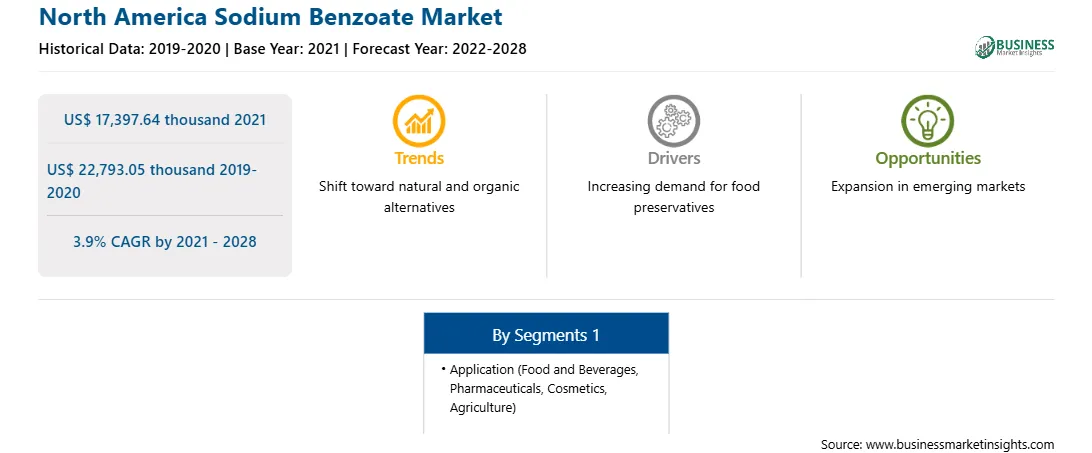
    The sodium benzoate market in North America is expected to grow from US$ 17,397.64 thousand in 2021 to US$ 22,793.05 thousand by 2028; it is estimated to register a CAGR of 3.9% from 2021 to 2028.

    Get a sample PDF of the report – https://www.businessmarketinsights.com/sample/BMIRE00025633?utm_source=Blog&utm_medium=10640

    Sodium benzoate is the sodium salt of benzoic acid. It is widely used as a food preservative and a pickling agent in the food & beverages industry. The rising demand for sodium benzoate in this industry is the major factor driving the growth of the North America sodium benzoate market. It is generally recognized as safe by the Food and Drug Administration (FDA) and allows up to a 0.1% concentration by weight when used in food products. Sodium benzoate is used in acidic foods such as salad dressings, carbonated drinks, pickles, jams and fruit juices, condiments, and frozen yogurt toppings to prevent spoilage caused by harmful microorganisms such as harmful bacteria, yeasts, and molds.

    #SodiumBenzoate #Preservatives #FoodAndBeverage #PharmaExcipients #CosmeticsPreservatives #AgriculturalAdditives #FoodSafety #PreservativeMarket #NorthAmericaChemicals #MarketForecast #ChemicalPreservatives #FoodPreservativeTrends #IngredientInnovation #CleanLabelChallenges #F&BIngredients #CosmeticFormulation #PharmaPreservatives #SupplyChainChemicals #CAGRForecast #2028Outlook
    Investment Insights: North American Sodium Benzoate Market Outlook 2028 Get Full Report: https://www.businessmarketinsights.com/reports/north-america-sodium-benzoate-market The sodium benzoate market in North America is expected to grow from US$ 17,397.64 thousand in 2021 to US$ 22,793.05 thousand by 2028; it is estimated to register a CAGR of 3.9% from 2021 to 2028. Get a sample PDF of the report – https://www.businessmarketinsights.com/sample/BMIRE00025633?utm_source=Blog&utm_medium=10640 Sodium benzoate is the sodium salt of benzoic acid. It is widely used as a food preservative and a pickling agent in the food & beverages industry. The rising demand for sodium benzoate in this industry is the major factor driving the growth of the North America sodium benzoate market. It is generally recognized as safe by the Food and Drug Administration (FDA) and allows up to a 0.1% concentration by weight when used in food products. Sodium benzoate is used in acidic foods such as salad dressings, carbonated drinks, pickles, jams and fruit juices, condiments, and frozen yogurt toppings to prevent spoilage caused by harmful microorganisms such as harmful bacteria, yeasts, and molds. #SodiumBenzoate #Preservatives #FoodAndBeverage #PharmaExcipients #CosmeticsPreservatives #AgriculturalAdditives #FoodSafety #PreservativeMarket #NorthAmericaChemicals #MarketForecast #ChemicalPreservatives #FoodPreservativeTrends #IngredientInnovation #CleanLabelChallenges #F&BIngredients #CosmeticFormulation #PharmaPreservatives #SupplyChainChemicals #CAGRForecast #2028Outlook
    WWW.BUSINESSMARKETINSIGHTS.COM
    Sodium Benzoate Market in North America report 2028 | Size, Share, Growth by Business Market Insights
    North America Sodium Benzoate Market was valued at US$ 17,397.64 thousand in 2021 and is projected to reach US$ 22,793.05 Thousand by 2028 with a CAGR of 3.9% from 2021 to 2028 segmented into Application.
    0 Kommentare 0 Anteile 12KB Ansichten 0 Vorschau
  • Tomato Ketchup Market: A Technology Analysis of the Key Products and Their Applications

    Tomato Ketchup Market Size was estimated at 21.70 (USD Billion) in 2024. The Tomato Ketchup Industry is expected to grow from 22.21(USD Billion) in 2025 to 27.33 (USD Billion) by 2034. The Tomato Ketchup Market CAGR (growth rate) is expected to be around 2.3% during the forecast period (2025-2034).

    Tomato ketchup has long been a staple in households, restaurants, and fast-food outlets worldwide, serving as a versatile condiment that enhances the taste of various dishes. The global tomato ketchup market continues to grow due to rising consumer demand, innovations in packaging, and shifts in consumer preferences towards healthier and organic alternatives. The market is segmented based on packaging type, application, organic vs. conventional production, flavor variations, distribution channels, and regional influence.

    Industry Developments

    The tomato ketchup market has witnessed significant industry developments in recent years. Manufacturers are focusing on introducing organic and low-sugar options to cater to health-conscious consumers. Many brands have also been developing innovative flavors, such as spicy, garlic-infused, and sweet variants, to attract diverse consumer preferences. Sustainable packaging has become a key focus area, with brands shifting to recyclable and biodegradable materials to reduce their environmental footprint. Additionally, digital transformation has reshaped distribution strategies, with online retailers offering direct-to-consumer sales and subscription-based services. Private-label brands are also gaining traction, as supermarkets and hypermarkets introduce their own ketchup lines at competitive prices.

    Key Players are:

    Birds Eye Foods Inc ,The J.M. Smucker Company ,Del Monte ,Conagra Brands ,Asda Stores Limited ,Premier Foods ,Gebr. van den Bergh ,Givaudan S. A. ,Premier Foods plc ,C.F. Mueller Company ,Heinz Kraft ,Chobani LLC ,Kraft Heinz Company ,Unilever ,Ken's Foods, Inc

    Market Segmentation

    By Packaging Type

    Tomato ketchup is available in various packaging types, including bottles, sachets, tubes, and cans, catering to different consumer needs. Bottles, particularly squeezable plastic bottles, dominate the market due to their convenience and ease of use. Sachets are widely used in fast-food outlets and restaurants for portion control and takeaway services. Tubes have gained popularity for their portability, while cans are primarily used in bulk commercial applications such as food processing industries.

    By Application

    The market is driven by diverse applications, including fast-food outlets, restaurants, households, and commercial food processing. Fast-food outlets and quick-service restaurants (QSRs) are significant contributors to market growth, as ketchup is an essential accompaniment to burgers, fries, and sandwiches. Households continue to drive steady demand, especially in regions where ketchup is a common pantry staple. The commercial food processing sector uses ketchup as an ingredient in sauces, marinades, and ready-to-eat meals, further expanding its market reach.

    By Organic vs. Conventional

    The organic ketchup segment is growing rapidly as consumers become more aware of artificial additives, preservatives, and high sugar content in conventional products. Organic ketchup, made from organically grown tomatoes and natural sweeteners, appeals to health-conscious consumers and those preferring clean-label products. Conventional ketchup remains dominant due to its affordability and widespread availability, but the organic segment is expected to gain a larger share in the coming years as demand for healthier food options rises.

    By Flavor

    While original tomato ketchup remains the most popular variant, the market has expanded to include different flavors such as spicy, sweet, garlic, and other customized blends. Spicy ketchup has seen increasing demand due to rising consumer preference for bold and tangy flavors. Sweet variants, often made with honey or natural sweeteners, appeal to those looking for milder options. Garlic-infused ketchup has gained popularity in gourmet cooking and specialty food markets, while brands continue to experiment with unique flavor profiles to differentiate their products.

    By Distribution Channel

    Supermarkets and hypermarkets serve as major distribution channels for tomato ketchup, offering consumers a wide variety of brands and packaging options. Convenience stores play a crucial role in impulse purchases and small-sized packaging sales. Online retail has emerged as a fast-growing segment, with e-commerce platforms providing easy access to different ketchup brands, discounts, and subscription-based services. Specialty stores cater to niche markets, including organic and gourmet ketchup, providing premium-quality options for selective consumers.

    Market Drivers and Challenges

    Market Drivers

    The increasing demand for fast food and processed food products significantly drives the tomato ketchup market. With the expansion of global fast-food chains and QSRs, the consumption of ketchup as a complementary product has risen. Changing consumer lifestyles, particularly in urban areas, have led to greater reliance on ready-to-eat and convenience foods, further fueling market growth.

    Health-conscious consumers are pushing manufacturers to develop healthier ketchup variants, such as organic, sugar-free, and low-sodium options. Additionally, increasing disposable incomes, particularly in emerging economies, have allowed consumers to explore premium and gourmet ketchup brands. Innovation in packaging, including eco-friendly and portion-controlled options, has also contributed to market expansion by improving convenience and sustainability.

    Market Challenges

    Despite growth opportunities, the tomato ketchup market faces certain challenges. One of the key challenges is fluctuating raw material prices, particularly tomatoes, which are subject to seasonal availability and climate changes. The high sugar and sodium content in conventional ketchup has led to increasing scrutiny from health organizations and regulatory bodies, pushing brands to reformulate their products to meet evolving health standards.

    Intense market competition is another challenge, with established brands facing pressure from private-label products and regional manufacturers offering budget-friendly alternatives. Moreover, consumer preferences are shifting towards homemade and fresh condiments, posing a potential threat to packaged ketchup sales. The rising trend of alternative condiments, such as mayonnaise, mustard, and hot sauces, has also created competition, requiring ketchup brands to innovate continuously to retain market share.

    "Browse Report" - Explore the report's contents, sections, and key insights by browsing through its detailed information: https://www.marketresearchfuture.com/reports/tomato-ketchup-market-24781

    Regional Analysis

    North America

    North America is a leading market for tomato ketchup, driven by high fast-food consumption and a well-established retail infrastructure. The U.S. remains a major consumer, with a strong preference for traditional and spicy variants. Organic and clean-label ketchup options have gained traction, reflecting the region’s growing health-conscious population.

    Europe

    Europe has a mature ketchup market, with steady demand from both households and foodservice industries. Countries like the UK, Germany, and France exhibit high per capita ketchup consumption. Sustainability trends have led to the adoption of recyclable packaging and organic ketchup options, aligning with consumer expectations for environmentally friendly products.

    South America

    South America has shown increasing demand for tomato ketchup, particularly in Brazil and Argentina, where Western food trends have influenced consumption patterns. The region’s growing fast-food industry and expansion of international restaurant chains have contributed to market growth.

    Asia Pacific

    The Asia Pacific region is experiencing rapid market expansion, driven by rising urbanization, increasing disposable incomes, and a growing affinity for Western-style fast food. Countries such as China, India, and Japan have become significant consumers of tomato ketchup, with local adaptations catering to regional taste preferences. The e-commerce boom has further enhanced product accessibility.

    Middle East and Africa

    The Middle East and Africa represent emerging markets for tomato ketchup, with increasing demand from the foodservice sector and rising household consumption. The proliferation of international fast-food chains in Gulf countries has spurred ketchup sales, while economic development and urbanization continue to support market growth in African nations.

    Grab More Report:

    Wireless Speakers Market Research Report By Frequency Range (Below 20 Hz, 20 Hz - 100 Hz, 100 Hz - 1 kHz, 1 kHz - 10 kHz, 10 kHz - 20 kHz, Above 20 kHz), By Power Output (Less than 5 Watts, 5 - 10 Watts, 10 - 20 Watts, 20 - 50 Watts, 50 - 100 Watts, Above 100 Watts), By Connectivity Protocol (Bluetooth, Wi-Fi, NFC, AirPlay, Chromecast, Proprietary Protocols), By Smart Features (Voice Assistant Compatibility, Music Streaming Services Integration, Multi-Room Audio, Smart Home Integration, App Control), By Form Factor (Portable, Desktop, Sound

    Doughnut Market Research Report By Dough Type (Raised, Glazed, Old-Fashioned, Cake, Apple Cider), By Filling Type (Jelly, Cream, Fruit, Custard, Chocolate), By Topping Type (Sprinkles, Nuts, Fruit, Chocolate Chips, Glaze), By Target Consumer (Individuals, Businesses, Schools, Restaurants) and By Regional (North America, Europe, South America, Asia Pacific, Middle East and Africa) - Forecast to 2032

    About Market Research Future:

    Market Research Future (MRFR) is a world-renowned market research company that offers a wide range of services, complete with accurate and precise analysis about diverse markets, sub-markets and target consumers. Our approach is a combination of extensive information and multiple data sources that help provide an exhaustive comprehension about the latest major developments to the client, in addition to future events and what measures and decisions to take on the basis of the same.

    Our fast-emerging market research firm is armed with an adept research analysts’ team that focuses on gathering useful data and analytics in terms of economic and technological advances. Our proficient analysts conduct industrial visits in a bid to achieve reliable and accurate information from established market participants. One of our foremost objectives is to keep the client well-versed with all the lucrative opportunities as well as challenges surrounding various global markets. We offer step-by-step guidance to our clients, through consulting and strategic services, enabling them to arrive at a practical and effective decision.

    Contact us:

    Market Research Future (part of Wantstats Research and Media Private Limited),

    99 Hudson Street,5Th Floor, New York, New York 10013, United States of America

    PH no.: +1 646 845 9312

    Email: [email protected]

    Tomato Ketchup Market: A Technology Analysis of the Key Products and Their Applications Tomato Ketchup Market Size was estimated at 21.70 (USD Billion) in 2024. The Tomato Ketchup Industry is expected to grow from 22.21(USD Billion) in 2025 to 27.33 (USD Billion) by 2034. The Tomato Ketchup Market CAGR (growth rate) is expected to be around 2.3% during the forecast period (2025-2034). Tomato ketchup has long been a staple in households, restaurants, and fast-food outlets worldwide, serving as a versatile condiment that enhances the taste of various dishes. The global tomato ketchup market continues to grow due to rising consumer demand, innovations in packaging, and shifts in consumer preferences towards healthier and organic alternatives. The market is segmented based on packaging type, application, organic vs. conventional production, flavor variations, distribution channels, and regional influence. Industry Developments The tomato ketchup market has witnessed significant industry developments in recent years. Manufacturers are focusing on introducing organic and low-sugar options to cater to health-conscious consumers. Many brands have also been developing innovative flavors, such as spicy, garlic-infused, and sweet variants, to attract diverse consumer preferences. Sustainable packaging has become a key focus area, with brands shifting to recyclable and biodegradable materials to reduce their environmental footprint. Additionally, digital transformation has reshaped distribution strategies, with online retailers offering direct-to-consumer sales and subscription-based services. Private-label brands are also gaining traction, as supermarkets and hypermarkets introduce their own ketchup lines at competitive prices. Key Players are: Birds Eye Foods Inc ,The J.M. Smucker Company ,Del Monte ,Conagra Brands ,Asda Stores Limited ,Premier Foods ,Gebr. van den Bergh ,Givaudan S. A. ,Premier Foods plc ,C.F. Mueller Company ,Heinz Kraft ,Chobani LLC ,Kraft Heinz Company ,Unilever ,Ken's Foods, Inc Market Segmentation By Packaging Type Tomato ketchup is available in various packaging types, including bottles, sachets, tubes, and cans, catering to different consumer needs. Bottles, particularly squeezable plastic bottles, dominate the market due to their convenience and ease of use. Sachets are widely used in fast-food outlets and restaurants for portion control and takeaway services. Tubes have gained popularity for their portability, while cans are primarily used in bulk commercial applications such as food processing industries. By Application The market is driven by diverse applications, including fast-food outlets, restaurants, households, and commercial food processing. Fast-food outlets and quick-service restaurants (QSRs) are significant contributors to market growth, as ketchup is an essential accompaniment to burgers, fries, and sandwiches. Households continue to drive steady demand, especially in regions where ketchup is a common pantry staple. The commercial food processing sector uses ketchup as an ingredient in sauces, marinades, and ready-to-eat meals, further expanding its market reach. By Organic vs. Conventional The organic ketchup segment is growing rapidly as consumers become more aware of artificial additives, preservatives, and high sugar content in conventional products. Organic ketchup, made from organically grown tomatoes and natural sweeteners, appeals to health-conscious consumers and those preferring clean-label products. Conventional ketchup remains dominant due to its affordability and widespread availability, but the organic segment is expected to gain a larger share in the coming years as demand for healthier food options rises. By Flavor While original tomato ketchup remains the most popular variant, the market has expanded to include different flavors such as spicy, sweet, garlic, and other customized blends. Spicy ketchup has seen increasing demand due to rising consumer preference for bold and tangy flavors. Sweet variants, often made with honey or natural sweeteners, appeal to those looking for milder options. Garlic-infused ketchup has gained popularity in gourmet cooking and specialty food markets, while brands continue to experiment with unique flavor profiles to differentiate their products. By Distribution Channel Supermarkets and hypermarkets serve as major distribution channels for tomato ketchup, offering consumers a wide variety of brands and packaging options. Convenience stores play a crucial role in impulse purchases and small-sized packaging sales. Online retail has emerged as a fast-growing segment, with e-commerce platforms providing easy access to different ketchup brands, discounts, and subscription-based services. Specialty stores cater to niche markets, including organic and gourmet ketchup, providing premium-quality options for selective consumers. Market Drivers and Challenges Market Drivers The increasing demand for fast food and processed food products significantly drives the tomato ketchup market. With the expansion of global fast-food chains and QSRs, the consumption of ketchup as a complementary product has risen. Changing consumer lifestyles, particularly in urban areas, have led to greater reliance on ready-to-eat and convenience foods, further fueling market growth. Health-conscious consumers are pushing manufacturers to develop healthier ketchup variants, such as organic, sugar-free, and low-sodium options. Additionally, increasing disposable incomes, particularly in emerging economies, have allowed consumers to explore premium and gourmet ketchup brands. Innovation in packaging, including eco-friendly and portion-controlled options, has also contributed to market expansion by improving convenience and sustainability. Market Challenges Despite growth opportunities, the tomato ketchup market faces certain challenges. One of the key challenges is fluctuating raw material prices, particularly tomatoes, which are subject to seasonal availability and climate changes. The high sugar and sodium content in conventional ketchup has led to increasing scrutiny from health organizations and regulatory bodies, pushing brands to reformulate their products to meet evolving health standards. Intense market competition is another challenge, with established brands facing pressure from private-label products and regional manufacturers offering budget-friendly alternatives. Moreover, consumer preferences are shifting towards homemade and fresh condiments, posing a potential threat to packaged ketchup sales. The rising trend of alternative condiments, such as mayonnaise, mustard, and hot sauces, has also created competition, requiring ketchup brands to innovate continuously to retain market share. "Browse Report" - Explore the report's contents, sections, and key insights by browsing through its detailed information: https://www.marketresearchfuture.com/reports/tomato-ketchup-market-24781 Regional Analysis North America North America is a leading market for tomato ketchup, driven by high fast-food consumption and a well-established retail infrastructure. The U.S. remains a major consumer, with a strong preference for traditional and spicy variants. Organic and clean-label ketchup options have gained traction, reflecting the region’s growing health-conscious population. Europe Europe has a mature ketchup market, with steady demand from both households and foodservice industries. Countries like the UK, Germany, and France exhibit high per capita ketchup consumption. Sustainability trends have led to the adoption of recyclable packaging and organic ketchup options, aligning with consumer expectations for environmentally friendly products. South America South America has shown increasing demand for tomato ketchup, particularly in Brazil and Argentina, where Western food trends have influenced consumption patterns. The region’s growing fast-food industry and expansion of international restaurant chains have contributed to market growth. Asia Pacific The Asia Pacific region is experiencing rapid market expansion, driven by rising urbanization, increasing disposable incomes, and a growing affinity for Western-style fast food. Countries such as China, India, and Japan have become significant consumers of tomato ketchup, with local adaptations catering to regional taste preferences. The e-commerce boom has further enhanced product accessibility. Middle East and Africa The Middle East and Africa represent emerging markets for tomato ketchup, with increasing demand from the foodservice sector and rising household consumption. The proliferation of international fast-food chains in Gulf countries has spurred ketchup sales, while economic development and urbanization continue to support market growth in African nations. Grab More Report: Wireless Speakers Market Research Report By Frequency Range (Below 20 Hz, 20 Hz - 100 Hz, 100 Hz - 1 kHz, 1 kHz - 10 kHz, 10 kHz - 20 kHz, Above 20 kHz), By Power Output (Less than 5 Watts, 5 - 10 Watts, 10 - 20 Watts, 20 - 50 Watts, 50 - 100 Watts, Above 100 Watts), By Connectivity Protocol (Bluetooth, Wi-Fi, NFC, AirPlay, Chromecast, Proprietary Protocols), By Smart Features (Voice Assistant Compatibility, Music Streaming Services Integration, Multi-Room Audio, Smart Home Integration, App Control), By Form Factor (Portable, Desktop, Sound Doughnut Market Research Report By Dough Type (Raised, Glazed, Old-Fashioned, Cake, Apple Cider), By Filling Type (Jelly, Cream, Fruit, Custard, Chocolate), By Topping Type (Sprinkles, Nuts, Fruit, Chocolate Chips, Glaze), By Target Consumer (Individuals, Businesses, Schools, Restaurants) and By Regional (North America, Europe, South America, Asia Pacific, Middle East and Africa) - Forecast to 2032 About Market Research Future: Market Research Future (MRFR) is a world-renowned market research company that offers a wide range of services, complete with accurate and precise analysis about diverse markets, sub-markets and target consumers. Our approach is a combination of extensive information and multiple data sources that help provide an exhaustive comprehension about the latest major developments to the client, in addition to future events and what measures and decisions to take on the basis of the same. Our fast-emerging market research firm is armed with an adept research analysts’ team that focuses on gathering useful data and analytics in terms of economic and technological advances. Our proficient analysts conduct industrial visits in a bid to achieve reliable and accurate information from established market participants. One of our foremost objectives is to keep the client well-versed with all the lucrative opportunities as well as challenges surrounding various global markets. We offer step-by-step guidance to our clients, through consulting and strategic services, enabling them to arrive at a practical and effective decision. Contact us: Market Research Future (part of Wantstats Research and Media Private Limited), 99 Hudson Street,5Th Floor, New York, New York 10013, United States of America PH no.: +1 646 845 9312 Email: [email protected]
    WWW.MARKETRESEARCHFUTURE.COM
    Tomato Ketchup Market Size, Share, Trends, Forecast 2034
    Tomato Ketchup Market Size is Anticipated to Reach at a USD 27.33 Billion 2034 with CAGR 2.3% by 2025-2034, Due to Growing Popularity of Convenience Foods and Fast Casual Dining
    0 Kommentare 0 Anteile 13KB Ansichten 0 Vorschau
  • Gluten Free Pasta Market Research to Grow a CAGR during 2025 to 2034

    The gluten-free pasta market is segmented by product type, form, ingredient, distribution channel, and region. Key market players are introducing a variety of products to cater to the rising demand for gluten-free alternatives. As of now, the gluten-free pasta market has evolved to offer products such as rice-based, corn-based, lentil-based, quinoa-based, and starch-based gluten-free pasta, appealing to a broad consumer base. Additionally, these pasta varieties come in different forms, including dry and fresh options, to suit various culinary preferences.

    Gluten-Free Pasta Market was valued at approximately USD 2.74 billion in 2024 and is projected to experience significant growth. It is anticipated to expand from USD 2.94 billion in 2025 to USD 5.56 billion by 2034, reflecting a compound annual growth rate (CAGR) of around 7.3% during the forecast period (2025–2034).

    The global gluten-free pasta market has been experiencing significant growth over the past few years, driven by an increasing demand for healthier food options, greater awareness of gluten intolerance, and the rise of dietary preferences such as veganism, keto, and paleo. As more people adopt gluten-free diets due to health concerns such as celiac disease or gluten sensitivity, pasta brands have adapted by offering a variety of innovative gluten-free pasta products. These innovations cater to diverse dietary needs, and the market continues to thrive. The global gluten-free pasta market is poised for substantial growth in the coming years, with a broadening product range catering to both conventional and organic diets.

    Key Players:

    NewFields ,Hero Group ,Ancient Harvest ,The Hain Celestial Group ,Andean Naturals ,Ronzoni Pasta ,Dr. Oetker ,Barilla Group ,3B Group ,Pastificio Felicetti ,Roland Foods ,Fabbri Group ,General Mills ,Afia ,Schär

    "Request Free Sample" - Obtain a complimentary sample of our report to assess its quality and relevance to your requirements: https://www.marketresearchfuture.com/sample_request/23028

    Market Segmentation

    By Type The gluten-free pasta market is segmented into organic and conventional gluten-free pasta. Organic gluten-free pasta, which is made from organic ingredients without synthetic chemicals or preservatives, is gaining traction among health-conscious consumers. Organic food products are perceived as cleaner and more nutritious, which is influencing their growing market share. On the other hand, conventional gluten-free pasta remains the dominant segment due to its affordability and wider availability, especially among mass-market consumers.
    By Form Gluten-free pasta is available in two primary forms: dry and fresh. The dry segment holds the largest share of the market as dry gluten-free pasta has a longer shelf life and is convenient for storage and transportation. It is also easier to market and distribute across various regions, making it a staple in grocery stores and supermarkets. Fresh gluten-free pasta, however, is gaining momentum due to its superior texture and taste, attracting customers seeking premium pasta options.
    By Ingredient The ingredients used to create gluten-free pasta play a key role in shaping consumer preferences. Major ingredients include rice, corn, starch, lentils, and quinoa. Rice-based gluten-free pasta, which is the most common variant, offers a neutral flavor and is ideal for a wide range of dishes. Corn-based gluten-free pasta, which tends to have a firmer texture, is popular among consumers with dietary restrictions and preferences. Starch-based pasta, often derived from tapioca or potato, provides a smooth and elastic texture, while lentil-based and quinoa-based gluten-free pasta offer higher protein content and a more robust flavor profile. These diverse ingredient options cater to different nutritional needs, from those seeking higher protein intake to those following plant-based diets.
    By Distribution Channel The distribution channels for gluten-free pasta include supermarkets and hypermarkets, convenience stores, health food stores, online retailers, and other specialty stores. Supermarkets and hypermarkets remain the leading distribution channel due to their extensive reach and large customer base. Convenience stores and health food stores are also gaining popularity as more consumers look for gluten-free products in specialized retail outlets. The online retail segment has seen explosive growth, fueled by the increasing trend of e-commerce and the growing popularity of online grocery shopping. Direct-to-consumer platforms allow brands to reach a broader audience, providing a convenient shopping experience.
    By Region The gluten-free pasta market has a global presence, with the largest market shares in regions such as North America and Europe. North America is the largest market due to the high prevalence of gluten sensitivity and celiac disease, along with increasing awareness of health and wellness trends. The European market is experiencing steady growth, driven by consumer preferences for organic and plant-based diets. Asia Pacific is emerging as a key growth region due to changing dietary habits and a growing demand for gluten-free products. Latin America and the Middle East are also witnessing growing interest in gluten-free pasta as consumer preferences shift towards healthier alternatives.
    "Proceed to Buy" - Move forward with your purchase and gain instant access to the complete report: https://www.marketresearchfuture.com/checkout?currency=one_user-USD&report_id=23028

    Industry Development

    The gluten-free pasta market is undergoing continuous innovation. Manufacturers are experimenting with new ingredients and production techniques to improve the taste, texture, and nutritional content of gluten-free pasta. Additionally, pasta brands are expanding their product lines to include gluten-free pasta that caters to various dietary preferences, including vegan, paleo, and keto. The development of pasta with added functional benefits such as higher protein content, fewer calories, and enhanced digestibility is also becoming a major trend in the market.

    Moreover, with the increasing number of consumers adopting plant-based diets, gluten-free pasta made from legumes and other plant-based ingredients is gaining in popularity. Lentil-based and quinoa-based pasta are key examples of this trend, offering high protein content and additional health benefits, which are appealing to those seeking plant-based alternatives.

    Companies are also investing in sustainable production practices to meet the growing demand for organic and environmentally-friendly products. As awareness of environmental issues rises, consumers are increasingly opting for products that are not only gluten-free but also ethically sourced and produced.

    Market Drivers

    The growth of the gluten-free pasta market can be attributed to several key drivers:

    Rising Incidence of Gluten Sensitivity and Celiac Disease As the global awareness of gluten sensitivity and celiac disease increases, more individuals are seeking gluten-free alternatives to traditional pasta. The number of diagnoses and awareness campaigns has significantly increased, leading to a surge in demand for gluten-free food products, including pasta.
    Health and Wellness Trends Consumers are becoming more health-conscious and are increasingly focusing on food products that offer nutritional benefits. Gluten-free pasta, often perceived as healthier and easier to digest, is favored by individuals looking to avoid gluten for health reasons, weight management, or overall wellness.
    Growing Adoption of Plant-Based Diets The popularity of plant-based diets, including vegan, paleo, and keto lifestyles, is contributing to the rise of gluten-free pasta. As people seek plant-based alternatives, gluten-free pasta made from ingredients such as lentils, quinoa, and corn is becoming more prevalent.
    Product Innovation Continuous innovation in gluten-free pasta production is a major driver of market growth. Brands are introducing new pasta varieties with improved textures and nutritional profiles, such as higher protein content or lower carbohydrate options, catering to diverse dietary needs.
    Increased Availability through E-Commerce The growth of online shopping has made gluten-free pasta more accessible to consumers, particularly those in regions where gluten-free products were previously difficult to find. E-commerce platforms and online grocery services are helping consumers access a broader range of gluten-free pasta options from the comfort of their homes.
    "Browse Report" - Explore the report's contents, sections, and key insights by browsing through its detailed information: https://www.marketresearchfuture.com/reports/gluten-free-pasta-market-23028

    Market Challenges

    Despite the market's rapid growth, several challenges continue to impact the gluten-free pasta industry:

    Higher Production Costs Gluten-free pasta tends to be more expensive to produce compared to conventional pasta due to the cost of gluten-free ingredients and specialized production processes. This results in higher retail prices, which may deter some price-sensitive consumers from opting for gluten-free alternatives.
    Taste and Texture Concerns One of the key challenges facing the gluten-free pasta market is the challenge of replicating the texture and taste of traditional pasta. While innovation has improved the sensory qualities of gluten-free pasta, some consumers still find the texture or taste of gluten-free options to be inferior to that of conventional pasta.
    Supply Chain and Ingredient Sourcing Issues The production of gluten-free pasta often relies on specialty ingredients, such as rice, corn, and quinoa. Fluctuations in the availability and price of these ingredients, due to factors such as crop yields or trade disruptions, can impact the production and pricing of gluten-free pasta.
    Competition from Other Gluten-Free Products The gluten-free market as a whole is highly competitive, with a wide range of products available beyond pasta, such as gluten-free bread, crackers, and snacks. This competition can divert consumer attention and spending away from gluten-free pasta options.

    Discover more Research Reports on Food, Beverages & Nutrition Industry, by Market Research Future:

    alginate casing Market : https://www.marketresearchfuture.com/reports/alginate-casing-market-26731

    specialty yeast Market : https://www.marketresearchfuture.com/reports/specialty-yeast-market-26863

    sports energy drinks 266 Market : https://www.marketresearchfuture.com/reports/sports-energy-drinks-266-market-26832

    threat hunting Market : https://www.marketresearchfuture.com/reports/threat-hunting-market-26899
    Gluten Free Pasta Market Research to Grow a CAGR during 2025 to 2034 The gluten-free pasta market is segmented by product type, form, ingredient, distribution channel, and region. Key market players are introducing a variety of products to cater to the rising demand for gluten-free alternatives. As of now, the gluten-free pasta market has evolved to offer products such as rice-based, corn-based, lentil-based, quinoa-based, and starch-based gluten-free pasta, appealing to a broad consumer base. Additionally, these pasta varieties come in different forms, including dry and fresh options, to suit various culinary preferences. Gluten-Free Pasta Market was valued at approximately USD 2.74 billion in 2024 and is projected to experience significant growth. It is anticipated to expand from USD 2.94 billion in 2025 to USD 5.56 billion by 2034, reflecting a compound annual growth rate (CAGR) of around 7.3% during the forecast period (2025–2034). The global gluten-free pasta market has been experiencing significant growth over the past few years, driven by an increasing demand for healthier food options, greater awareness of gluten intolerance, and the rise of dietary preferences such as veganism, keto, and paleo. As more people adopt gluten-free diets due to health concerns such as celiac disease or gluten sensitivity, pasta brands have adapted by offering a variety of innovative gluten-free pasta products. These innovations cater to diverse dietary needs, and the market continues to thrive. The global gluten-free pasta market is poised for substantial growth in the coming years, with a broadening product range catering to both conventional and organic diets. Key Players: NewFields ,Hero Group ,Ancient Harvest ,The Hain Celestial Group ,Andean Naturals ,Ronzoni Pasta ,Dr. Oetker ,Barilla Group ,3B Group ,Pastificio Felicetti ,Roland Foods ,Fabbri Group ,General Mills ,Afia ,Schär "Request Free Sample" - Obtain a complimentary sample of our report to assess its quality and relevance to your requirements: https://www.marketresearchfuture.com/sample_request/23028 Market Segmentation By Type The gluten-free pasta market is segmented into organic and conventional gluten-free pasta. Organic gluten-free pasta, which is made from organic ingredients without synthetic chemicals or preservatives, is gaining traction among health-conscious consumers. Organic food products are perceived as cleaner and more nutritious, which is influencing their growing market share. On the other hand, conventional gluten-free pasta remains the dominant segment due to its affordability and wider availability, especially among mass-market consumers. By Form Gluten-free pasta is available in two primary forms: dry and fresh. The dry segment holds the largest share of the market as dry gluten-free pasta has a longer shelf life and is convenient for storage and transportation. It is also easier to market and distribute across various regions, making it a staple in grocery stores and supermarkets. Fresh gluten-free pasta, however, is gaining momentum due to its superior texture and taste, attracting customers seeking premium pasta options. By Ingredient The ingredients used to create gluten-free pasta play a key role in shaping consumer preferences. Major ingredients include rice, corn, starch, lentils, and quinoa. Rice-based gluten-free pasta, which is the most common variant, offers a neutral flavor and is ideal for a wide range of dishes. Corn-based gluten-free pasta, which tends to have a firmer texture, is popular among consumers with dietary restrictions and preferences. Starch-based pasta, often derived from tapioca or potato, provides a smooth and elastic texture, while lentil-based and quinoa-based gluten-free pasta offer higher protein content and a more robust flavor profile. These diverse ingredient options cater to different nutritional needs, from those seeking higher protein intake to those following plant-based diets. By Distribution Channel The distribution channels for gluten-free pasta include supermarkets and hypermarkets, convenience stores, health food stores, online retailers, and other specialty stores. Supermarkets and hypermarkets remain the leading distribution channel due to their extensive reach and large customer base. Convenience stores and health food stores are also gaining popularity as more consumers look for gluten-free products in specialized retail outlets. The online retail segment has seen explosive growth, fueled by the increasing trend of e-commerce and the growing popularity of online grocery shopping. Direct-to-consumer platforms allow brands to reach a broader audience, providing a convenient shopping experience. By Region The gluten-free pasta market has a global presence, with the largest market shares in regions such as North America and Europe. North America is the largest market due to the high prevalence of gluten sensitivity and celiac disease, along with increasing awareness of health and wellness trends. The European market is experiencing steady growth, driven by consumer preferences for organic and plant-based diets. Asia Pacific is emerging as a key growth region due to changing dietary habits and a growing demand for gluten-free products. Latin America and the Middle East are also witnessing growing interest in gluten-free pasta as consumer preferences shift towards healthier alternatives. "Proceed to Buy" - Move forward with your purchase and gain instant access to the complete report: https://www.marketresearchfuture.com/checkout?currency=one_user-USD&report_id=23028 Industry Development The gluten-free pasta market is undergoing continuous innovation. Manufacturers are experimenting with new ingredients and production techniques to improve the taste, texture, and nutritional content of gluten-free pasta. Additionally, pasta brands are expanding their product lines to include gluten-free pasta that caters to various dietary preferences, including vegan, paleo, and keto. The development of pasta with added functional benefits such as higher protein content, fewer calories, and enhanced digestibility is also becoming a major trend in the market. Moreover, with the increasing number of consumers adopting plant-based diets, gluten-free pasta made from legumes and other plant-based ingredients is gaining in popularity. Lentil-based and quinoa-based pasta are key examples of this trend, offering high protein content and additional health benefits, which are appealing to those seeking plant-based alternatives. Companies are also investing in sustainable production practices to meet the growing demand for organic and environmentally-friendly products. As awareness of environmental issues rises, consumers are increasingly opting for products that are not only gluten-free but also ethically sourced and produced. Market Drivers The growth of the gluten-free pasta market can be attributed to several key drivers: Rising Incidence of Gluten Sensitivity and Celiac Disease As the global awareness of gluten sensitivity and celiac disease increases, more individuals are seeking gluten-free alternatives to traditional pasta. The number of diagnoses and awareness campaigns has significantly increased, leading to a surge in demand for gluten-free food products, including pasta. Health and Wellness Trends Consumers are becoming more health-conscious and are increasingly focusing on food products that offer nutritional benefits. Gluten-free pasta, often perceived as healthier and easier to digest, is favored by individuals looking to avoid gluten for health reasons, weight management, or overall wellness. Growing Adoption of Plant-Based Diets The popularity of plant-based diets, including vegan, paleo, and keto lifestyles, is contributing to the rise of gluten-free pasta. As people seek plant-based alternatives, gluten-free pasta made from ingredients such as lentils, quinoa, and corn is becoming more prevalent. Product Innovation Continuous innovation in gluten-free pasta production is a major driver of market growth. Brands are introducing new pasta varieties with improved textures and nutritional profiles, such as higher protein content or lower carbohydrate options, catering to diverse dietary needs. Increased Availability through E-Commerce The growth of online shopping has made gluten-free pasta more accessible to consumers, particularly those in regions where gluten-free products were previously difficult to find. E-commerce platforms and online grocery services are helping consumers access a broader range of gluten-free pasta options from the comfort of their homes. "Browse Report" - Explore the report's contents, sections, and key insights by browsing through its detailed information: https://www.marketresearchfuture.com/reports/gluten-free-pasta-market-23028 Market Challenges Despite the market's rapid growth, several challenges continue to impact the gluten-free pasta industry: Higher Production Costs Gluten-free pasta tends to be more expensive to produce compared to conventional pasta due to the cost of gluten-free ingredients and specialized production processes. This results in higher retail prices, which may deter some price-sensitive consumers from opting for gluten-free alternatives. Taste and Texture Concerns One of the key challenges facing the gluten-free pasta market is the challenge of replicating the texture and taste of traditional pasta. While innovation has improved the sensory qualities of gluten-free pasta, some consumers still find the texture or taste of gluten-free options to be inferior to that of conventional pasta. Supply Chain and Ingredient Sourcing Issues The production of gluten-free pasta often relies on specialty ingredients, such as rice, corn, and quinoa. Fluctuations in the availability and price of these ingredients, due to factors such as crop yields or trade disruptions, can impact the production and pricing of gluten-free pasta. Competition from Other Gluten-Free Products The gluten-free market as a whole is highly competitive, with a wide range of products available beyond pasta, such as gluten-free bread, crackers, and snacks. This competition can divert consumer attention and spending away from gluten-free pasta options. Discover more Research Reports on Food, Beverages & Nutrition Industry, by Market Research Future: alginate casing Market : https://www.marketresearchfuture.com/reports/alginate-casing-market-26731 specialty yeast Market : https://www.marketresearchfuture.com/reports/specialty-yeast-market-26863 sports energy drinks 266 Market : https://www.marketresearchfuture.com/reports/sports-energy-drinks-266-market-26832 threat hunting Market : https://www.marketresearchfuture.com/reports/threat-hunting-market-26899
    WWW.MARKETRESEARCHFUTURE.COM
    Sample Request for Gluten Free Pasta Market Report | Size, Share, Industry 2032
    Sample Request - Gluten Free Pasta Market 5.56 USD Billion -2034 with CAGR 7.3% by 2025-2034, Due to Rising Prevalence of Gluten Intolerance and Celiac Disease.
    0 Kommentare 0 Anteile 6KB Ansichten 0 Vorschau
  • Frozen Fruits and Vegetables Market Insights Research Report 2025-2034

    Frozen Fruits and Vegetables Market was valued at USD 32,099.5 million in 2023 and is expected to grow significantly, reaching USD 55,168.6 million by 2032. This growth reflects a projected compound annual growth rate (CAGR) of 6.2% during the forecast period from 2024 to 2032.

    The global frozen fruits and vegetables market is witnessing remarkable growth, driven by the increasing consumer demand for convenient, nutritious, and longer-lasting food options. The market is segmented based on type (fruits and vegetables), category (organic and conventional), form (whole, sliced, and cubed), distribution channel (supermarkets & hypermarkets, convenience stores, specialty stores, online, and others), and region (North America, Europe, Asia-Pacific, and the Rest of the World). With shifting dietary habits and the growing preference for frozen food products that retain essential nutrients, the market is expected to experience substantial expansion in the coming years.

    Key Players:

    Suyog Food Products (India), Swadhika Foods (India), Royal Foodstuffs (India), China Kunyu Industrial Co., Limited (China), Xiamen Sinofrost Co., Ltd. (China), Ghousia Food Products Pvt. Ltd. (India), Mandar Food Products (India), Tanvi Foods (India) Ltd. (India), Shimla Hills (India), Nature's Touch (Italy), among others.

    "Request Free Sample" - Obtain a complimentary sample of our report to assess its quality and relevance to your requirements: https://www.marketresearchfuture.com/sample_request/728

    Industry Development Driving Market Growth

    Recent industry developments have positioned frozen fruits and vegetables as a viable and nutritious alternative to fresh produce. Advancements in freezing technologies, such as individual quick freezing (IQF) and cryogenic freezing, have significantly improved the preservation of taste, texture, and nutrients. This has led to greater consumer confidence in frozen foods, contributing to the market’s expansion.

    In addition, the rise of organic frozen produce has been notable, as consumers prioritize chemical-free, non-GMO food options. Major players in the industry are responding to this demand by expanding their organic product lines. Furthermore, leading food manufacturers and retailers are collaborating to introduce innovative packaging solutions that enhance convenience and sustainability, such as biodegradable and recyclable packaging.

    The increasing penetration of e-commerce and online grocery platforms has also been a key driver. Online grocery shopping has surged, especially post-pandemic, enabling consumers to access a wide range of frozen fruits and vegetables with doorstep delivery options. This has encouraged market players to expand their online presence, investing in digital marketing strategies and direct-to-consumer sales models.

    Market Drivers Fueling Growth

    Several key factors are driving the expansion of the frozen fruits and vegetables market:

    Changing Lifestyles and Demand for Convenience Foods
    Rapid urbanization and busier lifestyles have led consumers to seek quick and easy meal solutions. Frozen fruits and vegetables offer extended shelf life and reduced preparation time, making them a preferred choice for modern households.
    Nutritional Retention and Health Awareness
    With increasing awareness about health and nutrition, consumers are turning to frozen produce, which retains vitamins and minerals due to advanced freezing methods. Unlike fresh produce, which can lose nutrients over time, frozen fruits and vegetables remain nutrient-dense and accessible year-round.
    Growth in the Organic and Non-GMO Segment
    The surge in demand for organic and clean-label products has boosted the market for organic frozen fruits and vegetables. Health-conscious consumers are willing to pay a premium for organic variants, prompting companies to expand their offerings in this category.
    Expansion of Distribution Channels
    The availability of frozen fruits and vegetables through supermarkets, hypermarkets, and online platforms has widened market reach. The rise of digital grocery shopping and home delivery services has further fueled the convenience-driven demand.
    Rising Popularity of Plant-Based Diets
    The growing adoption of vegan and plant-based diets has increased demand for frozen fruits and vegetables. Consumers seeking healthy alternatives to processed foods are incorporating frozen produce into their meals, contributing to market expansion.
    "Proceed to Buy" - Move forward with your purchase and gain instant access to the complete report: https://www.marketresearchfuture.com/checkout?currency=one_user-USD&report_id=728

    Challenges Hindering Market Growth

    Despite the positive growth trajectory, the frozen fruits and vegetables market faces certain challenges:

    Perception Issues Regarding Freshness
    Some consumers still perceive frozen produce as inferior to fresh produce in terms of taste and quality. Educating consumers about the benefits of frozen fruits and vegetables remains a challenge for industry players.
    Supply Chain and Storage Constraints
    The frozen food supply chain requires efficient cold storage and logistics, which can be costly and energy-intensive. In emerging markets, limited access to adequate refrigeration infrastructure poses a significant hurdle.
    Fluctuating Raw Material Costs
    Seasonal availability and fluctuating prices of raw fruits and vegetables impact the overall cost of frozen products. Weather conditions, supply chain disruptions, and increased production costs can lead to price volatility, affecting profitability.
    Regulatory and Compliance Issues
    Stringent regulations regarding food safety, labeling, and preservatives require manufacturers to comply with evolving standards. Companies must invest in quality control measures to meet regulatory requirements, adding to operational costs.
    "Browse Report" - Explore the report's contents, sections, and key insights by browsing through its detailed information: https://www.marketresearchfuture.com/reports/frozen-fruits-vegetables-market-728

    Market Segmentation and Regional Outlook

    By Type: The market is divided into frozen fruits and frozen vegetables, with vegetables holding a larger share due to their widespread use in meal preparation and processed foods. However, frozen fruits are gaining traction due to their application in smoothies, desserts, and health-conscious diets.

    By Category: The market consists of organic and conventional segments. While conventional frozen produce dominates, the organic segment is witnessing rapid growth due to increasing consumer preference for chemical-free food products.

    By Form: The demand for whole, sliced, and cubed forms varies based on consumer convenience and food service requirements. Pre-cut and cubed frozen fruits and vegetables are preferred in quick-service restaurants (QSRs) and food processing industries.

    By Distribution Channel: Supermarkets and hypermarkets continue to dominate the market due to their widespread availability and in-store promotions. However, online sales are growing rapidly, driven by consumer preference for digital shopping and doorstep delivery services.

    By Region:

    North America holds a significant market share, driven by high consumer preference for frozen foods, well-established supply chains, and increasing demand for organic produce.
    Europe follows closely, with countries like Germany, the UK, and France leading in frozen food consumption. Health trends and sustainable packaging initiatives are shaping market growth in the region.
    Asia-Pacific is expected to witness the fastest growth, fueled by urbanization, rising disposable incomes, and increasing demand for convenience foods in countries like China, India, and Japan.
    Rest of the World includes regions such as Latin America and the Middle East, where market growth is gaining momentum due to increasing supermarket penetration and awareness about frozen food benefits.

    Discover more Research Reports on Food, Beverages & Nutrition Industry, by Market Research Future:

    algae based food additive Market : https://www.marketresearchfuture.com/reports/algae-based-food-additive-market-31696

    basil extract Market : https://www.marketresearchfuture.com/reports/basil-extract-market-31898

    bitterness suppressor and flavor carrier Market : https://www.marketresearchfuture.com/reports/bitterness-suppressor-and-flavor-carrier-market-31949

    black pepper Market : https://www.marketresearchfuture.com/reports/black-pepper-market-31947

    Frozen Fruits and Vegetables Market Insights Research Report 2025-2034 Frozen Fruits and Vegetables Market was valued at USD 32,099.5 million in 2023 and is expected to grow significantly, reaching USD 55,168.6 million by 2032. This growth reflects a projected compound annual growth rate (CAGR) of 6.2% during the forecast period from 2024 to 2032. The global frozen fruits and vegetables market is witnessing remarkable growth, driven by the increasing consumer demand for convenient, nutritious, and longer-lasting food options. The market is segmented based on type (fruits and vegetables), category (organic and conventional), form (whole, sliced, and cubed), distribution channel (supermarkets & hypermarkets, convenience stores, specialty stores, online, and others), and region (North America, Europe, Asia-Pacific, and the Rest of the World). With shifting dietary habits and the growing preference for frozen food products that retain essential nutrients, the market is expected to experience substantial expansion in the coming years. Key Players: Suyog Food Products (India), Swadhika Foods (India), Royal Foodstuffs (India), China Kunyu Industrial Co., Limited (China), Xiamen Sinofrost Co., Ltd. (China), Ghousia Food Products Pvt. Ltd. (India), Mandar Food Products (India), Tanvi Foods (India) Ltd. (India), Shimla Hills (India), Nature's Touch (Italy), among others. "Request Free Sample" - Obtain a complimentary sample of our report to assess its quality and relevance to your requirements: https://www.marketresearchfuture.com/sample_request/728 Industry Development Driving Market Growth Recent industry developments have positioned frozen fruits and vegetables as a viable and nutritious alternative to fresh produce. Advancements in freezing technologies, such as individual quick freezing (IQF) and cryogenic freezing, have significantly improved the preservation of taste, texture, and nutrients. This has led to greater consumer confidence in frozen foods, contributing to the market’s expansion. In addition, the rise of organic frozen produce has been notable, as consumers prioritize chemical-free, non-GMO food options. Major players in the industry are responding to this demand by expanding their organic product lines. Furthermore, leading food manufacturers and retailers are collaborating to introduce innovative packaging solutions that enhance convenience and sustainability, such as biodegradable and recyclable packaging. The increasing penetration of e-commerce and online grocery platforms has also been a key driver. Online grocery shopping has surged, especially post-pandemic, enabling consumers to access a wide range of frozen fruits and vegetables with doorstep delivery options. This has encouraged market players to expand their online presence, investing in digital marketing strategies and direct-to-consumer sales models. Market Drivers Fueling Growth Several key factors are driving the expansion of the frozen fruits and vegetables market: Changing Lifestyles and Demand for Convenience Foods Rapid urbanization and busier lifestyles have led consumers to seek quick and easy meal solutions. Frozen fruits and vegetables offer extended shelf life and reduced preparation time, making them a preferred choice for modern households. Nutritional Retention and Health Awareness With increasing awareness about health and nutrition, consumers are turning to frozen produce, which retains vitamins and minerals due to advanced freezing methods. Unlike fresh produce, which can lose nutrients over time, frozen fruits and vegetables remain nutrient-dense and accessible year-round. Growth in the Organic and Non-GMO Segment The surge in demand for organic and clean-label products has boosted the market for organic frozen fruits and vegetables. Health-conscious consumers are willing to pay a premium for organic variants, prompting companies to expand their offerings in this category. Expansion of Distribution Channels The availability of frozen fruits and vegetables through supermarkets, hypermarkets, and online platforms has widened market reach. The rise of digital grocery shopping and home delivery services has further fueled the convenience-driven demand. Rising Popularity of Plant-Based Diets The growing adoption of vegan and plant-based diets has increased demand for frozen fruits and vegetables. Consumers seeking healthy alternatives to processed foods are incorporating frozen produce into their meals, contributing to market expansion. "Proceed to Buy" - Move forward with your purchase and gain instant access to the complete report: https://www.marketresearchfuture.com/checkout?currency=one_user-USD&report_id=728 Challenges Hindering Market Growth Despite the positive growth trajectory, the frozen fruits and vegetables market faces certain challenges: Perception Issues Regarding Freshness Some consumers still perceive frozen produce as inferior to fresh produce in terms of taste and quality. Educating consumers about the benefits of frozen fruits and vegetables remains a challenge for industry players. Supply Chain and Storage Constraints The frozen food supply chain requires efficient cold storage and logistics, which can be costly and energy-intensive. In emerging markets, limited access to adequate refrigeration infrastructure poses a significant hurdle. Fluctuating Raw Material Costs Seasonal availability and fluctuating prices of raw fruits and vegetables impact the overall cost of frozen products. Weather conditions, supply chain disruptions, and increased production costs can lead to price volatility, affecting profitability. Regulatory and Compliance Issues Stringent regulations regarding food safety, labeling, and preservatives require manufacturers to comply with evolving standards. Companies must invest in quality control measures to meet regulatory requirements, adding to operational costs. "Browse Report" - Explore the report's contents, sections, and key insights by browsing through its detailed information: https://www.marketresearchfuture.com/reports/frozen-fruits-vegetables-market-728 Market Segmentation and Regional Outlook By Type: The market is divided into frozen fruits and frozen vegetables, with vegetables holding a larger share due to their widespread use in meal preparation and processed foods. However, frozen fruits are gaining traction due to their application in smoothies, desserts, and health-conscious diets. By Category: The market consists of organic and conventional segments. While conventional frozen produce dominates, the organic segment is witnessing rapid growth due to increasing consumer preference for chemical-free food products. By Form: The demand for whole, sliced, and cubed forms varies based on consumer convenience and food service requirements. Pre-cut and cubed frozen fruits and vegetables are preferred in quick-service restaurants (QSRs) and food processing industries. By Distribution Channel: Supermarkets and hypermarkets continue to dominate the market due to their widespread availability and in-store promotions. However, online sales are growing rapidly, driven by consumer preference for digital shopping and doorstep delivery services. By Region: North America holds a significant market share, driven by high consumer preference for frozen foods, well-established supply chains, and increasing demand for organic produce. Europe follows closely, with countries like Germany, the UK, and France leading in frozen food consumption. Health trends and sustainable packaging initiatives are shaping market growth in the region. Asia-Pacific is expected to witness the fastest growth, fueled by urbanization, rising disposable incomes, and increasing demand for convenience foods in countries like China, India, and Japan. Rest of the World includes regions such as Latin America and the Middle East, where market growth is gaining momentum due to increasing supermarket penetration and awareness about frozen food benefits. Discover more Research Reports on Food, Beverages & Nutrition Industry, by Market Research Future: algae based food additive Market : https://www.marketresearchfuture.com/reports/algae-based-food-additive-market-31696 basil extract Market : https://www.marketresearchfuture.com/reports/basil-extract-market-31898 bitterness suppressor and flavor carrier Market : https://www.marketresearchfuture.com/reports/bitterness-suppressor-and-flavor-carrier-market-31949 black pepper Market : https://www.marketresearchfuture.com/reports/black-pepper-market-31947
    WWW.MARKETRESEARCHFUTURE.COM
    Sample Request for Frozen Fruits and Vegetables Market Size, Share, Industry Report
    Sample Request - Frozen Fruits and Vegetables Market Size is Anticipated to Reach at USD 55,168.6 million by 2032 with 6.2% by 2024 - 2032, Due to Increasing More are More Demand for Frozen Products in Industry
    0 Kommentare 0 Anteile 9KB Ansichten 0 Vorschau
  • Agave Nectar Market Research to Grow a CAGR during 2025 to 2034

    Market Overview

    Agave Nectar Market Size was estimated at 18.3 (USD Billion) in 2022. The Agave Nectar Market Industry is expected to grow from 20.25(USD Billion) in 2023 to 50.333 (USD Billion) by 2032. The Agave Nectar Market CAGR (growth rate) is expected to be around 10.65% during the forecast period (2024 - 2032).

    The global agave nectar market is witnessing substantial growth, driven by increasing consumer demand for natural sweeteners and the growing awareness of the health benefits associated with agave-based products. Agave nectar, derived primarily from the blue agave plant and other agave species, is widely used in the food and beverage industry, pharmaceutical formulations, and personal care products. The market is segmented based on type, grade, source, application, and region, offering diverse opportunities for manufacturers and stakeholders to capitalize on the expanding demand.

    Agave nectar has gained popularity as a natural alternative to traditional sweeteners such as sugar and artificial syrups. With its low glycemic index, agave nectar is preferred by health-conscious consumers and individuals managing diabetes. The market's expansion is driven by the increasing adoption of organic and plant-based diets, which has fueled the demand for natural sweeteners across various industries. Additionally, agave nectar is extensively used in beverages, including cocktails, juices, and energy drinks, further contributing to market growth.

    Key Players are:

    SweetLeaf Stevia, Wholesome Sweeteners, Mogrosides, Madhava, Pure Via, Truvia, Thaumatin, Luo Han Guo, Stevita, Yacon Syrup, Allulose, Honey Gardens, NOW Foods, Monk Fruit, Brazzein

    "REQUEST FREE SAMPLE REPORT" - Obtain a free sample report to get a firsthand look at our comprehensive insights.

    Market Segmentation

    By Type

    The agave nectar market is categorized into raw agave nectar and refined agave nectar. Raw agave nectar undergoes minimal processing, retaining more of its natural nutrients and enzymes, making it a preferred choice among health-focused consumers. On the other hand, refined agave nectar is processed to remove impurities, providing a cleaner and more consistent flavor for use in commercial food production and beverages. The refined variety is widely used in the food and beverage industry due to its neutral taste and extended shelf life.

    By Grade

    Agave nectar is available in different grades based on color and processing levels. Light agave nectar has a mild taste and is commonly used as a sugar substitute in beverages and baking. Amber agave nectar has a more intense flavor and is preferred in desserts, marinades, and dressings. Dark agave nectar, with its deep caramel-like taste, is used in specialty products such as gourmet sauces, confectionery, and premium beverages. The diversity in grades allows manufacturers to cater to various consumer preferences and industry requirements.

    By Source

    The primary sources of agave nectar include blue agave, espadín agave, and Weber azul agave. Blue agave is the most prominent source, particularly in the production of premium agave nectar and tequila. Espadín agave is another widely cultivated species, known for its versatility and widespread use in artisanal sweeteners. Weber azul agave, a variant of blue agave, is also gaining traction for its high fructan content and suitability for producing high-quality nectar. The choice of source impacts the flavor profile and nutritional properties of agave nectar, influencing consumer preferences and product differentiation in the market.

    By Application

    Agave nectar finds applications in multiple industries, including the food and beverage industry, pharmaceutical industry, and personal care industry. In the food and beverage sector, agave nectar is used as a natural sweetener in bakery products, cereals, dairy alternatives, and alcoholic and non-alcoholic beverages. The pharmaceutical industry utilizes agave nectar for its potential health benefits, including anti-inflammatory and prebiotic properties. In the personal care industry, agave nectar is incorporated into skincare and hair care formulations due to its hydrating and soothing effects. The multifunctionality of agave nectar enhances its market appeal across different sectors.

    By Region

    The agave nectar market is geographically segmented into North America, Europe, South America, Asia-Pacific, and the Middle East and Africa. North America leads the market, driven by the strong demand for organic and plant-based sweeteners, particularly in the United States and Canada. Europe follows closely, with an increasing consumer preference for natural and low-calorie sweeteners in the UK, Germany, and France. South America, particularly Mexico, remains a key producer of agave nectar, benefiting from the region’s abundant agave cultivation. Asia-Pacific is experiencing rapid growth due to the rising health-conscious population and the expansion of the natural sweetener market in countries like China, India, and Japan. The Middle East and Africa are emerging markets with increasing adoption of agave-based products in food and health applications.

    Market Drivers

    Several factors are driving the growth of the agave nectar market. The rising demand for natural and organic sweeteners is a primary driver, fueled by growing health awareness and concerns over artificial sweeteners' negative effects. The increasing prevalence of diabetes and obesity has led consumers to seek alternative sweetening solutions, positioning agave nectar as an attractive option. Additionally, the expanding vegan and plant-based food industry is boosting the adoption of agave nectar as a preferred ingredient in dairy alternatives, plant-based snacks, and beverages.

    The food and beverage industry's innovation and product diversification further contribute to market growth. Manufacturers are incorporating agave nectar into functional foods, energy bars, and sports drinks, leveraging its natural sweetness and perceived health benefits. The clean-label movement, emphasizing transparency and minimal processing, also supports agave nectar's market expansion.

    Furthermore, the growing awareness of sustainable agriculture and ethical sourcing practices is shaping consumer preferences. Agave cultivation requires minimal water and thrives in arid conditions, making it an environmentally friendly alternative to other sweetener crops. This sustainability aspect aligns with the increasing demand for eco-conscious products, driving agave nectar's popularity among environmentally aware consumers.

    "Browse Report" - Explore the report's contents, sections, and key insights by browsing through its detailed information

    Market Challenges

    Despite its promising growth, the agave nectar market faces several challenges. One of the key concerns is the fluctuating availability and pricing of raw agave due to climate conditions, pests, and agricultural constraints. The lengthy growth cycle of agave plants, which can take several years to mature, makes supply chain stability a challenge for producers.

    Another challenge is the ongoing debate regarding the health implications of agave nectar’s high fructose content. While agave nectar is promoted as a healthier alternative to sugar, excessive consumption may contribute to metabolic issues, leading some health professionals to caution against its overuse. This has resulted in mixed consumer perceptions, requiring market players to educate consumers about responsible consumption and product benefits.

    Additionally, regulatory standards and labeling requirements vary across regions, posing compliance challenges for international manufacturers. The need for certifications, such as organic and non-GMO labels, adds complexity to market entry and expansion efforts. Competition from other natural sweeteners, including honey, maple syrup, and stevia, also presents a challenge, necessitating strategic differentiation and branding initiatives to maintain market share.

    Industry Development and Future Outlook

    The agave nectar market is expected to witness continued growth through 2032, driven by ongoing product innovation, expanding distribution channels, and increasing consumer awareness. Industry players are investing in sustainable sourcing practices, improving processing techniques, and developing novel formulations to enhance agave nectar’s appeal in various applications. The rise of e-commerce and direct-to-consumer sales is also facilitating market expansion, allowing brands to reach a broader audience.

    Furthermore, research and development efforts are exploring new applications for agave nectar, such as functional ingredients in dietary supplements and natural preservatives in food processing. The increasing adoption of agave-based products in emerging economies presents additional growth opportunities, with rising disposable incomes and changing dietary preferences fueling demand.

    Grab More Report:

    Bulk Food Ingredients Market: https://www.marketresearchfuture.com/reports/bulk-food-ingredients-market-21694

    Hemp Seed Oil Market: https://www.marketresearchfuture.com/reports/hemp-seed-oil-market-21543

    Sustainable Palm Oil Market: https://www.marketresearchfuture.com/reports/sustainable-palm-oil-market-21595

    Non Alcoholic Spirits Market: https://www.marketresearchfuture.com/reports/non-alcoholic-spirits-market-21597

    Leafy Greens Market: https://www.marketresearchfuture.com/reports/leafy-greens-market-21536

    About Market Research Future:

    Market Research Future (MRFR) is a world-renowned market research company that offers a wide range of services, complete with accurate and precise analysis about diverse markets, sub-markets and target consumers. Our approach is a combination of extensive information and multiple data sources that help provide an exhaustive comprehension about the latest major developments to the client, in addition to future events and what measures and decisions to take on the basis of the same.

    Our fast-emerging market research firm is armed with an adept research analysts’ team that focuses on gathering useful data and analytics in terms of economic and technological advances. Our proficient analysts conduct industrial visits in a bid to achieve reliable and accurate information from established market participants. One of our foremost objectives is to keep the client well-versed with all the lucrative opportunities as well as challenges surrounding various global markets. We offer step-by-step guidance to our clients, through consulting and strategic services, enabling them to arrive at a practical and effective decision.

    Contact us:

    Market Research Future (part of Wantstats Research and Media Private Limited),

    99 Hudson Street,5Th Floor, New York, New York 10013, United States of America

    PH no.: +1 646 845 9312

    Email: [email protected]

    Agave Nectar Market Research to Grow a CAGR during 2025 to 2034 Market Overview Agave Nectar Market Size was estimated at 18.3 (USD Billion) in 2022. The Agave Nectar Market Industry is expected to grow from 20.25(USD Billion) in 2023 to 50.333 (USD Billion) by 2032. The Agave Nectar Market CAGR (growth rate) is expected to be around 10.65% during the forecast period (2024 - 2032). The global agave nectar market is witnessing substantial growth, driven by increasing consumer demand for natural sweeteners and the growing awareness of the health benefits associated with agave-based products. Agave nectar, derived primarily from the blue agave plant and other agave species, is widely used in the food and beverage industry, pharmaceutical formulations, and personal care products. The market is segmented based on type, grade, source, application, and region, offering diverse opportunities for manufacturers and stakeholders to capitalize on the expanding demand. Agave nectar has gained popularity as a natural alternative to traditional sweeteners such as sugar and artificial syrups. With its low glycemic index, agave nectar is preferred by health-conscious consumers and individuals managing diabetes. The market's expansion is driven by the increasing adoption of organic and plant-based diets, which has fueled the demand for natural sweeteners across various industries. Additionally, agave nectar is extensively used in beverages, including cocktails, juices, and energy drinks, further contributing to market growth. Key Players are: SweetLeaf Stevia, Wholesome Sweeteners, Mogrosides, Madhava, Pure Via, Truvia, Thaumatin, Luo Han Guo, Stevita, Yacon Syrup, Allulose, Honey Gardens, NOW Foods, Monk Fruit, Brazzein "REQUEST FREE SAMPLE REPORT" - Obtain a free sample report to get a firsthand look at our comprehensive insights. Market Segmentation By Type The agave nectar market is categorized into raw agave nectar and refined agave nectar. Raw agave nectar undergoes minimal processing, retaining more of its natural nutrients and enzymes, making it a preferred choice among health-focused consumers. On the other hand, refined agave nectar is processed to remove impurities, providing a cleaner and more consistent flavor for use in commercial food production and beverages. The refined variety is widely used in the food and beverage industry due to its neutral taste and extended shelf life. By Grade Agave nectar is available in different grades based on color and processing levels. Light agave nectar has a mild taste and is commonly used as a sugar substitute in beverages and baking. Amber agave nectar has a more intense flavor and is preferred in desserts, marinades, and dressings. Dark agave nectar, with its deep caramel-like taste, is used in specialty products such as gourmet sauces, confectionery, and premium beverages. The diversity in grades allows manufacturers to cater to various consumer preferences and industry requirements. By Source The primary sources of agave nectar include blue agave, espadín agave, and Weber azul agave. Blue agave is the most prominent source, particularly in the production of premium agave nectar and tequila. Espadín agave is another widely cultivated species, known for its versatility and widespread use in artisanal sweeteners. Weber azul agave, a variant of blue agave, is also gaining traction for its high fructan content and suitability for producing high-quality nectar. The choice of source impacts the flavor profile and nutritional properties of agave nectar, influencing consumer preferences and product differentiation in the market. By Application Agave nectar finds applications in multiple industries, including the food and beverage industry, pharmaceutical industry, and personal care industry. In the food and beverage sector, agave nectar is used as a natural sweetener in bakery products, cereals, dairy alternatives, and alcoholic and non-alcoholic beverages. The pharmaceutical industry utilizes agave nectar for its potential health benefits, including anti-inflammatory and prebiotic properties. In the personal care industry, agave nectar is incorporated into skincare and hair care formulations due to its hydrating and soothing effects. The multifunctionality of agave nectar enhances its market appeal across different sectors. By Region The agave nectar market is geographically segmented into North America, Europe, South America, Asia-Pacific, and the Middle East and Africa. North America leads the market, driven by the strong demand for organic and plant-based sweeteners, particularly in the United States and Canada. Europe follows closely, with an increasing consumer preference for natural and low-calorie sweeteners in the UK, Germany, and France. South America, particularly Mexico, remains a key producer of agave nectar, benefiting from the region’s abundant agave cultivation. Asia-Pacific is experiencing rapid growth due to the rising health-conscious population and the expansion of the natural sweetener market in countries like China, India, and Japan. The Middle East and Africa are emerging markets with increasing adoption of agave-based products in food and health applications. Market Drivers Several factors are driving the growth of the agave nectar market. The rising demand for natural and organic sweeteners is a primary driver, fueled by growing health awareness and concerns over artificial sweeteners' negative effects. The increasing prevalence of diabetes and obesity has led consumers to seek alternative sweetening solutions, positioning agave nectar as an attractive option. Additionally, the expanding vegan and plant-based food industry is boosting the adoption of agave nectar as a preferred ingredient in dairy alternatives, plant-based snacks, and beverages. The food and beverage industry's innovation and product diversification further contribute to market growth. Manufacturers are incorporating agave nectar into functional foods, energy bars, and sports drinks, leveraging its natural sweetness and perceived health benefits. The clean-label movement, emphasizing transparency and minimal processing, also supports agave nectar's market expansion. Furthermore, the growing awareness of sustainable agriculture and ethical sourcing practices is shaping consumer preferences. Agave cultivation requires minimal water and thrives in arid conditions, making it an environmentally friendly alternative to other sweetener crops. This sustainability aspect aligns with the increasing demand for eco-conscious products, driving agave nectar's popularity among environmentally aware consumers. "Browse Report" - Explore the report's contents, sections, and key insights by browsing through its detailed information Market Challenges Despite its promising growth, the agave nectar market faces several challenges. One of the key concerns is the fluctuating availability and pricing of raw agave due to climate conditions, pests, and agricultural constraints. The lengthy growth cycle of agave plants, which can take several years to mature, makes supply chain stability a challenge for producers. Another challenge is the ongoing debate regarding the health implications of agave nectar’s high fructose content. While agave nectar is promoted as a healthier alternative to sugar, excessive consumption may contribute to metabolic issues, leading some health professionals to caution against its overuse. This has resulted in mixed consumer perceptions, requiring market players to educate consumers about responsible consumption and product benefits. Additionally, regulatory standards and labeling requirements vary across regions, posing compliance challenges for international manufacturers. The need for certifications, such as organic and non-GMO labels, adds complexity to market entry and expansion efforts. Competition from other natural sweeteners, including honey, maple syrup, and stevia, also presents a challenge, necessitating strategic differentiation and branding initiatives to maintain market share. Industry Development and Future Outlook The agave nectar market is expected to witness continued growth through 2032, driven by ongoing product innovation, expanding distribution channels, and increasing consumer awareness. Industry players are investing in sustainable sourcing practices, improving processing techniques, and developing novel formulations to enhance agave nectar’s appeal in various applications. The rise of e-commerce and direct-to-consumer sales is also facilitating market expansion, allowing brands to reach a broader audience. Furthermore, research and development efforts are exploring new applications for agave nectar, such as functional ingredients in dietary supplements and natural preservatives in food processing. The increasing adoption of agave-based products in emerging economies presents additional growth opportunities, with rising disposable incomes and changing dietary preferences fueling demand. Grab More Report: Bulk Food Ingredients Market: https://www.marketresearchfuture.com/reports/bulk-food-ingredients-market-21694 Hemp Seed Oil Market: https://www.marketresearchfuture.com/reports/hemp-seed-oil-market-21543 Sustainable Palm Oil Market: https://www.marketresearchfuture.com/reports/sustainable-palm-oil-market-21595 Non Alcoholic Spirits Market: https://www.marketresearchfuture.com/reports/non-alcoholic-spirits-market-21597 Leafy Greens Market: https://www.marketresearchfuture.com/reports/leafy-greens-market-21536 About Market Research Future: Market Research Future (MRFR) is a world-renowned market research company that offers a wide range of services, complete with accurate and precise analysis about diverse markets, sub-markets and target consumers. Our approach is a combination of extensive information and multiple data sources that help provide an exhaustive comprehension about the latest major developments to the client, in addition to future events and what measures and decisions to take on the basis of the same. Our fast-emerging market research firm is armed with an adept research analysts’ team that focuses on gathering useful data and analytics in terms of economic and technological advances. Our proficient analysts conduct industrial visits in a bid to achieve reliable and accurate information from established market participants. One of our foremost objectives is to keep the client well-versed with all the lucrative opportunities as well as challenges surrounding various global markets. We offer step-by-step guidance to our clients, through consulting and strategic services, enabling them to arrive at a practical and effective decision. Contact us: Market Research Future (part of Wantstats Research and Media Private Limited), 99 Hudson Street,5Th Floor, New York, New York 10013, United States of America PH no.: +1 646 845 9312 Email: [email protected]
    WWW.MARKETRESEARCHFUTURE.COM
    Bulk Food Ingredients Market Size, Trends, Industry, Growth 2032
    Bulk Food Ingredients Market Size is Anticipated to Reach at a USD 545.92 Billion by 2032, with CAGR of 4.60% By 2024 – 2032, Due to Increasing Consumption of Bakery Goods, Junk Food, & Sweets
    0 Kommentare 0 Anteile 12KB Ansichten 0 Vorschau
  • Acetic Acid In Food Application Market: A Strategic Analysis of the Key Players and Their Strategies

    Acetic Acid In Food Application Market Size was estimated at 4.11 (USD Billion) in 2024. The Acetic Acid In Food Application Industry is expected to grow from 4.29(USD Billion) in 2025 to 6.24 (USD Billion) by 2034. The Acetic Acid In Food Application Market CAGR (growth rate) is expected to be around 4.3% during the forecast period (2025-2034).

    Acetic acid, a key component in the food industry, is widely used as a preservative, flavoring agent, and pH regulator in various food applications. Its demand has been steadily increasing due to the rising consumer preference for natural and organic food products, leading to significant growth in the acetic acid in food application market. The global market is projected to experience substantial growth between 2024 and 2034, driven by increasing applications in beverages, bakery products, dairy, meat and poultry, and sauces and dressings. The industry is segmented based on application, acetic acid type, preservation method, form, concentration, and region.

    Industry Development

    The acetic acid market has been witnessing continuous development with advancements in food preservation techniques, increased demand for bio-based acetic acid, and the growing popularity of natural preservatives in the food industry. Leading manufacturers are focusing on sustainable production methods to reduce the carbon footprint associated with acetic acid production. Bio-based acetic acid, derived from renewable sources, is emerging as a viable alternative to synthetic acetic acid due to rising environmental concerns and regulatory pressures on chemical-based preservatives. The adoption of advanced fermentation technology for acetic acid production has also contributed to cost reduction and improved production efficiency.

    Additionally, innovations in packaging and storage have enhanced the shelf life and usability of acetic acid in various food applications. Companies are investing in research and development to improve the efficiency of acetic acid in food preservation, ensuring better microbial stability and prolonged freshness of perishable food products.

    Key Players are:

    LyondellBasell Industries Holdings ,Toray Industries ,Mitsubishi Chemical ,BP ,Invista ,Sumitomo Chemical ,Celanese ,Dow ,LG Chem ,Shell ,Mitsui Chemicals ,Chevron Phillips Chemical Company ,Eastman ,Saudi Basic Industries Corporation

    "REQUEST FREE SAMPLE REPORT" - Obtain a free sample report to get a firsthand look at our comprehensive insights.

    Market Drivers

    Expanding Processed Food Industry
    The increasing consumption of processed and convenience food is a significant driver of the acetic acid market. As urbanization and changing consumer lifestyles continue to influence dietary habits, the demand for packaged foods with extended shelf life has risen, fueling the need for acetic acid in food preservation and flavor enhancement.

    Rising Demand for Natural Preservatives
    Consumers are becoming more health-conscious and prefer food products with natural preservatives over synthetic additives. Acetic acid, derived from natural fermentation processes, is widely accepted as a safe and effective preservative, further driving its adoption in the food industry.

    Growth in the Beverage Sector
    Acetic acid is widely used in the beverage industry for its role in vinegar production, flavor enhancement, and pH regulation. The increasing consumption of flavored beverages, functional drinks, and ready-to-drink products has led to a growing need for acetic acid in this segment.

    Regulatory Approvals and Food Safety Standards
    Regulatory bodies such as the FDA, EFSA, and other food safety organizations have approved the use of acetic acid in food applications, ensuring its widespread adoption. These approvals have boosted consumer confidence in food products containing acetic acid and have contributed to market expansion.

    Expansion of the Fermented Food Market
    The growing popularity of fermented foods, including pickles, sauces, and condiments, has positively impacted the acetic acid market. As consumers seek out foods with probiotic benefits and enhanced flavor profiles, the demand for acetic acid as a fermentation agent continues to rise.

    Market Challenges

    Fluctuating Raw Material Prices
    The production of synthetic acetic acid relies on petrochemical-based raw materials such as methanol. Price volatility in crude oil and natural gas directly impacts the cost of acetic acid production, creating challenges for manufacturers and affecting market stability.

    Environmental Concerns and Stringent Regulations
    The synthetic acetic acid industry faces environmental challenges due to the emission of greenhouse gases and waste by-products during production. Regulatory bodies are imposing stricter guidelines on emissions and waste management, pushing manufacturers to adopt sustainable production methods, which may involve higher costs and technical challenges.

    Competition from Alternative Preservatives
    The food industry offers multiple alternatives to acetic acid, including citric acid, lactic acid, and sorbic acid, which can act as preservatives and acidity regulators. The availability of these substitutes poses a challenge to the acetic acid market, as some manufacturers may prefer alternatives based on cost, availability, or regulatory compliance.

    Health Concerns and Consumer Perception
    Although acetic acid is generally recognized as safe, excessive consumption or high concentrations in food products can cause adverse health effects, such as dental erosion and digestive discomfort. Consumer perception of acidity regulators in processed foods could impact demand, particularly in markets where natural and organic food movements are strong.

    "Browse Report" - Explore the report's contents, sections, and key insights by browsing through its detailed information

    Market Segmentation

    By Application

    Beverages: Used in vinegar, fruit juices, and carbonated drinks for pH regulation and flavor enhancement.
    Bakery Products: Functions as a dough conditioner, preserving agent, and leavening regulator.
    Meat and Poultry Products: Acts as an antimicrobial agent to improve shelf life and maintain freshness.
    Dairy Products: Used in cheese production and as an acidity regulator in milk-based products.
    Sauces and Dressings: Enhances taste and acts as a preservative in condiments like ketchup, mayonnaise, and mustard.
    Other Food Applications: Includes pickles, fermented foods, and ready-to-eat meals.
    By Acetic Acid Type

    Synthetic Acetic Acid: Derived from petrochemicals, widely used due to cost-effectiveness and availability.
    Bio-Based Acetic Acid: Sourced from fermentation processes, gaining traction due to sustainability and consumer preference for natural ingredients.
    By Preservation Method

    Acidity Regulator: Maintains pH balance in food products to ensure stability and taste consistency.
    Antimicrobial Agent: Prevents bacterial growth and extends shelf life.
    By Form

    Liquid: Commonly used in vinegar and liquid food applications.
    Glacial: Highly concentrated form used in industrial applications and food preservation.
    Crystalline: Solid form, less commonly used in the food industry but preferred for specific applications.
    By Concentration

    Above 99%: Used in industrial and high-purity applications.
    99-96%: Preferred for commercial food-grade applications.
    95-80%: Used in diluted forms for various food and beverage products.
    By Region

    North America: Strong demand from the processed food industry and regulatory support for acetic acid in food applications.
    Europe: Growth driven by increasing consumer preference for natural food preservatives and clean-label products.
    South America: Expanding food processing industry and rising demand for acid regulators in traditional cuisine.
    Asia Pacific: Largest market, driven by high consumption of processed and convenience foods in countries like China, India, and Japan.
    Middle East and Africa: Emerging markets with growing demand for food preservatives in urban areas.
    Grab More Report:

    freshwater fish market: https://www.marketresearchfuture.com/reports/freshwater-fish-market-11675

    light beer market: https://www.marketresearchfuture.com/reports/light-beer-market-19247

    united states mattress market: https://www.marketresearchfuture.com/reports/united-states-mattress-market-20703

    home use air purifiers market: https://www.marketresearchfuture.com/reports/home-use-air-purifiers-market-21384

    About Market Research Future:

    Market Research Future (MRFR) is a world-renowned market research company that offers a wide range of services, complete with accurate and precise analysis about diverse markets, sub-markets and target consumers. Our approach is a combination of extensive information and multiple data sources that help provide an exhaustive comprehension about the latest major developments to the client, in addition to future events and what measures and decisions to take on the basis of the same.

    Our fast-emerging market research firm is armed with an adept research analysts’ team that focuses on gathering useful data and analytics in terms of economic and technological advances. Our proficient analysts conduct industrial visits in a bid to achieve reliable and accurate information from established market participants. One of our foremost objectives is to keep the client well-versed with all the lucrative opportunities as well as challenges surrounding various global markets. We offer step-by-step guidance to our clients, through consulting and strategic services, enabling them to arrive at a practical and effective decision.

    Contact us:

    Market Research Future (part of Wantstats Research and Media Private Limited),

    99 Hudson Street,5Th Floor, New York, New York 10013, United States of America

    PH no.: +1 646 845 9312

    Email: [email protected]
    Acetic Acid In Food Application Market: A Strategic Analysis of the Key Players and Their Strategies Acetic Acid In Food Application Market Size was estimated at 4.11 (USD Billion) in 2024. The Acetic Acid In Food Application Industry is expected to grow from 4.29(USD Billion) in 2025 to 6.24 (USD Billion) by 2034. The Acetic Acid In Food Application Market CAGR (growth rate) is expected to be around 4.3% during the forecast period (2025-2034). Acetic acid, a key component in the food industry, is widely used as a preservative, flavoring agent, and pH regulator in various food applications. Its demand has been steadily increasing due to the rising consumer preference for natural and organic food products, leading to significant growth in the acetic acid in food application market. The global market is projected to experience substantial growth between 2024 and 2034, driven by increasing applications in beverages, bakery products, dairy, meat and poultry, and sauces and dressings. The industry is segmented based on application, acetic acid type, preservation method, form, concentration, and region. Industry Development The acetic acid market has been witnessing continuous development with advancements in food preservation techniques, increased demand for bio-based acetic acid, and the growing popularity of natural preservatives in the food industry. Leading manufacturers are focusing on sustainable production methods to reduce the carbon footprint associated with acetic acid production. Bio-based acetic acid, derived from renewable sources, is emerging as a viable alternative to synthetic acetic acid due to rising environmental concerns and regulatory pressures on chemical-based preservatives. The adoption of advanced fermentation technology for acetic acid production has also contributed to cost reduction and improved production efficiency. Additionally, innovations in packaging and storage have enhanced the shelf life and usability of acetic acid in various food applications. Companies are investing in research and development to improve the efficiency of acetic acid in food preservation, ensuring better microbial stability and prolonged freshness of perishable food products. Key Players are: LyondellBasell Industries Holdings ,Toray Industries ,Mitsubishi Chemical ,BP ,Invista ,Sumitomo Chemical ,Celanese ,Dow ,LG Chem ,Shell ,Mitsui Chemicals ,Chevron Phillips Chemical Company ,Eastman ,Saudi Basic Industries Corporation "REQUEST FREE SAMPLE REPORT" - Obtain a free sample report to get a firsthand look at our comprehensive insights. Market Drivers Expanding Processed Food Industry The increasing consumption of processed and convenience food is a significant driver of the acetic acid market. As urbanization and changing consumer lifestyles continue to influence dietary habits, the demand for packaged foods with extended shelf life has risen, fueling the need for acetic acid in food preservation and flavor enhancement. Rising Demand for Natural Preservatives Consumers are becoming more health-conscious and prefer food products with natural preservatives over synthetic additives. Acetic acid, derived from natural fermentation processes, is widely accepted as a safe and effective preservative, further driving its adoption in the food industry. Growth in the Beverage Sector Acetic acid is widely used in the beverage industry for its role in vinegar production, flavor enhancement, and pH regulation. The increasing consumption of flavored beverages, functional drinks, and ready-to-drink products has led to a growing need for acetic acid in this segment. Regulatory Approvals and Food Safety Standards Regulatory bodies such as the FDA, EFSA, and other food safety organizations have approved the use of acetic acid in food applications, ensuring its widespread adoption. These approvals have boosted consumer confidence in food products containing acetic acid and have contributed to market expansion. Expansion of the Fermented Food Market The growing popularity of fermented foods, including pickles, sauces, and condiments, has positively impacted the acetic acid market. As consumers seek out foods with probiotic benefits and enhanced flavor profiles, the demand for acetic acid as a fermentation agent continues to rise. Market Challenges Fluctuating Raw Material Prices The production of synthetic acetic acid relies on petrochemical-based raw materials such as methanol. Price volatility in crude oil and natural gas directly impacts the cost of acetic acid production, creating challenges for manufacturers and affecting market stability. Environmental Concerns and Stringent Regulations The synthetic acetic acid industry faces environmental challenges due to the emission of greenhouse gases and waste by-products during production. Regulatory bodies are imposing stricter guidelines on emissions and waste management, pushing manufacturers to adopt sustainable production methods, which may involve higher costs and technical challenges. Competition from Alternative Preservatives The food industry offers multiple alternatives to acetic acid, including citric acid, lactic acid, and sorbic acid, which can act as preservatives and acidity regulators. The availability of these substitutes poses a challenge to the acetic acid market, as some manufacturers may prefer alternatives based on cost, availability, or regulatory compliance. Health Concerns and Consumer Perception Although acetic acid is generally recognized as safe, excessive consumption or high concentrations in food products can cause adverse health effects, such as dental erosion and digestive discomfort. Consumer perception of acidity regulators in processed foods could impact demand, particularly in markets where natural and organic food movements are strong. "Browse Report" - Explore the report's contents, sections, and key insights by browsing through its detailed information Market Segmentation By Application Beverages: Used in vinegar, fruit juices, and carbonated drinks for pH regulation and flavor enhancement. Bakery Products: Functions as a dough conditioner, preserving agent, and leavening regulator. Meat and Poultry Products: Acts as an antimicrobial agent to improve shelf life and maintain freshness. Dairy Products: Used in cheese production and as an acidity regulator in milk-based products. Sauces and Dressings: Enhances taste and acts as a preservative in condiments like ketchup, mayonnaise, and mustard. Other Food Applications: Includes pickles, fermented foods, and ready-to-eat meals. By Acetic Acid Type Synthetic Acetic Acid: Derived from petrochemicals, widely used due to cost-effectiveness and availability. Bio-Based Acetic Acid: Sourced from fermentation processes, gaining traction due to sustainability and consumer preference for natural ingredients. By Preservation Method Acidity Regulator: Maintains pH balance in food products to ensure stability and taste consistency. Antimicrobial Agent: Prevents bacterial growth and extends shelf life. By Form Liquid: Commonly used in vinegar and liquid food applications. Glacial: Highly concentrated form used in industrial applications and food preservation. Crystalline: Solid form, less commonly used in the food industry but preferred for specific applications. By Concentration Above 99%: Used in industrial and high-purity applications. 99-96%: Preferred for commercial food-grade applications. 95-80%: Used in diluted forms for various food and beverage products. By Region North America: Strong demand from the processed food industry and regulatory support for acetic acid in food applications. Europe: Growth driven by increasing consumer preference for natural food preservatives and clean-label products. South America: Expanding food processing industry and rising demand for acid regulators in traditional cuisine. Asia Pacific: Largest market, driven by high consumption of processed and convenience foods in countries like China, India, and Japan. Middle East and Africa: Emerging markets with growing demand for food preservatives in urban areas. Grab More Report: freshwater fish market: https://www.marketresearchfuture.com/reports/freshwater-fish-market-11675 light beer market: https://www.marketresearchfuture.com/reports/light-beer-market-19247 united states mattress market: https://www.marketresearchfuture.com/reports/united-states-mattress-market-20703 home use air purifiers market: https://www.marketresearchfuture.com/reports/home-use-air-purifiers-market-21384 About Market Research Future: Market Research Future (MRFR) is a world-renowned market research company that offers a wide range of services, complete with accurate and precise analysis about diverse markets, sub-markets and target consumers. Our approach is a combination of extensive information and multiple data sources that help provide an exhaustive comprehension about the latest major developments to the client, in addition to future events and what measures and decisions to take on the basis of the same. Our fast-emerging market research firm is armed with an adept research analysts’ team that focuses on gathering useful data and analytics in terms of economic and technological advances. Our proficient analysts conduct industrial visits in a bid to achieve reliable and accurate information from established market participants. One of our foremost objectives is to keep the client well-versed with all the lucrative opportunities as well as challenges surrounding various global markets. We offer step-by-step guidance to our clients, through consulting and strategic services, enabling them to arrive at a practical and effective decision. Contact us: Market Research Future (part of Wantstats Research and Media Private Limited), 99 Hudson Street,5Th Floor, New York, New York 10013, United States of America PH no.: +1 646 845 9312 Email: [email protected]
    WWW.MARKETRESEARCHFUTURE.COM
    Freshwater Fish Market Size, Demand, Share, Trends, 2034
    Freshwater Fish Market Size is Anticipated to reach USD 340.68 Billion by 2034 with a 3.5% CAGR By 2025–2034, Due to Rising awareness of its health benefits
    0 Kommentare 0 Anteile 8KB Ansichten 0 Vorschau
  • Wine Scotch And Whiskey Barrel Market: A Strategic Analysis of the Key Players and Their Strategies


    Wine Scotch And Whiskey Barrel Market Size was estimated at 1.96 (USD Billion) in 2024. The Wine Scotch And Whiskey Barrel Industry is expected to grow from 2.03(USD Billion) in 2025 to 2.77 (USD Billion) by 2034. The Wine Scotch And Whiskey Barrel Market CAGR (growth rate) is expected to be around 3.5% during the forecast period (2025-2034).

    The Wine, Scotch, and Whiskey Barrel Market has witnessed steady growth in recent years, driven by the increasing demand for premium aged beverages. These barrels, traditionally made from oak, play a crucial role in the aging process, enhancing the flavor, aroma, and overall quality of the spirits. The market encompasses barrels used by wineries, distilleries, and craft beverage producers worldwide.

    Key Market Drivers

    Rising Demand for Premium Aged Spirits – The growing popularity of aged whiskey, scotch, and wine has significantly boosted the demand for high-quality barrels.
    Expansion of Craft Beverage Industry – The surge in craft distilleries and wineries has increased the need for unique and high-quality barrels.
    Innovation in Barrel Aging – Producers are experimenting with different types of wood, charring levels, and barrel treatments to create distinct flavor profiles.
    Sustainability and Barrel Reusability – Increasing focus on sustainability has led to the repurposing of barrels for aging different spirits, reducing waste and enhancing flavor complexities.
    Growing Popularity of Barrel-Aged Beverages – The trend of barrel-aged beers, cocktails, and even non-alcoholic beverages is further fueling market growth.
    "REQUEST FREE SAMPLE REPORT" - Obtain a free sample report to get a firsthand look at our comprehensive insights.

    Competitive Landscape

    The Wine, Scotch, and Whiskey Barrel Market is highly competitive, with several established players and emerging manufacturers striving for market share. Key companies include:

    Independent Stave Company
    Nadalie Cooperage
    The Barrel Mill
    Tonnellerie Radoux
    Kelvin Cooperage
    Seguin Moreau Napa Cooperage
    These companies focus on product innovation, sustainable sourcing, and expanding their distribution networks to stay ahead in the market.

    Market Segmentation

    The market is segmented based on:

    By Type of Barrel:
    American Oak Barrels – Popular for their vanilla and caramel notes, widely used in bourbon and whiskey aging.
    French Oak Barrels – Known for imparting softer tannins and complex flavors, preferred in wine aging.
    Other Wood Types – Including chestnut, cherry, and acacia barrels used for specialty beverages.
    By End-Use Industry:
    Wineries – Large consumers of French oak barrels for wine maturation.
    Distilleries – Using American and European oak barrels for whiskey and scotch aging.
    Craft Breweries – Incorporating barrel-aging techniques for specialty beers.
    Others – Including producers of barrel-aged cocktails and spirits.
    By Region:
    North America – The largest market, driven by whiskey production in the U.S. and Canada.
    Europe – Strong presence in France, Scotland, and Ireland due to their rich distilling traditions.
    Asia-Pacific – Rising demand for whiskey and wine, particularly in China, India, and Japan.
    Latin America – Expanding market due to increasing wine production in Argentina and Chile.
    Middle East & Africa – Niche market with growing premium alcohol consumption.
    Key Players are:

    Ermitage Trading ,Tonnellerie de Mercurey ,Tonnellerie Saury ,Taransaud ,Tonnellerie Nadalié ,Vicard France SAS ,Boutes ,Sylvain ,Seguin Moreaun ,Tonnellerie Radoux ,A Barrels ,Arboreal Wines ,Demptos ,Saury

    Future Outlook

    The Wine, Scotch, and Whiskey Barrel Market is expected to continue its growth trajectory, driven by:

    Increasing Global Alcohol Consumption – Rising demand for aged spirits across emerging markets.
    Expansion of Craft Beverage Industry – More breweries and distilleries adopting barrel-aging techniques.
    Sustainable Innovations – Development of eco-friendly barrels and alternative wood treatments.
    Technological Advancements – Enhanced aging techniques using AI and controlled environments.
    Grab More Report:

    Food Cold Chain Market Research Report: By Cold Storage Type (Refrigerated Warehouses, Freezer Warehouses, Cold Storage Distribution Centers), By Refrigeration Technology (Mechanical Refrigeration, Cryogenic Refrigeration, Solid Carbon Dioxide (CO2) Refrigeration), By Food Product Type (Fresh Fruits and Vegetables, Dairy Products, Meat and Poultry, Seafood, Processed Foods), By Transportation Mode (Refrigerated Trucks, Refrigerated Railcars, Refrigerated Ships, Refrigerated Airplanes)

    Food Delivery Service Market Research Report By Food Type (Restaurant Food, Groceries, Prepared Meals, Beverages), By Delivery Model (On-Demand Delivery, Scheduled Delivery, Subscription-Based Delivery), By Service Fee (Flat Fee, Percentage-Based Fee, Tiered Fee Structure), By Payment Options (Cash-on-Delivery, Online Payment, Third-Party Payment Gateways), By Transportation Mode (Motorcycles, Cars, Scooters, Bicycles) and By Regional (North America, Europe, South America, Asia Pacific, Middle East and Africa) - Forecast to 2032

    Functional Confectionery Market Research Report By Product Type (Gummies, Chocolates, Bars, Capsules, Liquids, Powders, Other Product Types), By Functionality (Energy and Alertness, Immunity and Probiotics, Digestive Health, Mood and Stress Support, Beauty and Skin Health, Other Functionalities), By Distribution Channel (Supermarkets/Hypermarkets, Convenience Stores, Online Retailers, Drug Stores/Pharmacies, Other Distribution Channels), By Target Consumer (Athletes and Fitness Enthusiasts, Health-Conscious Consumers, Children and Adolescen

    About Market Research Future:

    Market Research Future (MRFR) is a world-renowned market research company that offers a wide range of services, complete with accurate and precise analysis about diverse markets, sub-markets and target consumers. Our approach is a combination of extensive information and multiple data sources that help provide an exhaustive comprehension about the latest major developments to the client, in addition to future events and what measures and decisions to take on the basis of the same.

    Our fast-emerging market research firm is armed with an adept research analysts’ team that focuses on gathering useful data and analytics in terms of economic and technological advances. Our proficient analysts conduct industrial visits in a bid to achieve reliable and accurate information from established market participants. One of our foremost objectives is to keep the client well-versed with all the lucrative opportunities as well as challenges surrounding various global markets. We offer step-by-step guidance to our clients, through consulting and strategic services, enabling them to arrive at a practical and effective decision.

    Contact us:

    Market Research Future (part of Wantstats Research and Media Private Limited),

    99 Hudson Street,5Th Floor, New York, New York 10013, United States of America

    PH no.: +1 646 845 9312

    Email: [email protected]

    By Application

    The market is driven by diverse applications, including fast-food outlets, restaurants, households, and commercial food processing. Fast-food outlets and quick-service restaurants (QSRs) are significant contributors to market growth, as ketchup is an essential accompaniment to burgers, fries, and sandwiches. Households continue to drive steady demand, especially in regions where ketchup is a common pantry staple. The commercial food processing sector uses ketchup as an ingredient in sauces, marinades, and ready-to-eat meals, further expanding its market reach.

    By Organic vs. Conventional

    The organic ketchup segment is growing rapidly as consumers become more aware of artificial additives, preservatives, and high sugar content in conventional products. Organic ketchup, made from organically grown tomatoes and natural sweeteners, appeals to health-conscious consumers and those preferring clean-label products. Conventional ketchup remains dominant due to its affordability and widespread availability, but the organic segment is expected to gain a larger share in the coming years as demand for healthier food options rises.

    By Flavor

    While original tomato ketchup remains the most popular variant, the market has expanded to include different flavors such as spicy, sweet, garlic, and other customized blends. Spicy ketchup has seen increasing demand due to rising consumer preference for bold and tangy flavors. Sweet variants, often made with honey or natural sweeteners, appeal to those looking for milder options. Garlic-infused ketchup has gained popularity in gourmet cooking and specialty food markets, while brands continue to experiment with unique flavor profiles to differentiate their products.

    By Distribution Channel

    Supermarkets and hypermarkets serve as major distribution channels for tomato ketchup, offering consumers a wide variety of brands and packaging options. Convenience stores play a crucial role in impulse purchases and small-sized packaging sales. Online retail has emerged as a fast-growing segment, with e-commerce platforms providing easy access to different ketchup brands, discounts, and subscription-based services. Specialty stores cater to niche markets, including organic and gourmet ketchup, providing premium-quality options for selective consumers.

    Market Drivers and Challenges

    Market Drivers

    The increasing demand for fast food and processed food products significantly drives the tomato ketchup market. With the expansion of global fast-food chains and QSRs, the consumption of ketchup as a complementary product has risen. Changing consumer lifestyles, particularly in urban areas, have led to greater reliance on ready-to-eat and convenience foods, further fueling market growth.

    Health-conscious consumers are pushing manufacturers to develop healthier ketchup variants, such as organic, sugar-free, and low-sodium options. Additionally, increasing disposable incomes, particularly in emerging economies, have allowed consumers to explore premium and gourmet ketchup brands. Innovation in packaging, including eco-friendly and portion-controlled options, has also contributed to market expansion by improving convenience and sustainability.

    Market Challenges

    Despite growth opportunities, the tomato ketchup market faces certain challenges. One of the key challenges is fluctuating raw material prices, particularly tomatoes, which are subject to seasonal availability and climate changes. The high sugar and sodium content in conventional ketchup has led to increasing scrutiny from health organizations and regulatory bodies, pushing brands to reformulate their products to meet evolving health standards.

    Intense market competition is another challenge, with established brands facing pressure from private-label products and regional manufacturers offering budget-friendly alternatives. Moreover, consumer preferences are shifting towards homemade and fresh condiments, posing a potential threat to packaged ketchup sales. The rising trend of alternative condiments, such as mayonnaise, mustard, and hot sauces, has also created competition, requiring ketchup brands to innovate continuously to retain market share.

    "Browse Report" - Explore the report's contents, sections, and key insights by browsing through its detailed information: https://www.marketresearchfuture.com/reports/tomato-ketchup-market-24781

    Regional Analysis

    North America

    North America is a leading market for tomato ketchup, driven by high fast-food consumption and a well-established retail infrastructure. The U.S. remains a major consumer, with a strong preference for traditional and spicy variants. Organic and clean-label ketchup options have gained traction, reflecting the region’s growing health-conscious population.

    Europe

    Europe has a mature ketchup market, with steady demand from both households and foodservice industries. Countries like the UK, Germany, and France exhibit high per capita ketchup consumption. Sustainability trends have led to the adoption of recyclable packaging and organic ketchup options, aligning with consumer expectations for environmentally friendly products.

    South America

    South America has shown increasing demand for tomato ketchup, particularly in Brazil and Argentina, where Western food trends have influenced consumption patterns. The region’s growing fast-food industry and expansion of international restaurant chains have contributed to market growth.

    Asia Pacific

    The Asia Pacific region is experiencing rapid market expansion, driven by rising urbanization, increasing disposable incomes, and a growing affinity for Western-style fast food. Countries such as China, India, and Japan have become significant consumers of tomato ketchup, with local adaptations catering to regional taste preferences. The e-commerce boom has further enhanced product accessibility.

    Middle East and Africa

    The Middle East and Africa represent emerging markets for tomato ketchup, with increasing demand from the foodservice sector and rising household consumption. The proliferation of international fast-food chains in Gulf countries has spurred ketchup sales, while economic development and urbanization continue to support market growth in African nations.

    Grab More Report:

    Wireless Speakers Market Research Report By Frequency Range (Below 20 Hz, 20 Hz - 100 Hz, 100 Hz - 1 kHz, 1 kHz - 10 kHz, 10 kHz - 20 kHz, Above 20 kHz), By Power Output (Less than 5 Watts, 5 - 10 Watts, 10 - 20 Watts, 20 - 50 Watts, 50 - 100 Watts, Above 100 Watts), By Connectivity Protocol (Bluetooth, Wi-Fi, NFC, AirPlay, Chromecast, Proprietary Protocols), By Smart Features (Voice Assistant Compatibility, Music Streaming Services Integration, Multi-Room Audio, Smart Home Integration, App Control), By Form Factor (Portable, Desktop, Sound

    Doughnut Market Research Report By Dough Type (Raised, Glazed, Old-Fashioned, Cake, Apple Cider), By Filling Type (Jelly, Cream, Fruit, Custard, Chocolate), By Topping Type (Sprinkles, Nuts, Fruit, Chocolate Chips, Glaze), By Target Consumer (Individuals, Businesses, Schools, Restaurants) and By Regional (North America, Europe, South America, Asia Pacific, Middle East and Africa) - Forecast to 2032

    About Market Research Future:

    Market Research Future (MRFR) is a world-renowned market research company that offers a wide range of services, complete with accurate and precise analysis about diverse markets, sub-markets and target consumers. Our approach is a combination of extensive information and multiple data sources that help provide an exhaustive comprehension about the latest major developments to the client, in addition to future events and what measures and decisions to take on the basis of the same.

    Our fast-emerging market research firm is armed with an adept research analysts’ team that focuses on gathering useful data and analytics in terms of economic and technological advances. Our proficient analysts conduct industrial visits in a bid to achieve reliable and accurate information from established market participants. One of our foremost objectives is to keep the client well-versed with all the lucrative opportunities as well as challenges surrounding various global markets. We offer step-by-step guidance to our clients, through consulting and strategic services, enabling them to arrive at a practical and effective decision.

    Contact us:

    Market Research Future (part of Wantstats Research and Media Private Limited),

    99 Hudson Street,5Th Floor, New York, New York 10013, United States of America

    PH no.: +1 646 845 9312

    Email: [email protected]
    Wine Scotch And Whiskey Barrel Market: A Strategic Analysis of the Key Players and Their Strategies Wine Scotch And Whiskey Barrel Market Size was estimated at 1.96 (USD Billion) in 2024. The Wine Scotch And Whiskey Barrel Industry is expected to grow from 2.03(USD Billion) in 2025 to 2.77 (USD Billion) by 2034. The Wine Scotch And Whiskey Barrel Market CAGR (growth rate) is expected to be around 3.5% during the forecast period (2025-2034). The Wine, Scotch, and Whiskey Barrel Market has witnessed steady growth in recent years, driven by the increasing demand for premium aged beverages. These barrels, traditionally made from oak, play a crucial role in the aging process, enhancing the flavor, aroma, and overall quality of the spirits. The market encompasses barrels used by wineries, distilleries, and craft beverage producers worldwide. Key Market Drivers Rising Demand for Premium Aged Spirits – The growing popularity of aged whiskey, scotch, and wine has significantly boosted the demand for high-quality barrels. Expansion of Craft Beverage Industry – The surge in craft distilleries and wineries has increased the need for unique and high-quality barrels. Innovation in Barrel Aging – Producers are experimenting with different types of wood, charring levels, and barrel treatments to create distinct flavor profiles. Sustainability and Barrel Reusability – Increasing focus on sustainability has led to the repurposing of barrels for aging different spirits, reducing waste and enhancing flavor complexities. Growing Popularity of Barrel-Aged Beverages – The trend of barrel-aged beers, cocktails, and even non-alcoholic beverages is further fueling market growth. "REQUEST FREE SAMPLE REPORT" - Obtain a free sample report to get a firsthand look at our comprehensive insights. Competitive Landscape The Wine, Scotch, and Whiskey Barrel Market is highly competitive, with several established players and emerging manufacturers striving for market share. Key companies include: Independent Stave Company Nadalie Cooperage The Barrel Mill Tonnellerie Radoux Kelvin Cooperage Seguin Moreau Napa Cooperage These companies focus on product innovation, sustainable sourcing, and expanding their distribution networks to stay ahead in the market. Market Segmentation The market is segmented based on: By Type of Barrel: American Oak Barrels – Popular for their vanilla and caramel notes, widely used in bourbon and whiskey aging. French Oak Barrels – Known for imparting softer tannins and complex flavors, preferred in wine aging. Other Wood Types – Including chestnut, cherry, and acacia barrels used for specialty beverages. By End-Use Industry: Wineries – Large consumers of French oak barrels for wine maturation. Distilleries – Using American and European oak barrels for whiskey and scotch aging. Craft Breweries – Incorporating barrel-aging techniques for specialty beers. Others – Including producers of barrel-aged cocktails and spirits. By Region: North America – The largest market, driven by whiskey production in the U.S. and Canada. Europe – Strong presence in France, Scotland, and Ireland due to their rich distilling traditions. Asia-Pacific – Rising demand for whiskey and wine, particularly in China, India, and Japan. Latin America – Expanding market due to increasing wine production in Argentina and Chile. Middle East & Africa – Niche market with growing premium alcohol consumption. Key Players are: Ermitage Trading ,Tonnellerie de Mercurey ,Tonnellerie Saury ,Taransaud ,Tonnellerie Nadalié ,Vicard France SAS ,Boutes ,Sylvain ,Seguin Moreaun ,Tonnellerie Radoux ,A Barrels ,Arboreal Wines ,Demptos ,Saury Future Outlook The Wine, Scotch, and Whiskey Barrel Market is expected to continue its growth trajectory, driven by: Increasing Global Alcohol Consumption – Rising demand for aged spirits across emerging markets. Expansion of Craft Beverage Industry – More breweries and distilleries adopting barrel-aging techniques. Sustainable Innovations – Development of eco-friendly barrels and alternative wood treatments. Technological Advancements – Enhanced aging techniques using AI and controlled environments. Grab More Report: Food Cold Chain Market Research Report: By Cold Storage Type (Refrigerated Warehouses, Freezer Warehouses, Cold Storage Distribution Centers), By Refrigeration Technology (Mechanical Refrigeration, Cryogenic Refrigeration, Solid Carbon Dioxide (CO2) Refrigeration), By Food Product Type (Fresh Fruits and Vegetables, Dairy Products, Meat and Poultry, Seafood, Processed Foods), By Transportation Mode (Refrigerated Trucks, Refrigerated Railcars, Refrigerated Ships, Refrigerated Airplanes) Food Delivery Service Market Research Report By Food Type (Restaurant Food, Groceries, Prepared Meals, Beverages), By Delivery Model (On-Demand Delivery, Scheduled Delivery, Subscription-Based Delivery), By Service Fee (Flat Fee, Percentage-Based Fee, Tiered Fee Structure), By Payment Options (Cash-on-Delivery, Online Payment, Third-Party Payment Gateways), By Transportation Mode (Motorcycles, Cars, Scooters, Bicycles) and By Regional (North America, Europe, South America, Asia Pacific, Middle East and Africa) - Forecast to 2032 Functional Confectionery Market Research Report By Product Type (Gummies, Chocolates, Bars, Capsules, Liquids, Powders, Other Product Types), By Functionality (Energy and Alertness, Immunity and Probiotics, Digestive Health, Mood and Stress Support, Beauty and Skin Health, Other Functionalities), By Distribution Channel (Supermarkets/Hypermarkets, Convenience Stores, Online Retailers, Drug Stores/Pharmacies, Other Distribution Channels), By Target Consumer (Athletes and Fitness Enthusiasts, Health-Conscious Consumers, Children and Adolescen About Market Research Future: Market Research Future (MRFR) is a world-renowned market research company that offers a wide range of services, complete with accurate and precise analysis about diverse markets, sub-markets and target consumers. Our approach is a combination of extensive information and multiple data sources that help provide an exhaustive comprehension about the latest major developments to the client, in addition to future events and what measures and decisions to take on the basis of the same. Our fast-emerging market research firm is armed with an adept research analysts’ team that focuses on gathering useful data and analytics in terms of economic and technological advances. Our proficient analysts conduct industrial visits in a bid to achieve reliable and accurate information from established market participants. One of our foremost objectives is to keep the client well-versed with all the lucrative opportunities as well as challenges surrounding various global markets. We offer step-by-step guidance to our clients, through consulting and strategic services, enabling them to arrive at a practical and effective decision. Contact us: Market Research Future (part of Wantstats Research and Media Private Limited), 99 Hudson Street,5Th Floor, New York, New York 10013, United States of America PH no.: +1 646 845 9312 Email: [email protected] By Application The market is driven by diverse applications, including fast-food outlets, restaurants, households, and commercial food processing. Fast-food outlets and quick-service restaurants (QSRs) are significant contributors to market growth, as ketchup is an essential accompaniment to burgers, fries, and sandwiches. Households continue to drive steady demand, especially in regions where ketchup is a common pantry staple. The commercial food processing sector uses ketchup as an ingredient in sauces, marinades, and ready-to-eat meals, further expanding its market reach. By Organic vs. Conventional The organic ketchup segment is growing rapidly as consumers become more aware of artificial additives, preservatives, and high sugar content in conventional products. Organic ketchup, made from organically grown tomatoes and natural sweeteners, appeals to health-conscious consumers and those preferring clean-label products. Conventional ketchup remains dominant due to its affordability and widespread availability, but the organic segment is expected to gain a larger share in the coming years as demand for healthier food options rises. By Flavor While original tomato ketchup remains the most popular variant, the market has expanded to include different flavors such as spicy, sweet, garlic, and other customized blends. Spicy ketchup has seen increasing demand due to rising consumer preference for bold and tangy flavors. Sweet variants, often made with honey or natural sweeteners, appeal to those looking for milder options. Garlic-infused ketchup has gained popularity in gourmet cooking and specialty food markets, while brands continue to experiment with unique flavor profiles to differentiate their products. By Distribution Channel Supermarkets and hypermarkets serve as major distribution channels for tomato ketchup, offering consumers a wide variety of brands and packaging options. Convenience stores play a crucial role in impulse purchases and small-sized packaging sales. Online retail has emerged as a fast-growing segment, with e-commerce platforms providing easy access to different ketchup brands, discounts, and subscription-based services. Specialty stores cater to niche markets, including organic and gourmet ketchup, providing premium-quality options for selective consumers. Market Drivers and Challenges Market Drivers The increasing demand for fast food and processed food products significantly drives the tomato ketchup market. With the expansion of global fast-food chains and QSRs, the consumption of ketchup as a complementary product has risen. Changing consumer lifestyles, particularly in urban areas, have led to greater reliance on ready-to-eat and convenience foods, further fueling market growth. Health-conscious consumers are pushing manufacturers to develop healthier ketchup variants, such as organic, sugar-free, and low-sodium options. Additionally, increasing disposable incomes, particularly in emerging economies, have allowed consumers to explore premium and gourmet ketchup brands. Innovation in packaging, including eco-friendly and portion-controlled options, has also contributed to market expansion by improving convenience and sustainability. Market Challenges Despite growth opportunities, the tomato ketchup market faces certain challenges. One of the key challenges is fluctuating raw material prices, particularly tomatoes, which are subject to seasonal availability and climate changes. The high sugar and sodium content in conventional ketchup has led to increasing scrutiny from health organizations and regulatory bodies, pushing brands to reformulate their products to meet evolving health standards. Intense market competition is another challenge, with established brands facing pressure from private-label products and regional manufacturers offering budget-friendly alternatives. Moreover, consumer preferences are shifting towards homemade and fresh condiments, posing a potential threat to packaged ketchup sales. The rising trend of alternative condiments, such as mayonnaise, mustard, and hot sauces, has also created competition, requiring ketchup brands to innovate continuously to retain market share. "Browse Report" - Explore the report's contents, sections, and key insights by browsing through its detailed information: https://www.marketresearchfuture.com/reports/tomato-ketchup-market-24781 Regional Analysis North America North America is a leading market for tomato ketchup, driven by high fast-food consumption and a well-established retail infrastructure. The U.S. remains a major consumer, with a strong preference for traditional and spicy variants. Organic and clean-label ketchup options have gained traction, reflecting the region’s growing health-conscious population. Europe Europe has a mature ketchup market, with steady demand from both households and foodservice industries. Countries like the UK, Germany, and France exhibit high per capita ketchup consumption. Sustainability trends have led to the adoption of recyclable packaging and organic ketchup options, aligning with consumer expectations for environmentally friendly products. South America South America has shown increasing demand for tomato ketchup, particularly in Brazil and Argentina, where Western food trends have influenced consumption patterns. The region’s growing fast-food industry and expansion of international restaurant chains have contributed to market growth. Asia Pacific The Asia Pacific region is experiencing rapid market expansion, driven by rising urbanization, increasing disposable incomes, and a growing affinity for Western-style fast food. Countries such as China, India, and Japan have become significant consumers of tomato ketchup, with local adaptations catering to regional taste preferences. The e-commerce boom has further enhanced product accessibility. Middle East and Africa The Middle East and Africa represent emerging markets for tomato ketchup, with increasing demand from the foodservice sector and rising household consumption. The proliferation of international fast-food chains in Gulf countries has spurred ketchup sales, while economic development and urbanization continue to support market growth in African nations. Grab More Report: Wireless Speakers Market Research Report By Frequency Range (Below 20 Hz, 20 Hz - 100 Hz, 100 Hz - 1 kHz, 1 kHz - 10 kHz, 10 kHz - 20 kHz, Above 20 kHz), By Power Output (Less than 5 Watts, 5 - 10 Watts, 10 - 20 Watts, 20 - 50 Watts, 50 - 100 Watts, Above 100 Watts), By Connectivity Protocol (Bluetooth, Wi-Fi, NFC, AirPlay, Chromecast, Proprietary Protocols), By Smart Features (Voice Assistant Compatibility, Music Streaming Services Integration, Multi-Room Audio, Smart Home Integration, App Control), By Form Factor (Portable, Desktop, Sound Doughnut Market Research Report By Dough Type (Raised, Glazed, Old-Fashioned, Cake, Apple Cider), By Filling Type (Jelly, Cream, Fruit, Custard, Chocolate), By Topping Type (Sprinkles, Nuts, Fruit, Chocolate Chips, Glaze), By Target Consumer (Individuals, Businesses, Schools, Restaurants) and By Regional (North America, Europe, South America, Asia Pacific, Middle East and Africa) - Forecast to 2032 About Market Research Future: Market Research Future (MRFR) is a world-renowned market research company that offers a wide range of services, complete with accurate and precise analysis about diverse markets, sub-markets and target consumers. Our approach is a combination of extensive information and multiple data sources that help provide an exhaustive comprehension about the latest major developments to the client, in addition to future events and what measures and decisions to take on the basis of the same. Our fast-emerging market research firm is armed with an adept research analysts’ team that focuses on gathering useful data and analytics in terms of economic and technological advances. Our proficient analysts conduct industrial visits in a bid to achieve reliable and accurate information from established market participants. One of our foremost objectives is to keep the client well-versed with all the lucrative opportunities as well as challenges surrounding various global markets. We offer step-by-step guidance to our clients, through consulting and strategic services, enabling them to arrive at a practical and effective decision. Contact us: Market Research Future (part of Wantstats Research and Media Private Limited), 99 Hudson Street,5Th Floor, New York, New York 10013, United States of America PH no.: +1 646 845 9312 Email: [email protected]
    WWW.MARKETRESEARCHFUTURE.COM
    Tomato Ketchup Market Size, Share, Trends, Forecast 2034
    Tomato Ketchup Market Size is Anticipated to Reach at a USD 27.33 Billion 2034 with CAGR 2.3% by 2025-2034, Due to Growing Popularity of Convenience Foods and Fast Casual Dining
    0 Kommentare 0 Anteile 12KB Ansichten 0 Vorschau
  • Tomato Ketchup Market Trends Overview by Share, Growth and Competitors


    Tomato Ketchup Market: Trends, Developments, and Growth Opportunities

    Tomato Ketchup Market Size was estimated at 21.70 (USD Billion) in 2024. The Tomato Ketchup Industry is expected to grow from 22.21(USD Billion) in 2025 to 27.33 (USD Billion) by 2034. The Tomato Ketchup Market CAGR (growth rate) is expected to be around 2.3% during the forecast period (2025-2034).

    Tomato ketchup has long been a staple in households, restaurants, and fast-food outlets worldwide, serving as a versatile condiment that enhances the taste of various dishes. The global tomato ketchup market continues to grow due to rising consumer demand, innovations in packaging, and shifts in consumer preferences towards healthier and organic alternatives. The market is segmented based on packaging type, application, organic vs. conventional production, flavor variations, distribution channels, and regional influence.

    Industry Developments

    The tomato ketchup market has witnessed significant industry developments in recent years. Manufacturers are focusing on introducing organic and low-sugar options to cater to health-conscious consumers. Many brands have also been developing innovative flavors, such as spicy, garlic-infused, and sweet variants, to attract diverse consumer preferences. Sustainable packaging has become a key focus area, with brands shifting to recyclable and biodegradable materials to reduce their environmental footprint. Additionally, digital transformation has reshaped distribution strategies, with online retailers offering direct-to-consumer sales and subscription-based services. Private-label brands are also gaining traction, as supermarkets and hypermarkets introduce their own ketchup lines at competitive prices.

    Key Players are:

    Birds Eye Foods Inc ,The J.M. Smucker Company ,Del Monte ,Conagra Brands ,Asda Stores Limited ,Premier Foods ,Gebr. van den Bergh ,Givaudan S. A. ,Premier Foods plc ,C.F. Mueller Company ,Heinz Kraft ,Chobani LLC ,Kraft Heinz Company ,Unilever ,Ken's Foods, Inc

    "REQUEST FREE SAMPLE REPORT" - Obtain a free sample report to get a firsthand look at our comprehensive insights.

    Market Segmentation

    By Packaging Type

    Tomato ketchup is available in various packaging types, including bottles, sachets, tubes, and cans, catering to different consumer needs. Bottles, particularly squeezable plastic bottles, dominate the market due to their convenience and ease of use. Sachets are widely used in fast-food outlets and restaurants for portion control and takeaway services. Tubes have gained popularity for their portability, while cans are primarily used in bulk commercial applications such as food processing industries.

    By Application

    The market is driven by diverse applications, including fast-food outlets, restaurants, households, and commercial food processing. Fast-food outlets and quick-service restaurants (QSRs) are significant contributors to market growth, as ketchup is an essential accompaniment to burgers, fries, and sandwiches. Households continue to drive steady demand, especially in regions where ketchup is a common pantry staple. The commercial food processing sector uses ketchup as an ingredient in sauces, marinades, and ready-to-eat meals, further expanding its market reach.

    By Organic vs. Conventional

    The organic ketchup segment is growing rapidly as consumers become more aware of artificial additives, preservatives, and high sugar content in conventional products. Organic ketchup, made from organically grown tomatoes and natural sweeteners, appeals to health-conscious consumers and those preferring clean-label products. Conventional ketchup remains dominant due to its affordability and widespread availability, but the organic segment is expected to gain a larger share in the coming years as demand for healthier food options rises.

    By Flavor

    While original tomato ketchup remains the most popular variant, the market has expanded to include different flavors such as spicy, sweet, garlic, and other customized blends. Spicy ketchup has seen increasing demand due to rising consumer preference for bold and tangy flavors. Sweet variants, often made with honey or natural sweeteners, appeal to those looking for milder options. Garlic-infused ketchup has gained popularity in gourmet cooking and specialty food markets, while brands continue to experiment with unique flavor profiles to differentiate their products.

    By Distribution Channel

    Supermarkets and hypermarkets serve as major distribution channels for tomato ketchup, offering consumers a wide variety of brands and packaging options. Convenience stores play a crucial role in impulse purchases and small-sized packaging sales. Online retail has emerged as a fast-growing segment, with e-commerce platforms providing easy access to different ketchup brands, discounts, and subscription-based services. Specialty stores cater to niche markets, including organic and gourmet ketchup, providing premium-quality options for selective consumers.

    Market Drivers and Challenges

    Market Drivers

    The increasing demand for fast food and processed food products significantly drives the tomato ketchup market. With the expansion of global fast-food chains and QSRs, the consumption of ketchup as a complementary product has risen. Changing consumer lifestyles, particularly in urban areas, have led to greater reliance on ready-to-eat and convenience foods, further fueling market growth.

    Health-conscious consumers are pushing manufacturers to develop healthier ketchup variants, such as organic, sugar-free, and low-sodium options. Additionally, increasing disposable incomes, particularly in emerging economies, have allowed consumers to explore premium and gourmet ketchup brands. Innovation in packaging, including eco-friendly and portion-controlled options, has also contributed to market expansion by improving convenience and sustainability.

    Market Challenges

    Despite growth opportunities, the tomato ketchup market faces certain challenges. One of the key challenges is fluctuating raw material prices, particularly tomatoes, which are subject to seasonal availability and climate changes. The high sugar and sodium content in conventional ketchup has led to increasing scrutiny from health organizations and regulatory bodies, pushing brands to reformulate their products to meet evolving health standards.

    Intense market competition is another challenge, with established brands facing pressure from private-label products and regional manufacturers offering budget-friendly alternatives. Moreover, consumer preferences are shifting towards homemade and fresh condiments, posing a potential threat to packaged ketchup sales. The rising trend of alternative condiments, such as mayonnaise, mustard, and hot sauces, has also created competition, requiring ketchup brands to innovate continuously to retain market share.

    "Browse Report" - Explore the report's contents, sections, and key insights by browsing through its detailed information: https://www.marketresearchfuture.com/reports/tomato-ketchup-market-24781

    Regional Analysis

    North America

    North America is a leading market for tomato ketchup, driven by high fast-food consumption and a well-established retail infrastructure. The U.S. remains a major consumer, with a strong preference for traditional and spicy variants. Organic and clean-label ketchup options have gained traction, reflecting the region’s growing health-conscious population.

    Europe

    Europe has a mature ketchup market, with steady demand from both households and foodservice industries. Countries like the UK, Germany, and France exhibit high per capita ketchup consumption. Sustainability trends have led to the adoption of recyclable packaging and organic ketchup options, aligning with consumer expectations for environmentally friendly products.

    South America

    South America has shown increasing demand for tomato ketchup, particularly in Brazil and Argentina, where Western food trends have influenced consumption patterns. The region’s growing fast-food industry and expansion of international restaurant chains have contributed to market growth.

    Asia Pacific

    The Asia Pacific region is experiencing rapid market expansion, driven by rising urbanization, increasing disposable incomes, and a growing affinity for Western-style fast food. Countries such as China, India, and Japan have become significant consumers of tomato ketchup, with local adaptations catering to regional taste preferences. The e-commerce boom has further enhanced product accessibility.

    Middle East and Africa

    The Middle East and Africa represent emerging markets for tomato ketchup, with increasing demand from the foodservice sector and rising household consumption. The proliferation of international fast-food chains in Gulf countries has spurred ketchup sales, while economic development and urbanization continue to support market growth in African nations.

    Grab More Report:

    Wireless Speakers Market Research Report By Frequency Range (Below 20 Hz, 20 Hz - 100 Hz, 100 Hz - 1 kHz, 1 kHz - 10 kHz, 10 kHz - 20 kHz, Above 20 kHz), By Power Output (Less than 5 Watts, 5 - 10 Watts, 10 - 20 Watts, 20 - 50 Watts, 50 - 100 Watts, Above 100 Watts), By Connectivity Protocol (Bluetooth, Wi-Fi, NFC, AirPlay, Chromecast, Proprietary Protocols), By Smart Features (Voice Assistant Compatibility, Music Streaming Services Integration, Multi-Room Audio, Smart Home Integration, App Control), By Form Factor (Portable, Desktop, Sound

    Doughnut Market Research Report By Dough Type (Raised, Glazed, Old-Fashioned, Cake, Apple Cider), By Filling Type (Jelly, Cream, Fruit, Custard, Chocolate), By Topping Type (Sprinkles, Nuts, Fruit, Chocolate Chips, Glaze), By Target Consumer (Individuals, Businesses, Schools, Restaurants) and By Regional (North America, Europe, South America, Asia Pacific, Middle East and Africa) - Forecast to 2032

    About Market Research Future:

    Market Research Future (MRFR) is a world-renowned market research company that offers a wide range of services, complete with accurate and precise analysis about diverse markets, sub-markets and target consumers. Our approach is a combination of extensive information and multiple data sources that help provide an exhaustive comprehension about the latest major developments to the client, in addition to future events and what measures and decisions to take on the basis of the same.

    Our fast-emerging market research firm is armed with an adept research analysts’ team that focuses on gathering useful data and analytics in terms of economic and technological advances. Our proficient analysts conduct industrial visits in a bid to achieve reliable and accurate information from established market participants. One of our foremost objectives is to keep the client well-versed with all the lucrative opportunities as well as challenges surrounding various global markets. We offer step-by-step guidance to our clients, through consulting and strategic services, enabling them to arrive at a practical and effective decision.

    Contact us:

    Market Research Future (part of Wantstats Research and Media Private Limited),

    99 Hudson Street,5Th Floor, New York, New York 10013, United States of America

    PH no.: +1 646 845 9312

    Email: [email protected]
    Tomato Ketchup Market Trends Overview by Share, Growth and Competitors Tomato Ketchup Market: Trends, Developments, and Growth Opportunities Tomato Ketchup Market Size was estimated at 21.70 (USD Billion) in 2024. The Tomato Ketchup Industry is expected to grow from 22.21(USD Billion) in 2025 to 27.33 (USD Billion) by 2034. The Tomato Ketchup Market CAGR (growth rate) is expected to be around 2.3% during the forecast period (2025-2034). Tomato ketchup has long been a staple in households, restaurants, and fast-food outlets worldwide, serving as a versatile condiment that enhances the taste of various dishes. The global tomato ketchup market continues to grow due to rising consumer demand, innovations in packaging, and shifts in consumer preferences towards healthier and organic alternatives. The market is segmented based on packaging type, application, organic vs. conventional production, flavor variations, distribution channels, and regional influence. Industry Developments The tomato ketchup market has witnessed significant industry developments in recent years. Manufacturers are focusing on introducing organic and low-sugar options to cater to health-conscious consumers. Many brands have also been developing innovative flavors, such as spicy, garlic-infused, and sweet variants, to attract diverse consumer preferences. Sustainable packaging has become a key focus area, with brands shifting to recyclable and biodegradable materials to reduce their environmental footprint. Additionally, digital transformation has reshaped distribution strategies, with online retailers offering direct-to-consumer sales and subscription-based services. Private-label brands are also gaining traction, as supermarkets and hypermarkets introduce their own ketchup lines at competitive prices. Key Players are: Birds Eye Foods Inc ,The J.M. Smucker Company ,Del Monte ,Conagra Brands ,Asda Stores Limited ,Premier Foods ,Gebr. van den Bergh ,Givaudan S. A. ,Premier Foods plc ,C.F. Mueller Company ,Heinz Kraft ,Chobani LLC ,Kraft Heinz Company ,Unilever ,Ken's Foods, Inc "REQUEST FREE SAMPLE REPORT" - Obtain a free sample report to get a firsthand look at our comprehensive insights. Market Segmentation By Packaging Type Tomato ketchup is available in various packaging types, including bottles, sachets, tubes, and cans, catering to different consumer needs. Bottles, particularly squeezable plastic bottles, dominate the market due to their convenience and ease of use. Sachets are widely used in fast-food outlets and restaurants for portion control and takeaway services. Tubes have gained popularity for their portability, while cans are primarily used in bulk commercial applications such as food processing industries. By Application The market is driven by diverse applications, including fast-food outlets, restaurants, households, and commercial food processing. Fast-food outlets and quick-service restaurants (QSRs) are significant contributors to market growth, as ketchup is an essential accompaniment to burgers, fries, and sandwiches. Households continue to drive steady demand, especially in regions where ketchup is a common pantry staple. The commercial food processing sector uses ketchup as an ingredient in sauces, marinades, and ready-to-eat meals, further expanding its market reach. By Organic vs. Conventional The organic ketchup segment is growing rapidly as consumers become more aware of artificial additives, preservatives, and high sugar content in conventional products. Organic ketchup, made from organically grown tomatoes and natural sweeteners, appeals to health-conscious consumers and those preferring clean-label products. Conventional ketchup remains dominant due to its affordability and widespread availability, but the organic segment is expected to gain a larger share in the coming years as demand for healthier food options rises. By Flavor While original tomato ketchup remains the most popular variant, the market has expanded to include different flavors such as spicy, sweet, garlic, and other customized blends. Spicy ketchup has seen increasing demand due to rising consumer preference for bold and tangy flavors. Sweet variants, often made with honey or natural sweeteners, appeal to those looking for milder options. Garlic-infused ketchup has gained popularity in gourmet cooking and specialty food markets, while brands continue to experiment with unique flavor profiles to differentiate their products. By Distribution Channel Supermarkets and hypermarkets serve as major distribution channels for tomato ketchup, offering consumers a wide variety of brands and packaging options. Convenience stores play a crucial role in impulse purchases and small-sized packaging sales. Online retail has emerged as a fast-growing segment, with e-commerce platforms providing easy access to different ketchup brands, discounts, and subscription-based services. Specialty stores cater to niche markets, including organic and gourmet ketchup, providing premium-quality options for selective consumers. Market Drivers and Challenges Market Drivers The increasing demand for fast food and processed food products significantly drives the tomato ketchup market. With the expansion of global fast-food chains and QSRs, the consumption of ketchup as a complementary product has risen. Changing consumer lifestyles, particularly in urban areas, have led to greater reliance on ready-to-eat and convenience foods, further fueling market growth. Health-conscious consumers are pushing manufacturers to develop healthier ketchup variants, such as organic, sugar-free, and low-sodium options. Additionally, increasing disposable incomes, particularly in emerging economies, have allowed consumers to explore premium and gourmet ketchup brands. Innovation in packaging, including eco-friendly and portion-controlled options, has also contributed to market expansion by improving convenience and sustainability. Market Challenges Despite growth opportunities, the tomato ketchup market faces certain challenges. One of the key challenges is fluctuating raw material prices, particularly tomatoes, which are subject to seasonal availability and climate changes. The high sugar and sodium content in conventional ketchup has led to increasing scrutiny from health organizations and regulatory bodies, pushing brands to reformulate their products to meet evolving health standards. Intense market competition is another challenge, with established brands facing pressure from private-label products and regional manufacturers offering budget-friendly alternatives. Moreover, consumer preferences are shifting towards homemade and fresh condiments, posing a potential threat to packaged ketchup sales. The rising trend of alternative condiments, such as mayonnaise, mustard, and hot sauces, has also created competition, requiring ketchup brands to innovate continuously to retain market share. "Browse Report" - Explore the report's contents, sections, and key insights by browsing through its detailed information: https://www.marketresearchfuture.com/reports/tomato-ketchup-market-24781 Regional Analysis North America North America is a leading market for tomato ketchup, driven by high fast-food consumption and a well-established retail infrastructure. The U.S. remains a major consumer, with a strong preference for traditional and spicy variants. Organic and clean-label ketchup options have gained traction, reflecting the region’s growing health-conscious population. Europe Europe has a mature ketchup market, with steady demand from both households and foodservice industries. Countries like the UK, Germany, and France exhibit high per capita ketchup consumption. Sustainability trends have led to the adoption of recyclable packaging and organic ketchup options, aligning with consumer expectations for environmentally friendly products. South America South America has shown increasing demand for tomato ketchup, particularly in Brazil and Argentina, where Western food trends have influenced consumption patterns. The region’s growing fast-food industry and expansion of international restaurant chains have contributed to market growth. Asia Pacific The Asia Pacific region is experiencing rapid market expansion, driven by rising urbanization, increasing disposable incomes, and a growing affinity for Western-style fast food. Countries such as China, India, and Japan have become significant consumers of tomato ketchup, with local adaptations catering to regional taste preferences. The e-commerce boom has further enhanced product accessibility. Middle East and Africa The Middle East and Africa represent emerging markets for tomato ketchup, with increasing demand from the foodservice sector and rising household consumption. The proliferation of international fast-food chains in Gulf countries has spurred ketchup sales, while economic development and urbanization continue to support market growth in African nations. Grab More Report: Wireless Speakers Market Research Report By Frequency Range (Below 20 Hz, 20 Hz - 100 Hz, 100 Hz - 1 kHz, 1 kHz - 10 kHz, 10 kHz - 20 kHz, Above 20 kHz), By Power Output (Less than 5 Watts, 5 - 10 Watts, 10 - 20 Watts, 20 - 50 Watts, 50 - 100 Watts, Above 100 Watts), By Connectivity Protocol (Bluetooth, Wi-Fi, NFC, AirPlay, Chromecast, Proprietary Protocols), By Smart Features (Voice Assistant Compatibility, Music Streaming Services Integration, Multi-Room Audio, Smart Home Integration, App Control), By Form Factor (Portable, Desktop, Sound Doughnut Market Research Report By Dough Type (Raised, Glazed, Old-Fashioned, Cake, Apple Cider), By Filling Type (Jelly, Cream, Fruit, Custard, Chocolate), By Topping Type (Sprinkles, Nuts, Fruit, Chocolate Chips, Glaze), By Target Consumer (Individuals, Businesses, Schools, Restaurants) and By Regional (North America, Europe, South America, Asia Pacific, Middle East and Africa) - Forecast to 2032 About Market Research Future: Market Research Future (MRFR) is a world-renowned market research company that offers a wide range of services, complete with accurate and precise analysis about diverse markets, sub-markets and target consumers. Our approach is a combination of extensive information and multiple data sources that help provide an exhaustive comprehension about the latest major developments to the client, in addition to future events and what measures and decisions to take on the basis of the same. Our fast-emerging market research firm is armed with an adept research analysts’ team that focuses on gathering useful data and analytics in terms of economic and technological advances. Our proficient analysts conduct industrial visits in a bid to achieve reliable and accurate information from established market participants. One of our foremost objectives is to keep the client well-versed with all the lucrative opportunities as well as challenges surrounding various global markets. We offer step-by-step guidance to our clients, through consulting and strategic services, enabling them to arrive at a practical and effective decision. Contact us: Market Research Future (part of Wantstats Research and Media Private Limited), 99 Hudson Street,5Th Floor, New York, New York 10013, United States of America PH no.: +1 646 845 9312 Email: [email protected]
    WWW.MARKETRESEARCHFUTURE.COM
    Tomato Ketchup Market Size, Share, Trends, Forecast 2034
    Tomato Ketchup Market Size is Anticipated to Reach at a USD 27.33 Billion 2034 with CAGR 2.3% by 2025-2034, Due to Growing Popularity of Convenience Foods and Fast Casual Dining
    0 Kommentare 0 Anteile 8KB Ansichten 0 Vorschau
  • US and Canada Flatbreads Market Players, Segmentation & Analysis by Recent Trends

    Market Overview

    US & Canada Flatbreads Market Size was valued at USD 40.53 million in 2023. The Flatbreads market industry is projected to grow USD 42.75 Million in 2024 to USD 76.69 million by 2032, exhibiting a compound annual growth rate (CAGR) of 7.58% during the forecast period (2024 - 2032).

    The flatbreads market in the US and Canada has witnessed significant growth in recent years, driven by changing consumer preferences, dietary trends, and the increasing popularity of ethnic cuisines. Flatbreads, including tortillas, naan, pita, focaccia, lavash, and pizza bases (both fresh and frozen), have become household staples and are widely used in both residential and commercial food preparations. The market has expanded with innovations in ingredients, catering to the rising demand for organic, gluten-free, and plant-based options.

    Industry Developments

    The flatbreads industry has evolved significantly with advancements in ingredient sourcing, production techniques, and distribution strategies. One of the major developments has been the increased adoption of upcycled ingredients in flatbread manufacturing, reducing food waste while catering to sustainability-conscious consumers. Additionally, plant-based flatbreads have gained traction as consumers opt for vegan and health-focused diets.

    The market has also witnessed the rise of frozen flatbreads, driven by convenience and longer shelf-life benefits. Many bakeries and commercial outlets now offer frozen options, allowing consumers to enjoy fresh-tasting flatbreads with minimal preparation. With an emphasis on health, several manufacturers have introduced organic and gluten-free alternatives, responding to dietary restrictions and lifestyle choices.

    Key Players are:

    FGF Brands (Canada), Atoria's Family Bakery (USA), Kontos (US), Toufayan Bakeries (Florida), Klosterman Baking Company (US), Bakestone Brothers (Canada), Byblos Bakery (Canada), Tyson Foods, Inc. (US), GRUMA, S.A.B. de C.V. (Mexico), Papa Pita (US), among others.

    "REQUEST FREE SAMPLE REPORT" - Obtain a free sample report to get a firsthand look at our comprehensive insights.

    Market Segmentation

    By Product Type

    Tortilla: One of the most popular flatbreads in North America, tortillas are widely used in Mexican and Tex-Mex cuisine and have expanded into mainstream food choices.
    Naan: Originally from South Asian cuisine, naan has gained popularity as a flavorful and soft flatbread used in various fusion dishes.
    Pita: Pita bread is commonly used in Mediterranean and Middle Eastern cuisine and is appreciated for its pocket-like structure, ideal for stuffing.
    Focaccia: A traditional Italian flatbread, focaccia is known for its rich texture and flavor, often used in gourmet sandwiches and appetizers.
    Lavash: A thin flatbread popular in Middle Eastern cuisine, lavash is used for wraps and snack applications.
    Pizza (Fresh & Frozen): Pizza bases, both fresh and frozen, account for a significant portion of the flatbreads market, catering to commercial food service and home consumption.
    Others: This segment includes specialty flatbreads such as roti, chapati, and specialty artisan varieties.
    By Material

    Upcycled Material: The increasing trend toward sustainability has led to the use of upcycled ingredients in flatbreads, reducing food waste and appealing to eco-conscious consumers.
    Plant-Based: Vegan and plant-based diets have driven demand for flatbreads made without dairy or animal-based ingredients, aligning with the broader plant-based food movement.
    By End-User

    Residential: Household consumption remains a dominant segment, with families incorporating flatbreads into daily meals.
    Commercial: Restaurants, bakeries, delis, and foodservice providers contribute significantly to flatbread sales, using them in diverse menu offerings.
    By Nature

    Organic: Health-conscious consumers are increasingly opting for organic flatbreads free from artificial preservatives and pesticides.
    Regular: Traditional flatbreads remain a staple in grocery stores and restaurants.
    Gluten-Free: The rise in gluten sensitivity and celiac disease cases has fueled demand for gluten-free flatbreads made from alternative grains.
    By Form

    Frozen: Convenience-driven purchasing behavior has propelled the frozen flatbread market, particularly in retail and commercial sectors.
    Regular: Freshly baked and shelf-stable flatbreads continue to be in high demand.
    By Distribution Channel

    Bakery Stores: Artisan bakeries and specialty stores play a crucial role in distributing fresh flatbreads.
    Deli: Many supermarkets and grocery stores offer freshly made or packaged flatbreads in their deli sections.
    Others: E-commerce and direct-to-consumer models are gaining traction, allowing brands to reach a wider audience.
    Market Drivers

    Several key factors are propelling the growth of the US and Canada flatbreads market. One of the primary drivers is the rising demand for convenient and ready-to-eat food products. Busy lifestyles and the growing influence of global cuisines have increased the appeal of flatbreads in everyday meals.

    The increasing adoption of plant-based and gluten-free diets is another critical driver. Health-conscious consumers seek clean-label products, leading manufacturers to innovate with natural and organic ingredients. The expanding foodservice industry, including restaurants, cafes, and quick-service restaurants (QSRs), has further accelerated flatbread consumption, with menu offerings featuring wraps, sandwiches, and gourmet pizzas.

    Sustainability initiatives and the use of upcycled ingredients also play a role in market expansion. Companies are leveraging food waste reduction strategies, appealing to environmentally aware consumers. Additionally, the shift toward e-commerce and online grocery shopping has made flatbreads more accessible to consumers, contributing to overall market growth.

    "Browse Report" - Explore the report's contents, sections, and key insights by browsing through its detailed information

    Market Challenges

    Despite the strong growth trajectory, the flatbreads market faces certain challenges. One of the major concerns is the fluctuating cost of raw materials, including flour, oils, and dairy ingredients. Price volatility can impact profitability for manufacturers, particularly those focusing on premium and organic products.

    Competition from alternative bread products and bakery items is another challenge. While flatbreads enjoy high demand, traditional sandwich bread, bagels, and specialty baked goods continue to compete for market share.

    Supply chain disruptions, particularly in sourcing high-quality organic and gluten-free ingredients, can also hinder market growth. Manufacturers must navigate logistical hurdles to ensure product availability and maintain consistent quality standards.

    Lastly, regulatory compliance related to food safety and labeling presents an ongoing challenge. Companies must adhere to strict guidelines in ingredient sourcing, packaging, and nutritional labeling to meet government regulations in both the US and Canada.

    Grab More Report:

    High Protein Coffee Market Research Report By Protein Source (Dairy-Based, Soy-Based, Plant-Based, Collagen-Based), By Distribution Channel (Online, Supermarkets/Hypermarkets, Convenience Stores, Specialty Stores, Others), By Caffeine Content (Caffeinated, Decaffeinated), By Flavor (Original, Chocolate, Vanilla, Hazelnut, Caramel, Other Flavors) and By Regional (North America, Europe, South America, Asia-Pacific, Middle East and Africa) - Forecast to 2032

    Molasses Extract Market Research Report By Source (Sugarcane Molasses, Beetroot Molasses), By Grade (Feed Grade, Pharmaceutical Grade, Food Grade), By End-Use Industry (Food and Beverage Industry, Animal Feed Industry, Pharmaceutical Industry), By Distribution Channel (Direct Sales, Retail Sales, Online Platforms) and By Regional (North America, Europe, South America, Asia-Pacific, Middle East and Africa) - Forecast to 2032

    About Market Research Future:

    Market Research Future (MRFR) is a world-renowned market research company that offers a wide range of services, complete with accurate and precise analysis about diverse markets, sub-markets and target consumers. Our approach is a combination of extensive information and multiple data sources that help provide an exhaustive comprehension about the latest major developments to the client, in addition to future events and what measures and decisions to take on the basis of the same.

    Our fast-emerging market research firm is armed with an adept research analysts’ team that focuses on gathering useful data and analytics in terms of economic and technological advances. Our proficient analysts conduct industrial visits in a bid to achieve reliable and accurate information from established market participants. One of our foremost objectives is to keep the client well-versed with all the lucrative opportunities as well as challenges surrounding various global markets. We offer step-by-step guidance to our clients, through consulting and strategic services, enabling them to arrive at a practical and effective decision.

    Contact us:

    Market Research Future (part of Wantstats Research and Media Private Limited),

    99 Hudson Street,5Th Floor, New York, New York 10013, United States of America

    PH no.: +1 646 845 9312

    Email: [email protected]
    US and Canada Flatbreads Market Players, Segmentation & Analysis by Recent Trends Market Overview US & Canada Flatbreads Market Size was valued at USD 40.53 million in 2023. The Flatbreads market industry is projected to grow USD 42.75 Million in 2024 to USD 76.69 million by 2032, exhibiting a compound annual growth rate (CAGR) of 7.58% during the forecast period (2024 - 2032). The flatbreads market in the US and Canada has witnessed significant growth in recent years, driven by changing consumer preferences, dietary trends, and the increasing popularity of ethnic cuisines. Flatbreads, including tortillas, naan, pita, focaccia, lavash, and pizza bases (both fresh and frozen), have become household staples and are widely used in both residential and commercial food preparations. The market has expanded with innovations in ingredients, catering to the rising demand for organic, gluten-free, and plant-based options. Industry Developments The flatbreads industry has evolved significantly with advancements in ingredient sourcing, production techniques, and distribution strategies. One of the major developments has been the increased adoption of upcycled ingredients in flatbread manufacturing, reducing food waste while catering to sustainability-conscious consumers. Additionally, plant-based flatbreads have gained traction as consumers opt for vegan and health-focused diets. The market has also witnessed the rise of frozen flatbreads, driven by convenience and longer shelf-life benefits. Many bakeries and commercial outlets now offer frozen options, allowing consumers to enjoy fresh-tasting flatbreads with minimal preparation. With an emphasis on health, several manufacturers have introduced organic and gluten-free alternatives, responding to dietary restrictions and lifestyle choices. Key Players are: FGF Brands (Canada), Atoria's Family Bakery (USA), Kontos (US), Toufayan Bakeries (Florida), Klosterman Baking Company (US), Bakestone Brothers (Canada), Byblos Bakery (Canada), Tyson Foods, Inc. (US), GRUMA, S.A.B. de C.V. (Mexico), Papa Pita (US), among others. "REQUEST FREE SAMPLE REPORT" - Obtain a free sample report to get a firsthand look at our comprehensive insights. Market Segmentation By Product Type Tortilla: One of the most popular flatbreads in North America, tortillas are widely used in Mexican and Tex-Mex cuisine and have expanded into mainstream food choices. Naan: Originally from South Asian cuisine, naan has gained popularity as a flavorful and soft flatbread used in various fusion dishes. Pita: Pita bread is commonly used in Mediterranean and Middle Eastern cuisine and is appreciated for its pocket-like structure, ideal for stuffing. Focaccia: A traditional Italian flatbread, focaccia is known for its rich texture and flavor, often used in gourmet sandwiches and appetizers. Lavash: A thin flatbread popular in Middle Eastern cuisine, lavash is used for wraps and snack applications. Pizza (Fresh & Frozen): Pizza bases, both fresh and frozen, account for a significant portion of the flatbreads market, catering to commercial food service and home consumption. Others: This segment includes specialty flatbreads such as roti, chapati, and specialty artisan varieties. By Material Upcycled Material: The increasing trend toward sustainability has led to the use of upcycled ingredients in flatbreads, reducing food waste and appealing to eco-conscious consumers. Plant-Based: Vegan and plant-based diets have driven demand for flatbreads made without dairy or animal-based ingredients, aligning with the broader plant-based food movement. By End-User Residential: Household consumption remains a dominant segment, with families incorporating flatbreads into daily meals. Commercial: Restaurants, bakeries, delis, and foodservice providers contribute significantly to flatbread sales, using them in diverse menu offerings. By Nature Organic: Health-conscious consumers are increasingly opting for organic flatbreads free from artificial preservatives and pesticides. Regular: Traditional flatbreads remain a staple in grocery stores and restaurants. Gluten-Free: The rise in gluten sensitivity and celiac disease cases has fueled demand for gluten-free flatbreads made from alternative grains. By Form Frozen: Convenience-driven purchasing behavior has propelled the frozen flatbread market, particularly in retail and commercial sectors. Regular: Freshly baked and shelf-stable flatbreads continue to be in high demand. By Distribution Channel Bakery Stores: Artisan bakeries and specialty stores play a crucial role in distributing fresh flatbreads. Deli: Many supermarkets and grocery stores offer freshly made or packaged flatbreads in their deli sections. Others: E-commerce and direct-to-consumer models are gaining traction, allowing brands to reach a wider audience. Market Drivers Several key factors are propelling the growth of the US and Canada flatbreads market. One of the primary drivers is the rising demand for convenient and ready-to-eat food products. Busy lifestyles and the growing influence of global cuisines have increased the appeal of flatbreads in everyday meals. The increasing adoption of plant-based and gluten-free diets is another critical driver. Health-conscious consumers seek clean-label products, leading manufacturers to innovate with natural and organic ingredients. The expanding foodservice industry, including restaurants, cafes, and quick-service restaurants (QSRs), has further accelerated flatbread consumption, with menu offerings featuring wraps, sandwiches, and gourmet pizzas. Sustainability initiatives and the use of upcycled ingredients also play a role in market expansion. Companies are leveraging food waste reduction strategies, appealing to environmentally aware consumers. Additionally, the shift toward e-commerce and online grocery shopping has made flatbreads more accessible to consumers, contributing to overall market growth. "Browse Report" - Explore the report's contents, sections, and key insights by browsing through its detailed information Market Challenges Despite the strong growth trajectory, the flatbreads market faces certain challenges. One of the major concerns is the fluctuating cost of raw materials, including flour, oils, and dairy ingredients. Price volatility can impact profitability for manufacturers, particularly those focusing on premium and organic products. Competition from alternative bread products and bakery items is another challenge. While flatbreads enjoy high demand, traditional sandwich bread, bagels, and specialty baked goods continue to compete for market share. Supply chain disruptions, particularly in sourcing high-quality organic and gluten-free ingredients, can also hinder market growth. Manufacturers must navigate logistical hurdles to ensure product availability and maintain consistent quality standards. Lastly, regulatory compliance related to food safety and labeling presents an ongoing challenge. Companies must adhere to strict guidelines in ingredient sourcing, packaging, and nutritional labeling to meet government regulations in both the US and Canada. Grab More Report: High Protein Coffee Market Research Report By Protein Source (Dairy-Based, Soy-Based, Plant-Based, Collagen-Based), By Distribution Channel (Online, Supermarkets/Hypermarkets, Convenience Stores, Specialty Stores, Others), By Caffeine Content (Caffeinated, Decaffeinated), By Flavor (Original, Chocolate, Vanilla, Hazelnut, Caramel, Other Flavors) and By Regional (North America, Europe, South America, Asia-Pacific, Middle East and Africa) - Forecast to 2032 Molasses Extract Market Research Report By Source (Sugarcane Molasses, Beetroot Molasses), By Grade (Feed Grade, Pharmaceutical Grade, Food Grade), By End-Use Industry (Food and Beverage Industry, Animal Feed Industry, Pharmaceutical Industry), By Distribution Channel (Direct Sales, Retail Sales, Online Platforms) and By Regional (North America, Europe, South America, Asia-Pacific, Middle East and Africa) - Forecast to 2032 About Market Research Future: Market Research Future (MRFR) is a world-renowned market research company that offers a wide range of services, complete with accurate and precise analysis about diverse markets, sub-markets and target consumers. Our approach is a combination of extensive information and multiple data sources that help provide an exhaustive comprehension about the latest major developments to the client, in addition to future events and what measures and decisions to take on the basis of the same. Our fast-emerging market research firm is armed with an adept research analysts’ team that focuses on gathering useful data and analytics in terms of economic and technological advances. Our proficient analysts conduct industrial visits in a bid to achieve reliable and accurate information from established market participants. One of our foremost objectives is to keep the client well-versed with all the lucrative opportunities as well as challenges surrounding various global markets. We offer step-by-step guidance to our clients, through consulting and strategic services, enabling them to arrive at a practical and effective decision. Contact us: Market Research Future (part of Wantstats Research and Media Private Limited), 99 Hudson Street,5Th Floor, New York, New York 10013, United States of America PH no.: +1 646 845 9312 Email: [email protected]
    0 Kommentare 0 Anteile 8KB Ansichten 0 Vorschau
Inserate